 Sudden Valley Siding
 Roof Repair Built for Fairhaven's Weather, Not a Generic Climate
Fairhaven sits right on Bellingham Bay, which means the roofs here take on a combination of stress you don't see everywhere in Whatcom County. Salt-laden air off the water works on exposed metal and fasteners year-round. Wind-driven rain comes in sideways off the bay often enough that flashing and underlayment details matter more than they would on a roof set back from open water. And the tree cover that gives Fairhaven its character also means long, damp shade on north-facing slopes, which is exactly what moss and moisture-loving growth need to take hold. A roof repair here isn't just patching a leak — it's addressing why that leak happened in the first place, in conditions that are genuinely tougher on roofing than the regional average.
This page is about roof repair specifically — not full roof replacement, and not siding, gutters, or other exterior work we also handle. If your roof has a leak, damaged shingles, moss buildup, or flashing problems and the structure underneath is still sound, repair is usually the right call. We'll tell you plainly if that's not the case.
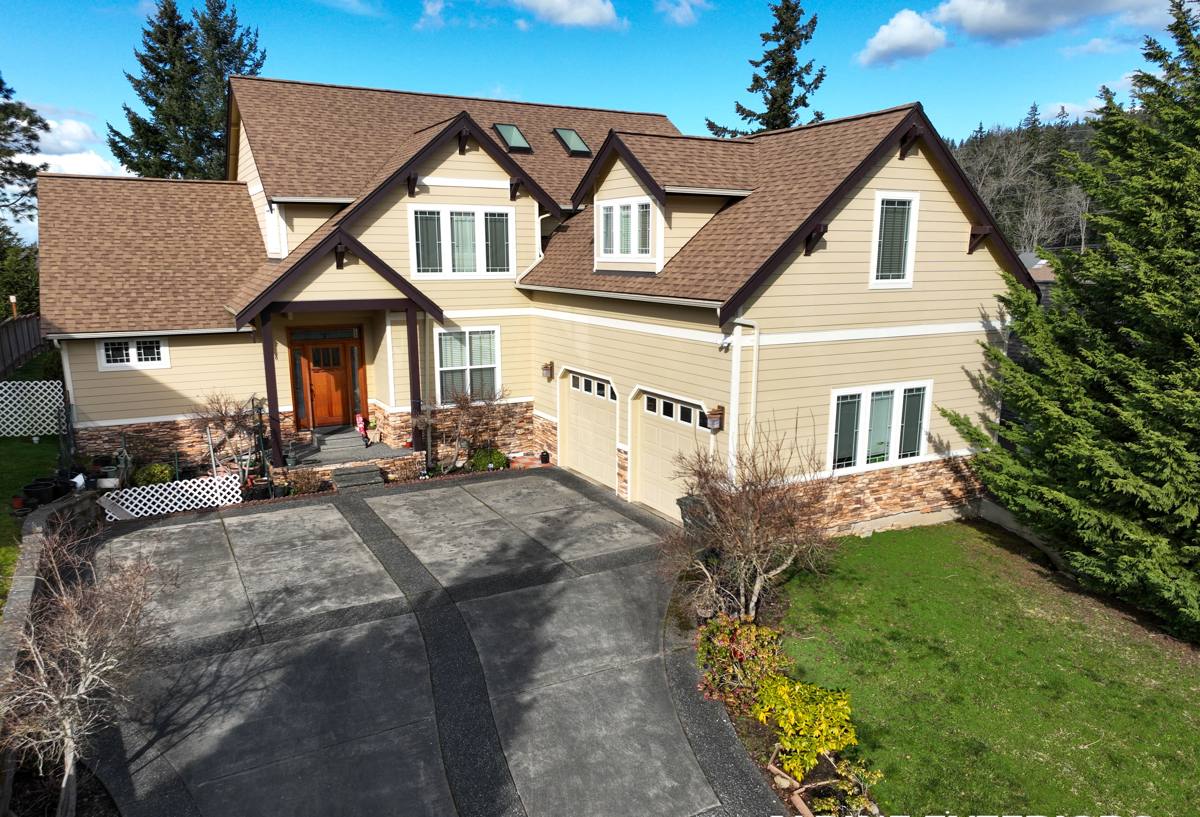
What "Correct" Roof Repair Looks Like
A roof repair that's done right does three things: it stops the water, it fixes the actual cause (not just the symptom), and it blends into the surrounding roof well enough that it won't fail again in a season or two. That sounds obvious, but a lot of repair work skips the middle step — sealing over a symptom without tracing it back to a cracked flashing, a nail pop, or a moss mat holding water against the deck.
Diagnosis Before Anything Gets Touched
Before any material comes off the roof, we trace the leak or damage to its actual source. Water travels — a stain on a ceiling inside the house is often several feet away from where the water actually entered the roof system. On older Fairhaven homes especially, we check valleys, chimney and vent flashing, roof-to-wall transitions, and any place moss or debris has been trapping moisture against the roofing material longer than it should.
Matching Materials and Technique
Shingles fade and weather over time, so a patch using brand-new material next to a 10-year-old roof will always look slightly different — that's physics, not a shortcut on our part. What we control is fit, fastening pattern, and how well the repair ties into the existing roofing so water sheds the way the roof was designed to shed it, not the way it's easiest to install.
Sealing and Flashing Detail
Most roof failures that end up as interior water damage trace back to flashing, not the field of the roof itself. Step flashing at walls, counterflashing at chimneys, and valley metal all need to be lapped correctly so water runs over the top of each piece, never under it. In a driving-rain environment like Fairhaven's, a flashing detail that's "close enough" inland can leak here.
Common Roof Repair Issues We See in Fairhaven
| Issue | What Causes It | Why It Matters Here |
|---|---|---|
| Moss and organic growth | Shade, moisture, and organic debris (needles, leaves) that don't dry out between rains | Fairhaven's tree cover and marine humidity extend the moss season well beyond a typical dry-summer roof |
| Failed or corroded flashing | Age, poor original installation, or metal fatigue from salt air exposure | Proximity to the bay accelerates corrosion on lower-grade or older metal flashing |
| Wind-driven rain intrusion | Gaps at roof-to-wall transitions, vents, or under-sealed penetrations | Open exposure toward the water means storms hit with more direct force than sheltered inland lots |
| Granule loss and shingle wear | UV exposure, age, and repeated wet-dry cycling | Marine climates cycle roofs through more freeze-thaw-adjacent wetting than dry inland areas |
| Clogged or damaged gutters | Needle and leaf debris from surrounding trees | Backed-up gutters push water under the drip edge, which reads as a "roof leak" even when the roofing itself is fine |
Repair or Replace? How We Make That Call
Not every damaged roof needs to come off. We look at a handful of practical factors before recommending repair over replacement, and we'll walk you through our reasoning rather than just handing down a verdict.
| Factor | Leans Toward Repair | Leans Toward Replacement |
|---|---|---|
| Age of roofing material | Well within its expected service life | Near or past the manufacturer's expected lifespan |
| Extent of damage | Localized — one section, one flashing detail, one leak point | Spread across multiple slopes or recurring in different spots |
| Deck condition | Solid, dry sheathing under the damaged area | Soft, delaminated, or water-stained decking |
| History of repairs | First or second repair on this roof | Repeated patch jobs in the same general area |
| Moss and organic buildup | Surface growth, roofing material intact underneath | Growth has held moisture long enough to degrade the shingle or deck below |
Broad honest range: most straightforward Fairhaven roof repairs run from a few hundred dollars for a single flashing or small shingle section up to a couple thousand for more involved leak tracing, deck repair, or multi-area work. We'll give you a firm number after we've actually looked at the roof — not a phone estimate.
Our Process, Start to Finish
- Initial contact and scheduling. You describe the problem — a leak, a stain, visible damage, or just a roof that's overdue for a look. We schedule a visit that works around Fairhaven's weather rather than fighting it.
- On-roof inspection. We physically inspect the affected area and the roof as a whole, including flashing, valleys, and any moss or debris accumulation, not just the spot you called about.
- Written scope and price. You get a clear explanation of what's actually wrong, what we recommend, and what it costs — before any work starts.
- The repair itself. We remove and replace only what needs it, re-flash correctly, and match materials as closely as reasonably possible.
- Cleanup and walk-through. Debris and old material are hauled off, gutters are checked for blockage caused by the work, and we walk you through what was done.
Moss Season and Long-Term Roof Health
Moss is more than a cosmetic issue on a Fairhaven roof. Left alone, moss mats hold moisture directly against shingles and underlayment, and over a wet Pacific Northwest winter that constant dampness is what actually shortens a roof's life — not one storm, but months of a roof that never fully dries out. When we're on-site for a repair, we'll flag moss buildup even if it isn't the reason you called, because treating it early is a lot cheaper than repairing the deck damage it eventually causes.
We don't pressure-wash roofing material — high-pressure washing strips granules and can drive water under shingles, which creates the exact problem you're trying to prevent. Correct moss management is a combination of gentle removal, appropriate treatment, and addressing the shade or debris conditions that let it establish in the first place, where that's practical.
Homeowner Moss & Debris Checklist
- Clear leaves and needles off the roof surface at least once before the wet season sets in
- Keep gutters and downspouts flowing freely — standing water backs up under roofing edges
- Watch for dark green or black streaking, which often signals algae or moss getting established
- Trim back branches that keep a section of roof shaded and damp longer than the rest
- Have any active moss growth treated before it mats thick enough to hold water against the shingles
- Note any interior ceiling stains right away — the roof leak is usually well ahead of the visible stain
Salt Air and Metal Components
Roofs have more exposed metal than people usually realize — flashing, vent caps, fasteners, and sometimes gutters and downspouts. In a bay-adjacent neighborhood like Fairhaven, that metal is exposed to a level of salt content in the air that inland Whatcom County roofs simply don't deal with. Lower-grade or aging metal corrodes faster here, and corroded flashing is one of the most common root causes of a "mystery leak" we get called out for. When we're repairing a roof in Fairhaven, we pay particular attention to flashing condition and fastener corrosion, not just the shingles themselves, because that's often where the actual failure started.
Why a Crew That Knows Fairhaven Matters
A roof repair crew that mostly works drier, inland jobs can still do competent work, but they're guessing at conditions a Fairhaven roof deals with every season. Knowing that moss season here runs longer, that wind-driven rain off the bay behaves differently than a straight-down inland storm, and that salt air shortens the service life of certain metals changes what we prioritize during an inspection and how we detail a repair. It's the difference between a repair that holds and one that's back on our schedule in a year.
We're based out of Sudden Valley and work throughout Whatcom County, including Fairhaven and the surrounding Bellingham area, so this isn't a one-time drive-in job for us — it's a neighborhood we come back to for follow-up, warranty work, and referrals from past customers.
What to Have Ready Before We Visit
A few details help us diagnose faster and give you a more accurate scope on the first visit:
- Roughly how long ago you noticed the problem (sudden vs. gradual)
- Whether the issue shows up only during heavy rain or wind from a particular direction
- The rough age of the roof, or when it was last worked on, if you know it
- Any interior signs — ceiling stains, damp attic insulation, or musty odor in a specific room
- Access notes, like steep pitch areas or anything blocking roof access
None of this is required to book a visit — we can work most of it out on-site — but it helps us come prepared with the right materials on the first trip instead of a return visit.
Get an Honest Look at Your Roof
If you're dealing with a leak, visible shingle damage, or a roof that's carrying more moss than it should, we're happy to come take a look and give you a straight answer — repair, monitor, or replace — along with a written estimate. No pressure, no upsell script. Use the form below to request a free estimate for your Fairhaven roof.