 Sudden Valley Siding
 Decks in This Part of Whatcom County Take More Abuse Than People Expect
A deck in Fairhaven doesn't fail the way a deck in a dry climate fails. It's rarely one big problem — it's months of dampness, a layer of moss nobody scraped off in time, and air carrying enough salt to work on metal fasteners year-round. By the time a homeowner notices soft boards or a railing post that wiggles, the damage has usually been building for a couple of seasons. Building or replacing a deck out here means designing around that reality from the start, not just picking a nice-looking board and hoping it holds up.
We build custom decks throughout the Sudden Valley area, and Fairhaven properties get the same close attention to material choice, drainage, and fastener selection that any coastal-influenced Whatcom County site needs. This page covers what that actually involves — not generic deck-building advice, but the specific decisions that matter here.
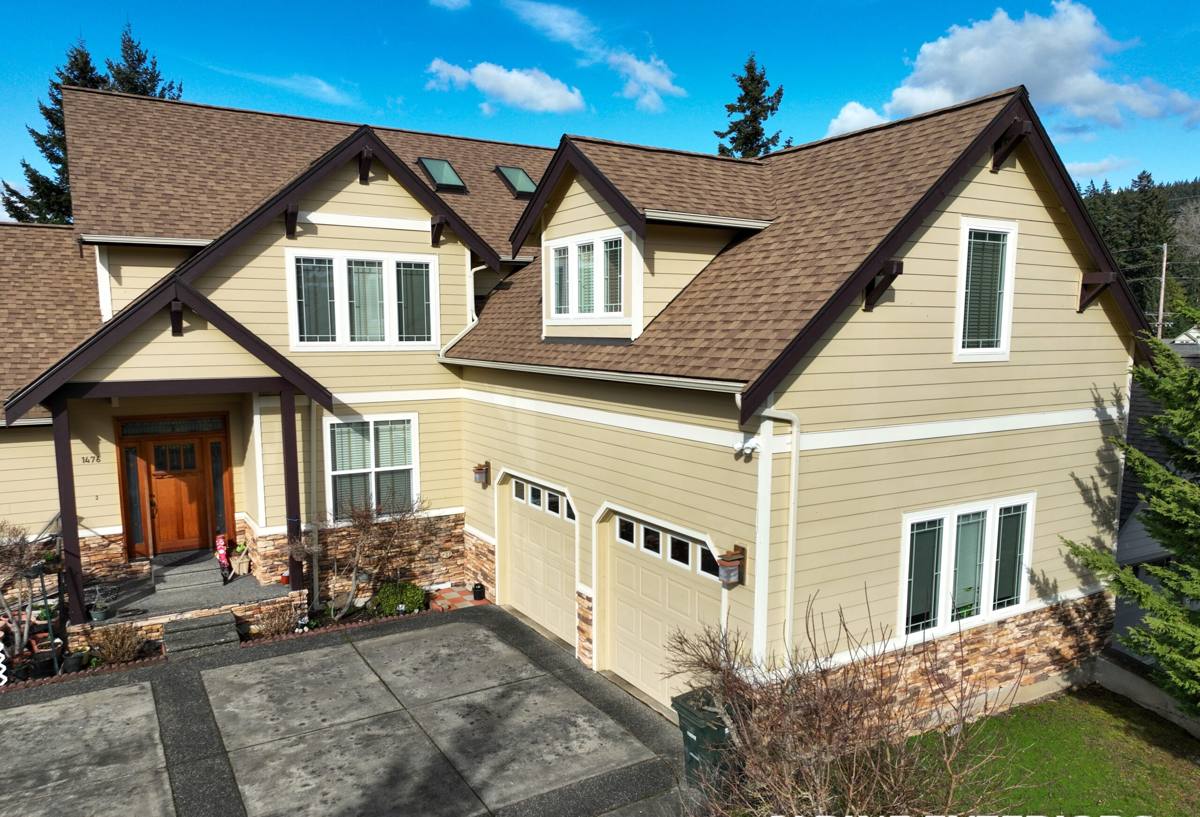
What Salt Air, Rain, and Moss Actually Do to a Deck
Each of these three factors attacks a deck differently, and understanding that shapes how we build.
Salt Air
Airborne salt accelerates corrosion on anything metal — fasteners, joist hangers, railing hardware, even the coating on some screws. A fastener rated for general outdoor use can start showing rust streaks within a year or two in a salt-influenced environment; a fastener rated for coastal or marine exposure will not. This is one of the most overlooked details in deck construction, because the difference isn't visible until the rust shows up.
Driving Rain
Rain that comes in at an angle, driven by wind off the water, gets under railings, into end-grain cuts, and behind ledger boards in ways that straight-down rain doesn't. Any spot where two pieces of decking meet, where a post meets a beam, or where the deck attaches to the house is a place water can work its way in if it isn't detailed correctly.
Moss
Whatcom County's long wet season gives moss and algae plenty of time to establish on shaded or north-facing deck surfaces. Beyond looking bad, moss holds moisture against the decking material, which speeds up rot in wood and can leave composite boards perpetually damp on the surface — a slip hazard as much as a durability one.
Choosing the Right Decking Material for a Fairhaven Property
There's no single "best" decking material — the right choice depends on budget, how much upkeep you want to do, and how exposed the deck is to sun, shade, and weather. Here's how the common options actually compare in this climate.
| Material | Moisture & Moss Resistance | Maintenance | Typical Lifespan Here |
|---|---|---|---|
| Pressure-treated wood | Good if sealed regularly; moss grows readily in shaded spots | Annual cleaning, re-sealing every 1-3 years | 15-20 years with upkeep |
| Cedar | Naturally moisture-resistant, still needs sealing to prevent graying and moss | Sealing/staining every 2-3 years | 15-25 years with upkeep |
| Composite (capped) | Excellent — doesn't absorb water or rot, but surface still needs cleaning where moss can sit | Periodic washing, no sealing/staining | 25-30+ years |
| PVC decking | Excellent — fully synthetic, resists moisture the same as capped composite | Periodic washing | 25-30+ years |
We're generally cautious about uncapped composite boards in this climate — early composite products absorb moisture at cut edges and fastener holes, which is exactly the kind of exposure driving rain and long wet seasons create. Capped composite and PVC decking solve that by wrapping the board in a moisture-resistant shell, which is why we lean toward those products when budget allows and low maintenance is a priority.
Framing and Structure: What's Underneath Matters More Than the Boards
Homeowners naturally focus on the decking surface, but the framing underneath is what determines whether a deck is safe and long-lasting. For this climate, that means:
- Ledger board flashing that actually sheds water away from the house rim joist, not just a bead of caulk
- Joist tape or a comparable protective barrier on top of framing lumber, so screw penetrations don't become entry points for water
- Adequate ventilation and clearance underneath the deck so the framing can dry out between rain events instead of staying damp
- Beams and posts sized and spaced correctly for the actual load and span — not just what's "close enough"
A deck can look finished and still have framing that's quietly rotting from the underside because none of this was done. It's not visible from the top, which is exactly why it's worth doing right the first time.
Railings, Fasteners, and Hardware Built for This Air
This is where a lot of otherwise well-built decks go wrong. We spec stainless steel or coastal-rated fasteners and hardware for connections that matter most — joist hangers, structural bolts, and railing posts — rather than standard exterior-grade hardware. The price difference on fasteners is small relative to the total project cost; the difference in how long they last in salt-influenced air is not small at all. We also detail railing post bases so water doesn't pool where the post meets the deck surface, which is one of the most common points of early rot on decks in wetter parts of Washington.
Metal Roof and Rail Cap Considerations
If your deck includes any metal accents, roof tie-ins, or aluminum railing systems, those components need the same corrosion-resistant hardware and finish rating as everything else. Mixing a coastal-rated frame with standard fasteners just moves the weak point somewhere else.
Drainage and Site Prep Before a Single Board Goes Down
Whatcom County's wet season means a deck's performance is decided as much by what's underneath and around it as by the decking material itself. Before we build, we look at:
- How water currently drains across the site and whether the deck footprint will interrupt that
- Whether footings need to go below the frost line and clear of standing water
- Grading near the house so water sheds away from both the foundation and the new deck structure
- Sun and shade patterns across the deck surface, since shaded sections need extra attention to moss prevention
Skipping this step is how you end up with a deck that looks great for the first year and then starts holding water in one corner every winter after that.
Our Process for a Fairhaven Deck Project
- On-site assessment: We walk the property, check drainage and sun exposure, and talk through how you actually plan to use the space.
- Design and material selection: We go over decking material options, railing style, and layout, with honest trade-offs on cost versus long-term maintenance.
- Permitting: We handle the permit process for the jurisdiction the property falls under, since deck permitting requirements vary by size, height, and attachment method.
- Structural build: Footings, framing, ledger flashing, and joist protection go in first, built to the standards outlined above.
- Decking, railings, and finish work: The visible surface goes on last, with attention to fastener spacing, board gaps for drainage, and clean railing terminations.
- Final walkthrough: We go over the finished deck with you, including what maintenance it actually needs going forward.
Maintenance Checklist for a Deck in This Climate
A well-built deck still needs some seasonal attention out here. This is the baseline we recommend to every Fairhaven-area customer regardless of decking material:
- Sweep and clear debris (leaves, needles, moss) from the surface and between boards at least twice a year
- Wash the deck surface annually with a cleaner appropriate for the material — pressure washing wood or composite incorrectly can do more harm than the moss it removes
- Check and re-seal or re-stain wood decking on the schedule appropriate to the product, typically every 1-3 years
- Inspect railing posts and fastener heads once a year for early rust or looseness
- Keep gutters and downspouts near the deck clear so runoff isn't dumping extra water onto or under the structure
- Trim back vegetation that keeps sections of the deck shaded and damp longer than necessary
Why Local Experience in This Area Is Worth Something
Deck-building advice that works in a dry climate can actively hurt you here. A crew that hasn't dealt with a Whatcom County wet season may under-spec fasteners, skip proper ledger flashing, or recommend a decking product that isn't built for this level of moisture exposure. We work in the Sudden Valley area regularly, including Fairhaven properties, and the material and hardware choices on this page reflect what actually holds up in this specific climate — not a generic national installation guide.
If you're planning a new deck or replacing one that's showing its age, we're happy to take a look and put together a free, no-pressure estimate. There's a form below to get started.