 Sudden Valley Siding
 Siding Built for Edgemoor's Waterfront Exposure
Edgemoor sits close to the water, and that proximity shapes everything about how siding performs there. Homes on or near Bellingham Bay deal with a mix of conditions that inland Whatcom County properties don't see in the same combination: salt-laden air moving off the water, driving rain that hits exposed elevations with real force, and a moss season that runs long even by Pacific Northwest standards. We install fiber cement siding — specifically James Hardie, and only James Hardie — for homes throughout Edgemoor, and the reasons come directly from what this stretch of coastline does to a house over time, not from a sales script.
This page is about one service in one neighborhood: fiber cement siding for Edgemoor homes. What the climate demands, what a correctly installed system actually involves, how we approach a project here, and why hiring a crew that already works this part of Whatcom County is worth something real.
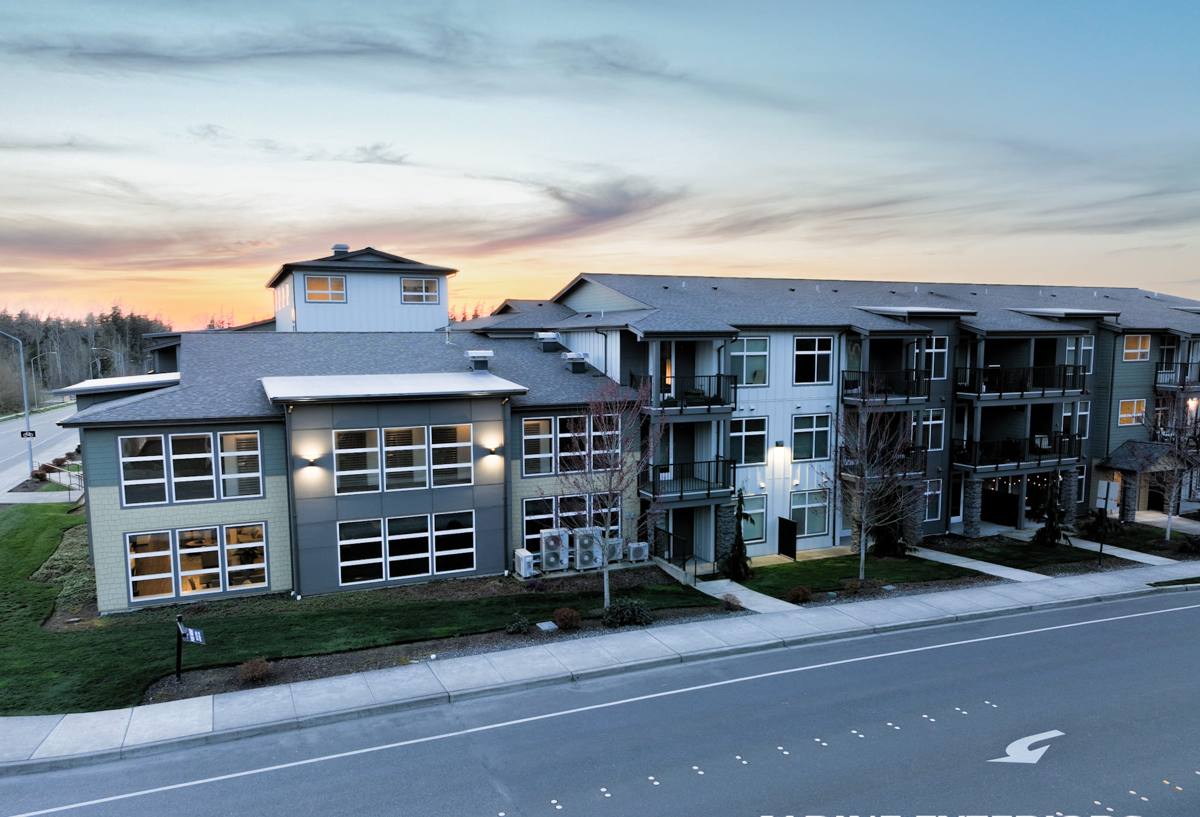
What Salt Air, Driving Rain, and Moss Do to Edgemoor Homes
Salt Air and Corrosion Near the Bay
Airborne salt from Bellingham Bay settles on exterior surfaces year-round, and it's more aggressive on homes closer to open water or on exposed, unshaded elevations. Salt exposure doesn't just affect the siding surface — it accelerates corrosion on fasteners, flashing, and any metal trim components if they aren't rated and installed for a marine-influenced environment. Siding materials that rely on paint film or surface coatings to hold up over time tend to show chalking, fading, and finish breakdown faster here than they would twenty miles inland.
Driving Rain and Wind-Driven Moisture
Storms moving in off the water hit Edgemoor's bay-facing elevations with wind-driven rain, which behaves very differently from rain falling straight down. Wind-driven moisture gets pushed up under laps, into joints, and behind trim in ways that a system built only for vertical rainfall isn't designed to handle. That's a water-management problem as much as a material problem — the siding assembly, not just the siding panel itself, has to be built to shed water that's arriving sideways.
A Long Moss and Algae Season
Cool, damp, and often shaded conditions along the water keep surfaces wet longer between dry spells, and that's exactly what moss and algae need to establish. Whatcom County already runs a long wet season; homes close to the bay, with elevated ambient humidity on top of normal rainfall, tend to stay in that damp window even longer. Porous or moisture-absorbing siding materials pick up growth and staining faster in this kind of setting than a material engineered to shed water and dry out.
Why Fiber Cement Is the Right Call for This Location
We used to install a broader range of siding products. We narrowed to James Hardie fiber cement exclusively after seeing, repeatedly on tear-offs and service calls in coastal and near-coastal Whatcom County settings, which materials actually held up to salt air and driving rain and which ones quietly failed underneath a still-decent-looking surface. The table below lays out the honest trade-offs as we see them.
| Material | Behavior in salt air / driving rain | Maintenance burden | Typical lifespan here |
|---|---|---|---|
| James Hardie fiber cement | Non-combustible, dimensionally stable, factory ColorPlus finish resists fading and moisture intrusion | Low — periodic washing, no repainting on ColorPlus | 30+ years with correct install and upkeep |
| Vinyl siding | Can warp or become brittle with temperature swings; seams are a moisture entry point | Low labor, but limited repair options once damaged | Variable; UV and impact damage shorten it |
| Cedar siding | Absorbs moisture, needs a working finish to resist rot and salt-driven decay | High — refinishing on a recurring cycle | Shorter without diligent maintenance |
| Engineered wood (LP SmartSide) | Wood-based core is moisture-sensitive; edge swelling is a known failure point if seals are compromised | Moderate to high — installation and caulk-joint sensitive | Depends heavily on installation quality and upkeep |
Every one of those products has a legitimate place in the broader market, and plenty of homeowners elsewhere get good service from them. Our position is narrower: on a bay-exposed lot like a typical Edgemoor property, we've made a professional call to stand behind one system we trust completely rather than offer a cheaper option that shifts long-term maintenance risk onto the homeowner. That's why we install James Hardie and nothing else — non-combustible core, a factory-applied finish that doesn't rely on field painting to resist the salt and moisture load, climate-engineered HZ formulations, and a warranty structure that actually means something when the installation follows Hardie's published specifications.
What Correct Fiber Cement Installation Actually Involves
Fiber cement only performs the way it's engineered to when the whole assembly behind it is built correctly — the panel itself is only part of the system. This is where a lot of siding jobs quietly go wrong, and it's especially unforgiving in a salt-air, wind-driven-rain environment like Edgemoor's.
Drainage Plane and Rain Screen
A properly detailed water-resistive barrier, with a drainage gap where the assembly calls for it, gives any water that gets past the siding a way out instead of a place to sit against the sheathing. On wind-exposed bay-facing walls, this detail is what separates a system that sheds incidental moisture from one that traps it.
Flashing and Trim Details
Every window, door, and roof-to-wall transition is a potential entry point for wind-driven rain. Head flashing, kick-out flashing at roof lines, and properly lapped weather-resistive barrier at every penetration have to be right — not close, right — or water finds its way behind the siding regardless of how good the panel material is.
Fastening, Clearances, and Joint Treatment
Correct fastener type and spacing, proper clearance from grade, roof surfaces, and decks, and properly treated butt joints all matter more in a salt-air environment because corrosion-prone fasteners and open joints are exactly what that environment exploits fastest. We fasten and seal to Hardie's published specifications for this climate zone, not to a generic national standard.
Finish: Factory ColorPlus vs. Field Paint
James Hardie's ColorPlus technology bakes the finish on in a controlled factory setting, which holds up to UV and salt exposure far longer than a field-applied coat. Where a specific look calls for primed material and field painting instead, the prep and coating schedule has to account for the added moisture and salt load this location sees — that's a real trade-off worth discussing before you decide, not an afterthought.
James Hardie Product Lines for a Bay-Exposed Lot
- HardiePlank lap siding: The standard horizontal lap profile, available in several textures and exposures — the most common choice for full re-sides in this area.
- HardieShingle: A shingle profile for homes where that look is part of the design, without the moisture absorption and upkeep of actual wood shingles.
- HardiePanel: Vertical panel siding, often used for accent sections, gables, or a more modern elevation treatment.
- HardieTrim: Fiber cement trim boards that match the siding's moisture and finish performance around windows, corners, and fascia — mixing in wood trim reintroduces the exact vulnerability the siding was chosen to avoid.
We install to the HZ5 specification appropriate for this region — the formulation and installation requirements engineered for climates with sustained moisture exposure and freeze-thaw cycling, which fits Edgemoor's bay-influenced conditions.
Our Process for an Edgemoor Siding Project
- On-site assessment: We look at existing siding, trim, flashing, and — where accessible — what's happening underneath, since salt-air and driving-rain damage often shows up as hidden sheathing or framing moisture before it's visible on the surface.
- Tear-off and substrate check: Once the old siding is off, we inspect the sheathing and framing for rot or moisture damage and address any of it before anything new goes on. Covering up a compromised substrate defeats the purpose of a new siding system.
- Weather-resistive barrier and drainage detailing: House wrap or building paper, properly lapped and sealed, with drainage detailing built in for wind-exposed elevations.
- Flashing at every penetration: Windows, doors, roof transitions, and any wall penetration get flashed before siding goes over them.
- Hardie installation to spec: Correct fastening, clearances, and joint treatment throughout, following James Hardie's published requirements for this climate zone.
- Trim, caulking, and final detailing: Fiber cement trim, sealed joints where the product calls for sealant, and a final walkthrough of every transition point.
- Site cleanup and walkthrough: We go over the finished work with the homeowner before calling the job done.
What Affects the Cost of a Fiber Cement Siding Project
| Factor | Why it moves the price |
|---|---|
| Tear-off scope | Removing multiple layers of old siding or dealing with hidden rot adds labor beyond a straightforward re-side |
| Home size and wall complexity | More corners, gables, and dormers mean more cutting, flashing, and trim work per square foot |
| Product line and profile | HardiePanel, HardieShingle, and specialty profiles carry different material and labor costs than standard lap siding |
| Finish choice | Factory ColorPlus vs. primed-for-field-paint changes both material cost and long-term maintenance cost |
| Substrate repair | Rotted sheathing or framing found during tear-off has to be repaired before new siding goes on |
| Access and site conditions | Bluff-adjacent or tight-access lots can add setup and staging time |
As a broad range, fiber cement siding installation in this region typically runs somewhere in the low-to-high teens per square foot installed, with full projects moving up from there based on the factors above. We'll walk through your specific scope during an estimate rather than quote a number sight unseen.
Signs Your Current Siding May Already Be Failing
- Soft or spongy spots when you press on the siding, especially near the bottom courses or under windows
- Paint that's bubbling, peeling, or chalking faster than it should on a wall with regular exposure to salt air
- Persistent moss or algae staining that returns quickly after cleaning
- Visible gaps, warping, or cupping at panel joints and butt seams
- Water stains on interior walls or ceilings near exterior corners after a wind-driven storm
- Fasteners showing rust streaks or corrosion at the head
Any one of these on its own might be minor. Several together, especially on bay-facing elevations, usually means moisture has been getting behind the siding for a while.
Why Hiring a Crew That Already Works Edgemoor Matters
Siding installation isn't identical from neighborhood to neighborhood, even within the same county. A crew that regularly works Edgemoor and similar bay-adjacent Whatcom County properties already has a working sense of which elevations take the worst of the wind-driven rain, how salt air behaves on exposed trim and fasteners over a few winters, and where moisture tends to hide on this kind of lot. That's not a substitute for a careful on-site assessment of your specific house — it's a head start on knowing what to look for. Ask any contractor bidding on a coastal Whatcom County property how they'd detail flashing and drainage differently here than they would twenty miles inland; the answer tells you a lot about whether they've actually worked this kind of exposure before.
A Few Questions Worth Asking Before You Hire
- Do you install to James Hardie's published fastening and clearance specifications for this climate zone, or a generic national standard?
- What's your approach to flashing and drainage detailing on wind-exposed, bay-facing elevations?
- Will you inspect and address the sheathing underneath before installing new siding?
- Is the Hardie warranty on this job transferable, and what does it actually require of the installation to stay valid?
If your Edgemoor home's siding is showing its age, or you're planning ahead for a project, we'd be glad to walk the property with you and give you a clear, no-pressure estimate — no obligation, and no pressure to sign anything on the spot. Use the form below to get started.