 Sudden Valley Siding
 Storm Damage Roof Repair for Deming Homes
Deming sits in the kind of Whatcom County terrain that takes weather seriously. Winter storms roll through with driving rain and gusty wind, and the moisture doesn't let up for months at a time. A roof that looks fine from the driveway can be quietly failing underneath — lifted shingles, soaked underlayment, moss working into a seam that was never designed to hold water. We repair storm-damaged roofs for homeowners in and around Sudden Valley, and Deming is part of that regular service area. This page covers what storm damage actually looks like here, what a correct repair involves, and how our process works from first call to finished roof.
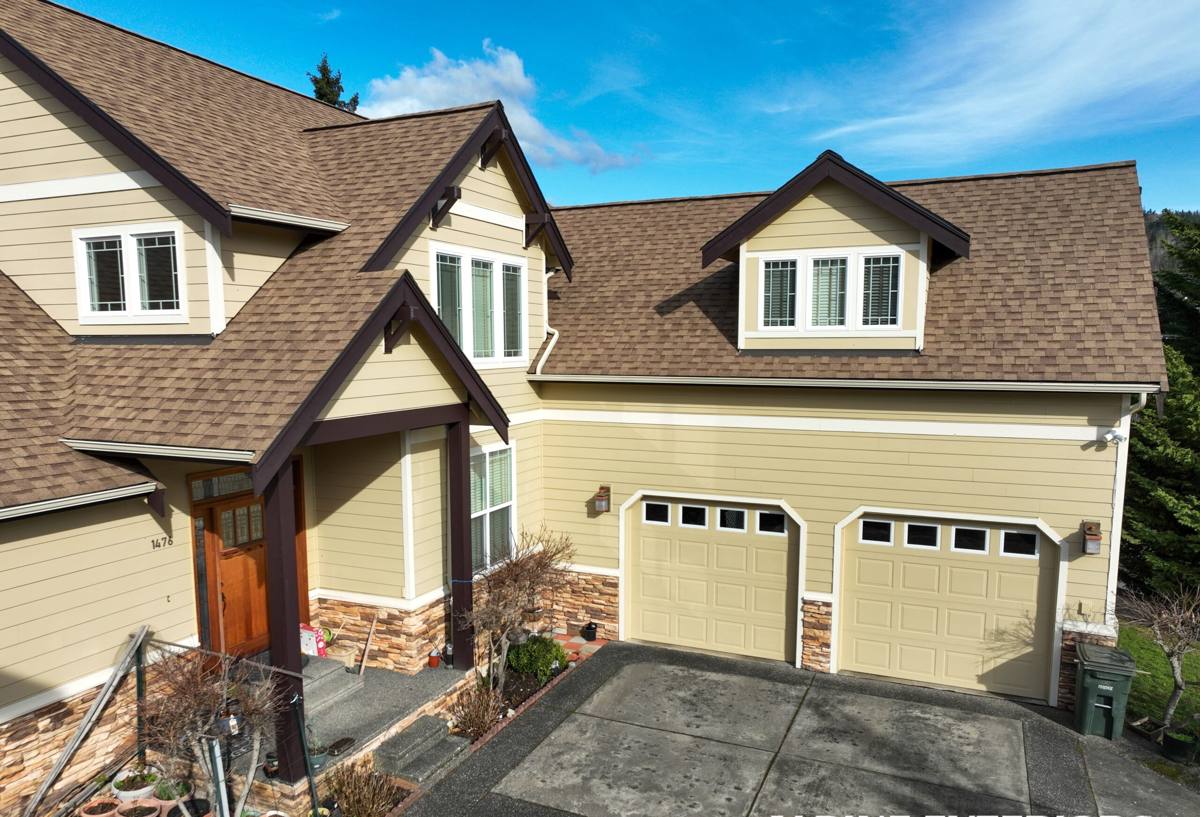
How Local Weather Damages a Roof
Storm damage isn't always a single dramatic event. In this part of Whatcom County it's usually a combination of factors working together over a season or several seasons.
Driving Rain and Wind-Driven Water
When rain comes in sideways during a windstorm, it doesn't just sit on the shingle surface — it gets pushed up and under laps, flashing edges, and vent boots that were never meant to handle horizontal water pressure. That's how a roof with no visible missing shingles can still develop an active leak during a storm.
Salt-Tinged Marine Air
The marine air that moves through this region carries a light salt content that accelerates corrosion on exposed metal — flashing, fasteners, and vent caps in particular. Corroded metal loses its seal well before the surrounding shingles show any wear, which is why a roof can leak at the metal long before the field of the roof needs attention.
A Long Moss Season
Shade, moisture, and mild temperatures add up to a moss season that runs much longer here than in drier parts of the state. Moss doesn't just look bad — it holds water against the shingle surface, lifts shingle edges as it grows, and clogs the channels that are supposed to move water off the roof. During a storm, a moss-choked roof has nowhere for the extra water to go, which is when small problems turn into interior leaks.
Wind Load on Trees and Debris
Deming's tree cover is part of what makes the area attractive to live in, but it also means storm winds bring down branches and heavier debris than a more open subdivision would see. Impact damage from falling limbs is a distinct category from wind-lift damage, and it usually needs a different repair approach — more on that below.
Signs Your Roof Has Storm Damage
Most storm damage is only obvious after it has already let water into the house. Catching it earlier is cheaper and a lot less disruptive. After any significant windstorm, it's worth doing a quick check for these signs:
- Shingles that are cracked, curling, or missing entirely, especially near ridges and edges
- Granules collecting in gutters or at downspout outlets — a sign of shingle surface wear
- Flashing around chimneys, skylights, or roof-to-wall joints that looks lifted, bent, or separated
- Moss buildup thick enough to block water from draining off the roof surface
- Interior ceiling stains, especially ones that appear or grow right after a storm
- Sagging or soft-feeling spots when walked on, which points to soaked decking underneath
- Debris, broken branches, or dents concentrated in one area from impact
- Gutters pulling away from the fascia or overflowing during rain
Any one of these on its own doesn't necessarily mean a full roof replacement is needed. But left unaddressed through another wet season, small issues compound.
What a Correct Storm Damage Repair Actually Involves
A repair that only replaces the shingles you can see from the ground is a repair that's likely to fail again in the next storm. A correct repair addresses what's underneath, not just the surface.
Inspecting Beyond the Obvious Damage
We check the full roof plane around any visible damage, not just the spot that was reported. Wind and water damage often extends past what's visible — a lifted shingle two rows away from the "problem area" is common after a real windstorm.
Checking the Decking
If water has been getting under the shingle layer for any length of time, the plywood or OSB decking underneath can be softened or delaminated. Repairing over damaged decking just hides the problem — it needs to be identified and, where necessary, replaced before new shingles go down.
Underlayment Condition
The underlayment is the actual water barrier under your shingles. If it's torn, saturated, or was installed with felt that's degraded over time, patching shingles on top of it won't stop the leak. We replace underlayment in the repair zone, not just the visible shingle course.
Flashing and Penetrations
Most storm leaks trace back to flashing, not the shingle field. Chimney flashing, valley flashing, vent boots, and roof-to-wall step flashing all need to be checked for corrosion, separation, and proper lap direction — installed backward or under-lapped flashing will leak regardless of how new the shingles around it are.
Our Storm Damage Repair Process
- On-site assessment. We walk the roof (weather permitting) and document the actual scope — not just the spot you called about.
- Honest scope and estimate. You get a plain-language explanation of what's damaged, what's causing it, and what it will take to fix correctly, with a written estimate before any work starts.
- Insurance documentation, if applicable. If the damage is storm-related and you're filing a claim, we provide the photos and written scope your adjuster will need.
- Repair work. Damaged decking, underlayment, flashing, and shingles are replaced to match the surrounding roof as closely as possible.
- Moss and debris clearing. Since moss and debris buildup are recurring issues in this area, we clear the surrounding roof area as part of the job so water can actually drain the way it's supposed to.
- Final walkthrough. We show you what was done and what to watch for going forward.
Repair vs. Replacement: What Actually Drives the Decision
Not every storm-damaged roof needs to be replaced, and not every "quick patch" is actually the cheaper option long-term. Here's what factors into that call:
| Factor | Repair Usually Makes Sense | Replacement Should Be Considered |
|---|---|---|
| Extent of damage | Isolated to one section or a few penetrations | Damage spread across multiple roof planes |
| Roof age | Roof is well within its expected service life | Roof was already near end of life before the storm |
| Decking condition | Decking is sound under the damaged area | Widespread soft or delaminated decking |
| Moss/algae history | Manageable with cleaning and maintenance | Long-term moss damage has degraded shingles broadly |
| Typical cost range | Roughly $400–$1,500 for a contained repair | Full replacement cost varies by size and material, typically several thousand dollars and up |
We'll tell you plainly which category your roof falls into. If a repair is the honest answer, that's what we'll recommend — a bigger job isn't automatically the right call just because it's on the table.
Materials We Use for Storm Repairs
Given the climate here — long wet stretches, real wind events, and a moss season that doesn't quit — we use materials chosen for this environment rather than the cheapest available option:
- Synthetic underlayment rather than older felt products, for better water resistance during extended wet periods
- Self-adhered membrane at eaves, valleys, and other high-exposure areas where wind-driven rain concentrates
- Corrosion-resistant flashing and fasteners suited to marine-influenced air
- Shingles matched as closely as possible to your existing roof for both appearance and performance
Why a Crew That Already Works Deming Matters
Storm damage repair isn't a one-size-fits-all trade skill — the right approach depends on knowing how the local climate actually behaves. A crew that regularly works Sudden Valley and the surrounding Whatcom County communities already knows what moss buildup looks like three years into a Deming roof's life, what kind of wind exposure different lot orientations get, and which flashing details tend to fail first in this air and rainfall pattern. That's the difference between a repair that holds and one that's back on the schedule next winter. We're not sending a crew unfamiliar with the region to figure it out on your roof.
After the Repair: Keeping Storm Damage From Coming Back
A good repair is only half the equation — the other half is not letting the same conditions cause the same damage again.
- Clear moss and debris from the roof surface at least once a year, ideally before the wet season sets in
- Keep gutters and downspouts clear so storm water has somewhere to go
- Trim back branches that overhang the roofline to reduce impact risk and moss-friendly shade
- Have flashing and vent boots checked periodically — they wear out faster than shingles do
- After any major windstorm, do a visual check from the ground for obvious damage
None of this eliminates storm risk entirely, but it meaningfully reduces how often you're dealing with repairs versus routine maintenance.
Get an Honest Look at Your Roof
If a recent storm has you wondering whether your roof needs attention, we're glad to come take a look. The estimate is free, there's no pressure to act on it immediately, and you'll get a straight answer about whether you're looking at a simple repair or something bigger. Use the form below to get started.