 Sudden Valley Siding
 Metal Roofing Built for Deming's Weather, Not Just Installed Here
Deming sits in a part of Whatcom County where the roof over your head works harder than it does in drier climates. The wet season runs long, rain arrives sideways more often than straight down, and tree cover means shade, debris, and moisture linger on roof surfaces for months at a time. A metal roof handles that combination better than most alternatives, but only if it's specified and installed with this exact climate in mind. That's the gap we see most often — a metal roof that looks right from the ground but was detailed for a drier, calmer part of the country.
This page covers what a metal roofing job for a Deming home should actually include: the panel and underlayment choices that make sense here, how a correct installation is put together, what ongoing moss and moisture pressure means for maintenance, and why local installation experience changes the outcome more than most homeowners expect.
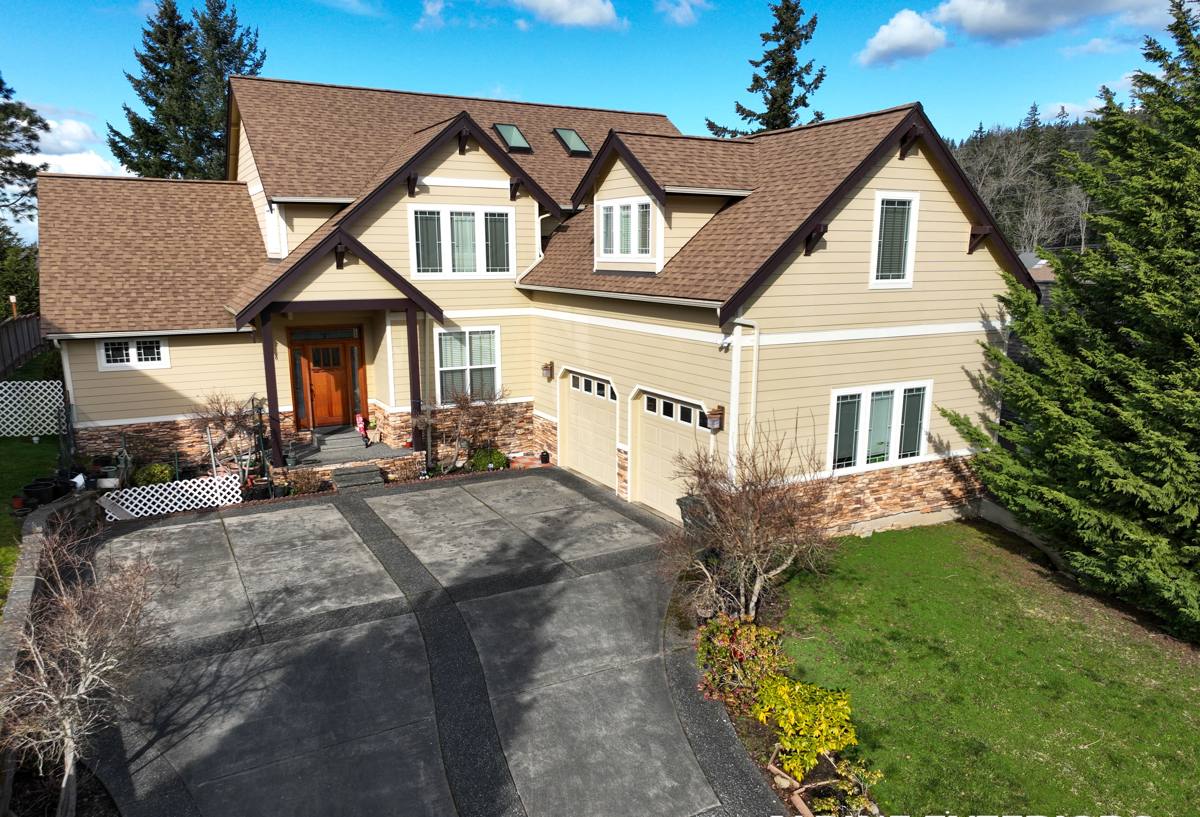
Why Metal Roofing Makes Sense in This Climate
Metal roofing has a real advantage in a region defined by prolonged wet weather: it sheds water fast, doesn't absorb moisture the way organic roofing materials can, and resists the kind of granule loss and surface breakdown that shortens the life of other roof types under constant rain exposure. Whatcom County's mix of driving rain, humidity, and a long moss season is hard on any roof — metal simply gives that moisture less to work with.
It's also a material that holds up well against the region's broader weather mix. Wind-driven rain, occasional heavy snow loads at higher elevations, and the general freeze-thaw cycling that shows up in a Pacific Northwest winter all favor a roofing system with few seams, strong fastening, and a hard, non-porous surface. Where homes are closer to open water or exposed to coastal air, corrosion resistance also becomes a real factor in material and fastener selection — something we account for in the products and hardware we spec, not something we leave to a generic install.
What This Means for Panel and Fastener Selection
Not every metal roofing product is built the same, and the differences matter more in a wet, moss-prone climate than they do somewhere dry. We steer clients toward systems with concealed fasteners, factory-applied finishes rated for coastal and high-humidity exposure, and panel profiles that don't create flat catch-points where debris and moisture can sit. Exposed-fastener panels can still be the right, budget-conscious choice for some structures — we just make sure the fastener type, washer material, and spacing are matched to this climate rather than a manufacturer's minimum spec.
What a Correct Metal Roof Installation Actually Involves
A metal roof is only as good as the layers underneath it. In a climate like Deming's, the underlayment, flashing, and ventilation details do as much work as the panels themselves — most metal roof failures we're called to diagnose trace back to one of these, not the metal.
- Deck inspection and repair: any soft, delaminated, or moisture-damaged sheathing gets addressed before a single panel goes down — covering a compromised deck just hides the problem.
- Synthetic underlayment or ice-and-water membrane: a continuous, high-quality water-resistant barrier underneath the metal, with extra protection at eaves, valleys, and low-slope transitions where standing water risk is highest.
- Proper panel overlap and seam direction: panels run and lap correctly for the prevailing wind and rain direction on that specific roof, not just laid out for speed.
- Flashing at every penetration and transition: chimneys, vents, skylights, and roof-to-wall junctions are common failure points if flashing is undersized or generic rather than fitted to the actual roof geometry.
- Ventilation that matches the assembly: proper intake and exhaust airflow keeps moisture from condensing under the metal, which is a bigger risk in a humid, shaded, tree-covered lot than in an open, sunny one.
- Fastener torque and spacing to spec: over-driven or under-driven fasteners are one of the most common causes of leaks and premature panel wear, and they're easy to miss on a rushed install.
None of this is unusual roofing knowledge — it's the standard a metal roof needs everywhere. The difference in a climate like this one is that skipping any of it shows up faster, because the roof is under near-constant moisture load for a large part of the year.
Comparing Metal Roofing Systems for This Area
| System | Best For | Moss & Moisture Behavior | Maintenance |
|---|---|---|---|
| Standing seam (concealed fastener) | Full roof replacements, long-term ownership | Excellent — few seams, no exposed fasteners to fail | Low; periodic debris clearing |
| Exposed-fastener panel | Budget-conscious replacements, outbuildings, additions | Good, but fastener washers age faster in constant wet exposure | Moderate; fastener inspection every few years |
| Stone-coated steel | Homeowners wanting a shake or shingle look with metal performance | Good; textured surface can hold moisture and debris slightly longer than smooth panel | Moderate; benefits from periodic gentle cleaning |
We'll walk through which of these fits your roof's slope, exposure, and budget during the estimate — there's rarely one universally "best" answer, only the right fit for a given structure.
Moss, Debris, and Long-Term Maintenance
Whatcom County's tree cover and extended wet season mean moss and organic debris are a fact of life for most roofs in and around Deming, not a sign that something was installed wrong. Metal sheds moss far better than composition roofing because there's no porous surface for spores to root into, but debris — needles, leaves, seed pods — can still collect in valleys, at eaves, and against any obstruction on the roof. Left alone, that debris holds moisture against the panel finish and gutters longer than it should.
A metal roof in this environment benefits from occasional gentle clearing of debris and a check of gutters and valleys, especially heading into and coming out of the wettest months. It does not need chemical treatments or aggressive pressure washing — both can damage panel finishes and void manufacturer warranties. We can talk through a simple, low-effort maintenance rhythm that fits your specific roof and lot during the estimate.
Our Process for a Deming Metal Roofing Project
- On-site assessment: we look at your existing roof, deck condition, ventilation, and how water actually moves across your roof and property — not just a generic measurement.
- System recommendation: based on your roof's slope, exposure, and budget, we recommend a specific panel type, gauge, and finish rather than a one-size default.
- Written estimate: a clear scope of work covering tear-off (if needed), underlayment, flashing, ventilation, and the panel system itself, so there's no ambiguity about what's included.
- Installation: deck repair as needed, underlayment, flashing, panels, and trim, installed to manufacturer spec and matched to this climate's demands.
- Final walkthrough: we go over the finished roof with you, including what routine maintenance will look like going forward.
Repair, Recoat, or Full Replacement
Not every metal roofing call ends in a full tear-off. Depending on the age and condition of your current roof, the right move might be a targeted repair, or in some cases we may not recommend proceeding at all if a roof still has good service life left. Factors that tend to drive the decision:
| Factor | Leans Toward Repair | Leans Toward Replacement |
|---|---|---|
| Deck condition | Sound, dry sheathing | Soft spots, rot, or water staining in the attic |
| Panel finish | Isolated fading or minor scratches | Widespread coating breakdown or corrosion |
| Fastener condition | Localized loose or backed-out fasteners | Fastener washers cracked or failing broadly |
| Age of system | Well within expected service life | Nearing or past the finish's rated lifespan |
| Leak history | Single, identifiable source | Recurring leaks from multiple, unclear points |
Signs Your Deming Home May Need a Metal Roofing Inspection
- Visible rust streaking or coating breakdown on panels
- Loose, backed-out, or missing fasteners
- Moss or debris buildup that keeps returning at seams and valleys
- Water stains on interior ceilings or in the attic after heavy rain
- Panels that have shifted, oil-canned excessively, or show separated seams
- A roof original to a home more than a couple decades old with no known upgrades
Any one of these on its own isn't necessarily urgent, but they're worth a professional look before the next stretch of heavy weather.
Why Local Installation Experience Matters
Metal roofing forgives very little. A panel system installed to a generic national spec can look identical, on install day, to one detailed for this specific climate — the difference only shows up a few wet seasons later, in the form of a leak at a flashing detail, corrosion at an undersized fastener, or moisture trapped by inadequate ventilation. A crew that regularly works in and around Deming has already seen how this area's rain, moss, and tree cover actually stress a roof over time, and builds the underlayment, flashing, and ventilation details accordingly from the start rather than learning it through a callback.
That local familiarity also shows up in smaller, practical ways — knowing which panel finishes hold up best given the area's moisture and any coastal air exposure nearby, understanding how a specific lot's tree cover affects debris and shading, and being available for a straightforward warranty or maintenance conversation without the runaround of an out-of-area contractor.
Get a Free, No-Pressure Estimate
If you're weighing a metal roof for your Deming home, or you have an existing metal roof that needs a professional look, we're glad to walk your roof, answer questions honestly, and put together a clear, itemized estimate — no pressure, no obligation. Use the form below to get started.