 Sudden Valley Siding
 Why Deming Roofs Wear Differently Than You'd Expect
Deming sits inland from the coast, but that doesn't mean the roof over your head gets an easier ride than homes closer to the water. Whatcom County's marine-influenced weather pattern pushes damp, salt-tinged air up the valleys and settles it against tree-covered slopes, where it lingers. Add in the driving rain that comes sideways off winter storms and the shaded, moisture-holding conditions that let moss take hold for most of the year, and you have a climate that is genuinely hard on asphalt shingles — even good ones, installed by someone who didn't account for the local conditions.
A shingle roof built for a drier climate, or installed with shortcuts that don't matter much somewhere sunny and arid, will show its problems here faster: granule loss from constant wetting and drying, moss roots working into the shingle mat, and slow leaks at flashing points that never fully dry out between rains. None of that means asphalt shingles are the wrong choice for Deming — they're still the most practical, cost-effective roofing material for most homes in this area. It means the installation has to be done with this specific climate in mind, not treated as a generic job.
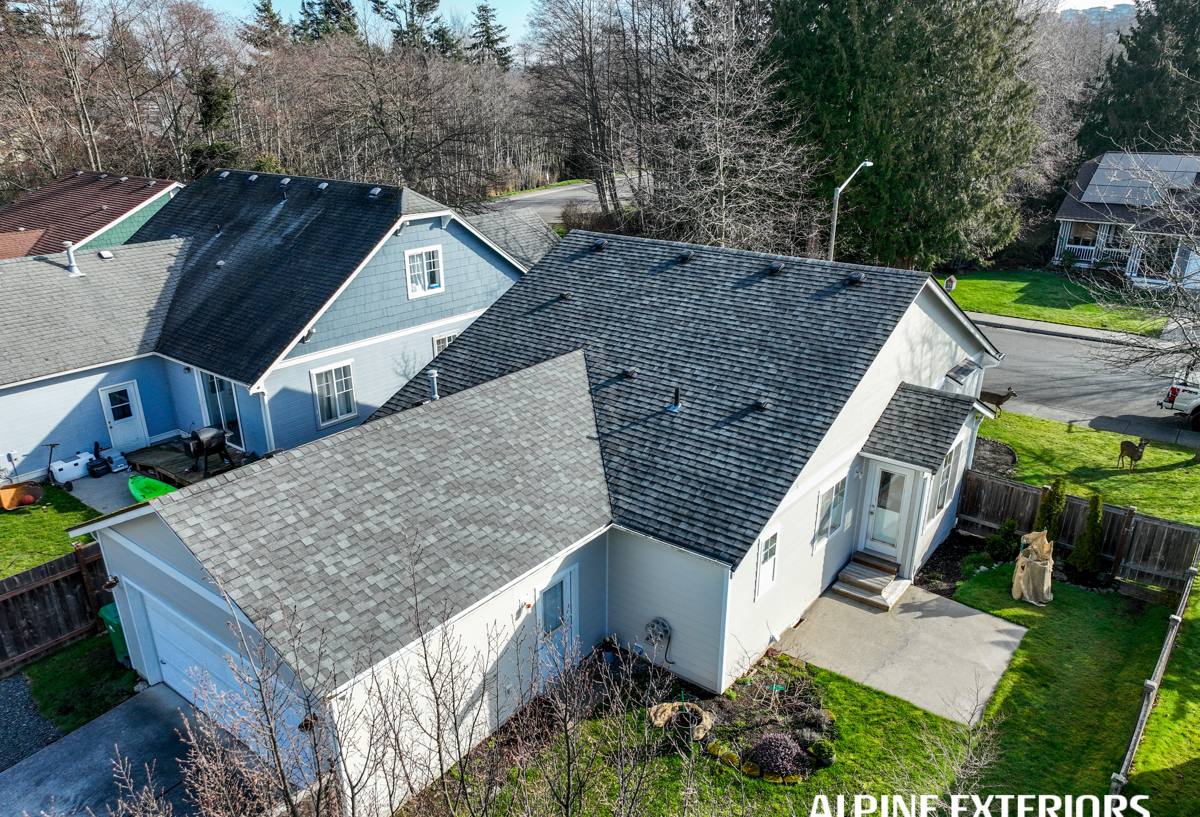
What a Correctly Installed Asphalt Shingle Roof Includes
A shingle roof is a system, not a single layer of material nailed to plywood. Every layer underneath the shingles you see does specific work, and in a wet climate like ours, skipping or shorting any one of them is where roofs fail early.
Underlayment and Ice-and-Water Protection
Synthetic underlayment goes down first as the roof's real waterproof barrier — the shingles above it are the weather-resistant layer, but the underlayment is what keeps water out if wind-driven rain gets under a shingle edge, which happens more often here than homeowners expect. At eaves, valleys, and any low-slope transitions, we use self-adhering ice-and-water membrane. It's not just for snow country; in Whatcom County it also protects against wind-driven rain backing up under shingles during the winter storm season.
Ventilation
A roof that can't breathe traps moisture in the attic, which condenses, soaks the sheathing from underneath, and shortens the life of the shingles from below — the opposite direction most homeowners worry about. Balanced intake at the soffits and exhaust at the ridge keeps air moving and moisture out, and it's one of the most commonly overlooked parts of a re-roof done by crews unfamiliar with the area.
Flashing Details
Chimneys, skylights, sidewalls, and roof valleys are where the vast majority of leaks originate — almost never the open field of shingles. Proper step flashing, counterflashing, and valley metal, all sealed and lapped correctly, matter more to a roof's long-term watertightness than the shingle brand on the box.
Choosing the Right Shingle for Local Conditions
Not every asphalt shingle performs the same way in a wet, shaded, moss-prone environment. Here's how the common options compare for a Deming home:
| Shingle Type | Typical Lifespan | Moss & Moisture Resistance | Best For |
|---|---|---|---|
| 3-tab shingles | 15–20 years | Lower — thinner profile holds less algae-resistant granule coating over time | Budget re-roofs, secondary structures |
| Architectural (dimensional) shingles | 25–30 years | Better — thicker mat and deeper granule bed resist wear longer | Most Deming homes; the standard choice |
| Algae-resistant (AR) shingles | 25–30 years | Best available in standard asphalt — copper-infused granules slow moss and algae growth | Shaded lots, north-facing slopes, tree-heavy properties |
| Impact-rated shingles | 25–30 years | Comparable to architectural, added durability against debris | Homes with overhanging trees or storm debris exposure |
For most properties in and around Deming, we recommend algae-resistant architectural shingles. The upcharge over standard architectural shingles is modest, and on a shaded, tree-lined lot it buys years of delayed moss growth — which matters, because moss is one of the leading causes of premature shingle failure in this part of the county.
Our Process for a Deming Roofing Project
- On-site inspection. We walk the roof (not just the ground), check the attic for ventilation and moisture issues, and look at flashing, valleys, and any problem areas before quoting anything.
- Honest scope and written estimate. You get a clear breakdown of what's being replaced, what underlayment and flashing package is included, and why — no vague line items.
- Tear-off and deck inspection. Old material comes off completely so we can check the roof deck for soft spots or rot before new material goes down. Covering up a damaged deck is one of the fastest ways to void a shingle warranty and guarantee a repeat job.
- Underlayment, ice-and-water membrane, and flashing installed to the details described above.
- Shingle installation to manufacturer nailing and exposure specs — not "close enough," since improper nailing is a leading cause of shingle blow-off in our windier winter storms.
- Final walkthrough where we show you the completed work and explain any maintenance recommendations specific to your property's shade and moss exposure.
Signs Your Deming Roof Needs Attention
Most roof failures don't happen suddenly — they show warning signs for months or years first. Worth checking for, especially heading into the wet season:
- Granules collecting in gutters or at downspout outlets
- Visible moss or thick algae streaking on north-facing slopes or shaded sections
- Shingles that look cupped, curling at the edges, or cracked
- Dark stains or sagging on interior ceilings, especially after heavy rain
- Daylight visible through the attic roof deck
- Flashing that looks rusted, lifted, or separated from the roofline
- Missing or torn shingles after a windstorm
Any one of these is worth a look before it becomes a bigger repair. A roof that's leaking has usually been letting some moisture in for a while before it shows up as a stain on the ceiling.
Moss, Moisture, and Ongoing Maintenance
Even a well-installed asphalt shingle roof in Whatcom County benefits from periodic upkeep, because the climate doesn't let up. Moss doesn't just sit on top of shingles — given enough time, it works root structures under the granule layer and lifts shingle edges, which is exactly where water gets in. Left unaddressed through a few wet seasons, moss growth can meaningfully shorten a roof's useful life regardless of how well it was installed originally.
We recommend a roof check at least once a year, ideally before the fall rains set in, along with gentle moss removal (never pressure washing, which strips protective granules) and keeping gutters and valleys clear so water has somewhere to go. Trees that overhang the roofline also keep shingles shaded and damp longer than they need to be — trimming back canopy where practical is one of the simplest things a homeowner can do to extend a roof's life here.
Cost Factors for Asphalt Shingle Roofing
Every roof is different, but the price of a shingle roofing job in this area is driven by a consistent set of factors. Rather than quote a number that won't match your actual roof, here's what actually moves the estimate:
| Factor | Why It Matters |
|---|---|
| Roof size and pitch | Steeper roofs take longer and require more safety setup, increasing labor |
| Number of layers to remove | Tear-off of multiple existing layers adds disposal and labor cost |
| Deck condition | Rotted or soft sheathing found during tear-off requires repair before shingles go down |
| Shingle grade chosen | 3-tab, standard architectural, and algae-resistant/impact-rated shingles carry different material costs |
| Flashing and ventilation scope | Chimneys, skylights, and multiple valleys add flashing labor; upgrading inadequate ventilation adds material and labor |
| Access and roof complexity | Steep driveways, tree cover, and multiple roof planes affect setup time |
We walk through these factors with you during the estimate so you understand exactly what's driving the number, rather than handing you a lump sum with no explanation.
Why Hire a Crew That Already Works in Deming
A roofing crew unfamiliar with Whatcom County's specific combination of driving rain, shaded lots, and near-constant moss pressure tends to default to installation practices built for a drier or more open climate — lighter underlayment packages, standard shingles instead of algae-resistant ones, minimal attic ventilation upgrades. None of those choices are dramatic mistakes on their own, but stacked together, they're why some shingle roofs in this region need real attention well before their expected lifespan is up.
We work throughout Sudden Valley and the surrounding Whatcom County communities, including Deming, and we build every shingle roof around the conditions this specific area produces: the moss, the rain, the shade, and the long stretches of damp weather between dry spells. That means the underlayment package, shingle selection, and ventilation plan reflect what actually happens to a roof here over ten or twenty years — not a generic specification.
Get a Straight Answer About Your Roof
If your Deming home's roof is showing its age, or you just want an honest opinion on how much life is left in it, we're glad to come take a look. The estimate is free, there's no pressure attached to it, and you'll get a straightforward explanation of what we see and what it would take to fix it. The form below is the easiest way to get started.