 Sudden Valley Siding
 Why Decks in Edgemoor Wear Out Faster Than You'd Expect
Edgemoor sits close enough to the water that salt air is a daily fact of life, not an occasional nuisance. Combine that with the driving rain that rolls through Whatcom County for much of the year and a long, low-sun moss season, and you have three separate forces working on a deck at the same time: corrosion, moisture intrusion, and biological growth. Most decks don't fail because the wood was bad or the contractor was careless. They fail because the structure was built for a drier, calmer climate than the one it actually sits in.
A deck built without that reality in mind will often look fine for a few years and then go downhill fast — fasteners rust from the inside out, ledger boards trap water against the house, and shaded corners grow a slick moss mat that never fully dries. By the time it's visibly bad, the structural wood underneath has usually been wet for a long time.
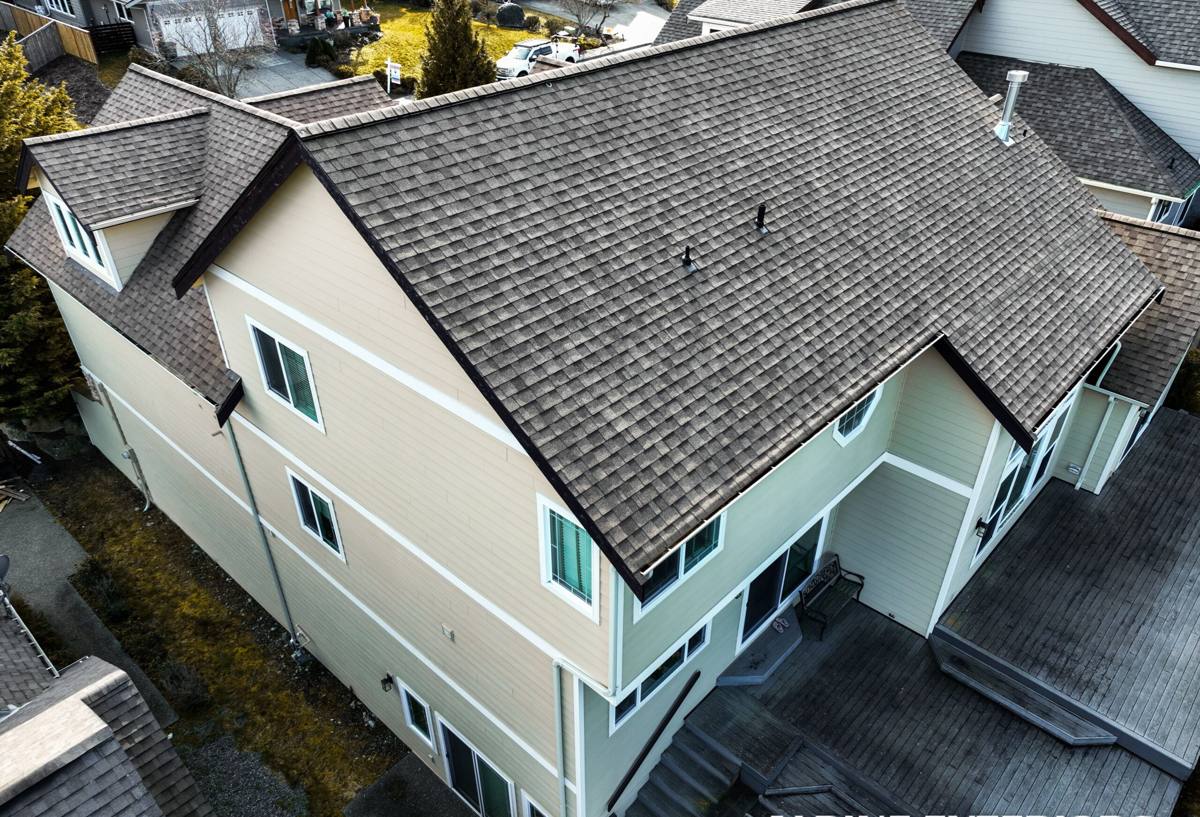
Repair or Replace? Reading the Warning Signs
Not every tired-looking deck needs to come out. Boards can be swapped, railings can be re-secured, and a good cleaning and reseal can buy a few more years on a structure that's still sound underneath. Replacement becomes the right call when the problems are in the framing, connections, or footings — the parts you can't fix by replacing a few boards.
- Soft, spongy, or springy decking boards, especially near the house or in shaded corners
- Rust streaks or crumbling around fasteners and joist hangers
- Any separation, gap, or dark staining where the ledger board meets the house
- Railing posts that flex or wobble when you push on them
- Footings that have visibly settled, heaved, or cracked
- A moss or algae film in shaded areas that comes right back within a week or two of cleaning
- Widening gaps between boards or fasteners that have backed themselves out
If you're seeing two or more of these, especially anything involving the ledger or footings, it's usually more cost-effective to replace than to keep patching. A deck that's been slowly saturating for years often has hidden rot that only shows up once boards are pulled.
Decking Materials That Actually Hold Up Near the Water
Material choice matters more here than it would inland. Salt-laden air accelerates corrosion in fasteners and hardware, and the region's damp, shaded conditions favor moss and algae on any surface that doesn't shed water and dry out quickly. There's no single "best" material for every homeowner — it comes down to how much upkeep you're willing to do versus what you want to spend up front.
| Material | Moisture & Salt-Air Resistance | Maintenance | Typical Upkeep Interval Here |
|---|---|---|---|
| Pressure-treated pine | Good if properly sealed; end cuts and fastener holes are the weak point | Needs regular cleaning and resealing | Reseal every 1–2 years |
| Cedar | Naturally moisture- and insect-resistant, but softer and prone to graying/moss uptake if not maintained | Cleaning, occasional oil or sealant | Clean/treat annually |
| Capped composite | Very good — the cap layer resists moisture absorption and doesn't feed moss the way raw wood fiber can | Low; periodic washing | Wash 1–2x per year |
| PVC/cellular decking | Excellent — no wood fiber to hold moisture at all | Lowest; occasional rinse | Wash as needed |
We install all of these depending on the homeowner's budget and priorities. What we won't do is cut corners on the hardware underneath a nicer surface material — a composite deck fastened with the wrong screws will still fail early in this climate, just quietly, from below.
Fasteners and Hardware Matter as Much as the Decking
In a marine-influenced climate, standard galvanized fasteners can corrode faster than the manufacturer's rated lifespan suggests. We use fasteners and structural hardware rated for the exposure — typically hot-dip galvanized or stainless steel at connection points — and we match hardware to whatever decking material is going on top, since mismatched metals can accelerate corrosion where they touch.
What a Correct Deck Replacement Actually Involves
Framing and Structure
Joist spacing, beam sizing, and post spacing all need to match the actual load the deck will see, not just what was there before. If the old deck was undersized or the joists have been sistered and patched over the years, we rebuild the frame to current standards rather than repeating the same shortcuts.
Ledger Attachment and Flashing
This is the single most common point of failure we find when we tear out an old deck. If the ledger board isn't properly flashed where it meets the house — with flashing that actually sheds water away from the wall rather than trapping it — water gets behind the siding and into the rim joist. In a climate with this much driving rain, a poorly flashed ledger is often rotting the house itself, not just the deck.
Footings
Footings need to be sized and set below frost depth per code, on undisturbed or properly compacted soil. On sites with poor drainage or heavy shade, we pay close attention to how water moves around the footings, since standing water at the base of a post is one of the fastest ways to undermine a deck's structure.
Railings and Code Compliance
Railing height, baluster spacing, and guard strength requirements aren't optional details — they're safety-critical and inspected. We build railings to meet current code regardless of what the old railing looked like.
Permits and Local Code Considerations
Most deck replacements that involve structural work — new footings, a new ledger attachment, or any deck above a certain height — require a permit and inspection. Whatcom County and local jurisdictions review decks for structural adequacy, guard and railing safety, and proper attachment to the house. Skipping the permit process might save a little time up front, but it leaves you without a documented inspection trail, which can matter at resale or if a problem shows up later. We handle the permit and inspection process as part of the job, so you're not left chasing paperwork after the fact.
Our Deck Replacement Process, Start to Finish
- On-site assessment — we inspect the existing deck, ledger, and framing, and check for rot or water damage that isn't visible from the surface.
- Material and layout discussion — we walk through decking material options, railing style, and layout based on your budget and how you use the space.
- Permit and design — we prepare the plans needed for permit submittal and handle the application.
- Demolition — the old deck comes out, including checking the ledger area and rim joist for hidden damage once boards are pulled.
- Framing and flashing — new footings, framing, and properly flashed ledger attachment go in first, before any decking is installed.
- Decking, railings, and finish work — surface material and railings are installed to code, with attention to fastener spacing and drainage gaps.
- Final inspection and walkthrough — we schedule the required inspection and walk the finished deck with you.
Keeping a New Deck Looking Good Through Moss Season
Even a well-built deck needs some seasonal attention in this climate. A little routine care goes a long way toward protecting the investment and keeping surfaces from getting slick underfoot during the wetter months.
- Sweep debris off the deck regularly, especially fallen leaves and needles that trap moisture against the surface
- Keep gutters and downspouts directing water away from the deck and its footings
- Rinse or scrub shaded, low-airflow areas where moss tends to establish first
- Check railing posts and stair connections once a year for movement
- Reseal wood decking on the schedule appropriate to the product — don't wait until it's visibly gray and dry
- Trim back overhanging vegetation to let more light and air reach shaded sections
Why Hiring a Crew That Already Works Edgemoor Matters
A lot of deck problems in this area trace back to a design or product choice that made sense somewhere drier. A crew that regularly builds and repairs decks around Edgemoor and the wider Sudden Valley area already knows which details actually matter here — ledger flashing, fastener grade, and how much shade and salt exposure a given site gets — instead of learning it the hard way on your project. We're a local Whatcom County crew, and the way we frame, flash, and fasten a deck reflects what we've seen hold up in this exact climate, not a generic build spec.
If your deck is showing signs of trouble, or you're just ready for something that will actually hold up to the rain and salt air, we're happy to take a look. Fill out the form below for a free, no-pressure estimate — we'll walk the site, tell you honestly whether you need a repair or a full replacement, and give you a straight answer on cost and materials.