 Sudden Valley Siding
 Deming's Climate Is Hard on Windows
Deming sits inland from the coast, but it's still squarely in Whatcom County's wet marine climate, and that combination is tougher on windows than most homeowners realize. The region sees long stretches of steady rain, high humidity most of the year, and heavy tree cover along the Nooksack valley that keeps siding and window frames from drying out between storms. Add in the salt-laden air that moves through the broader Whatcom County corridor and the moss and algae growth that comes with shaded, damp conditions, and you've got an environment that finds every weak seal, every gap in flashing, and every worn-out frame within a few seasons.
Windows are one of the first places that shows up. A window that was installed correctly but without the local climate in mind — or one that's simply reached the end of its service life — starts letting moisture into the wall cavity long before you see a stain on the drywall. By the time you notice it inside, the damage is usually already sitting behind the trim.
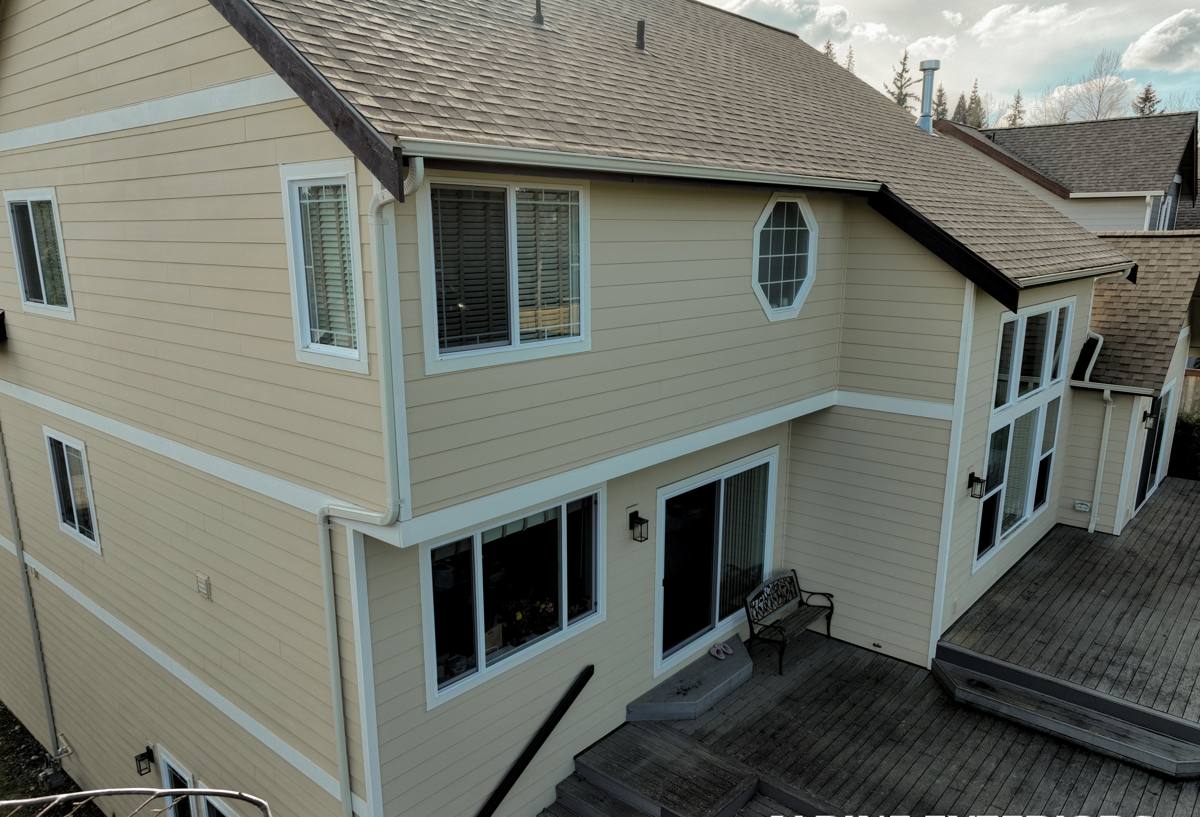
Signs Your Windows Are Losing the Battle
Most window failures in this area are slow and quiet. Here's what we look for, and what you should be checking for yourself between service visits:
- Fogging or visible moisture between panes of a double- or triple-pane window (a failed seal, not a cleanable smudge)
- Soft or discolored wood trim around the window, inside or out
- Visible moss, algae, or black streaking building up on the sill or frame
- Drafts you can feel with your hand near the frame on a windy day
- Windows that are difficult to open, close, or lock — frames can swell and warp with sustained moisture exposure
- Peeling paint or bubbling caulk around the window perimeter
- Noticeably higher heating costs with no other explanation
Any one of these on its own might just mean a caulking touch-up. Two or three together, especially on a window that's original to an older home, usually means it's time to talk about replacement.
What We Mean by "Custom" Windows
"Custom" doesn't necessarily mean expensive or unusual-looking — it means the window is built and installed to fit an opening, structure, or style that a stock size won't handle correctly. That's common in Deming, where you'll find everything from older farmhouses to newer builds with non-standard sightlines.
Non-Standard Openings
Older homes settle over the decades, and rough openings that were square when the house was framed often aren't anymore. Rather than forcing a stock window into an opening it doesn't fit, we build to the actual measurements of your wall. That matters more here than in a drier climate, because a poor fit leaves gaps that become moisture pathways during our wet months.
New Construction vs. Retrofit
A retrofit (replacing an existing window within the existing frame) is a different job from a full-frame replacement that goes back to the rough opening and rebuilds the flashing and moisture barrier from scratch. Retrofits are faster and less invasive, but they only make sense when the existing frame and surrounding wall are still sound. If there's evidence of water damage behind the old window, we'll recommend the full-frame approach even though it costs more — patching a window into a compromised opening just relocates the problem.
Choosing the Right Frame Material
There's no single "best" window material — the right choice depends on your home's exposure, your budget, and how much upkeep you're willing to do. Here's how the common options compare for a climate like ours:
| Material | Moisture Performance | Maintenance | Typical Lifespan |
|---|---|---|---|
| Vinyl | Good — won't rot, handles humidity well | Low — occasional cleaning | 20–30 years |
| Fiberglass | Excellent — dimensionally stable in wet/dry cycles | Low | 30–40 years |
| Wood | Requires diligent upkeep in a wet climate | High — repainting, sealing | 15–30 years with upkeep |
| Wood-clad (wood interior, composite/aluminum exterior) | Good — exterior shell resists moisture | Moderate | 25–35 years |
| Aluminum | Fair — can conduct cold and condense in our humidity | Low | 20–30 years |
For most Deming homes, we lean toward vinyl or fiberglass on the exterior-facing side simply because they don't need repainting or resealing to keep moisture out — and in a climate with this much sustained dampness, low-maintenance materials tend to age better with less attention. Wood interiors are still a fine choice if you want the look, especially paired with a protective exterior cladding, but we'll be upfront that an all-wood exterior frame is a bigger ongoing commitment here than it would be somewhere drier.
How We Install Custom Windows the Right Way
Assessment and Measurement
Every job starts with a look at the actual wall — not just the window opening. We check for existing water damage, soft framing, and how the current window ties into your siding and weather barrier. Measurements are taken for the true opening, not assumed based on the old unit's stated size.
Flashing and Moisture Barrier Integration
This is the step that determines whether a window lasts 25 years or fails in five. Flashing has to be layered correctly — sill pan, side flashing, head flashing — so that any water that does get past the exterior surface is directed back out, not into the wall cavity. We tie this into the surrounding weather-resistive barrier so there's no gap where water can find its way behind the siding.
Sealing and Finish Work
Interior and exterior sealing, insulation around the frame, and trim work finish the job. We use sealants and backer rod rated for sustained exposure to rain and humidity, not general-purpose caulk that hardens and cracks within a couple of wet seasons.
Why Windows and Siding Need to Be Treated as One System
Windows don't fail in isolation — they fail where they meet the siding, trim, and moisture barrier around them. Because we install and repair siding across Sudden Valley and the surrounding Whatcom County area, we look at window replacement as part of the whole building envelope, not a standalone swap. If the flashing at a window doesn't integrate cleanly with the siding above and beside it, water finds that seam eventually, regardless of how good the window itself is.
This is also why we're cautious about jobs where only the window is being touched but the surrounding siding is already showing wear. A brand-new window installed into failing siding is a short-term fix. We'll tell you honestly if that's the situation on your home.
Cost Factors to Expect
Every home is different, and we don't quote sight unseen, but these are the main variables that move the price of a custom window job up or down:
| Factor | How It Affects Cost |
|---|---|
| Retrofit vs. full-frame replacement | Full-frame costs more but is necessary when the opening or wall has damage |
| Frame material | Vinyl is typically the most affordable; fiberglass and wood-clad cost more upfront |
| Number and size of openings | Larger or multiple windows in one project can reduce per-unit labor cost |
| Existing damage | Rot repair or reframing adds cost but is not optional if present |
| Access and height | Second-story or hard-to-reach windows require more setup time |
We'll walk through these with you during the estimate so there are no surprises once work starts — if we find damage once the old window is out, we'll show it to you before proceeding.
Why a Contractor Who Works Deming Regularly Matters
Whatcom County isn't uniform — a home tucked under tree cover near the Nooksack River holds moisture differently than one in open exposure closer to the water, and window and siding work needs to account for that. A crew that regularly works Deming and the Sudden Valley area already knows what kind of moisture load to plan for, which older homes in the area tend to have original single-pane windows still in service, and how local permitting and inspection typically go. That local familiarity means fewer surprises and a job that's built for the conditions your specific property actually faces, not a generic install.
It also means accountability. A local crew that's still working in the area next year, and the year after, has every reason to get the flashing and sealing right the first time.
Simple Maintenance That Extends Window Life
Even a correctly installed window benefits from basic upkeep in a climate this wet. A few habits go a long way:
- Clear moss and debris from sills and tracks a couple of times a year, especially under tree cover
- Check exterior caulking annually and touch up before gaps open up
- Keep gutters and downspouts clear so runoff isn't sheeting directly across window heads
- Trim back vegetation that keeps window and frame surfaces shaded and damp
- Open and close each window periodically, even in winter, to catch swelling or sticking early
None of this replaces a properly installed window, but it buys years of extra service life out of one that was installed correctly.
If you're dealing with drafty, fogged, or failing windows in Deming, or you're planning ahead for a siding project and want windows handled as part of the same job, we're glad to take a look. Estimates are free and there's no pressure to move forward — just a straight assessment of what your home actually needs.