 Sudden Valley Siding
 Composite Decking Built for Alger's Weather, Not Just Its Looks
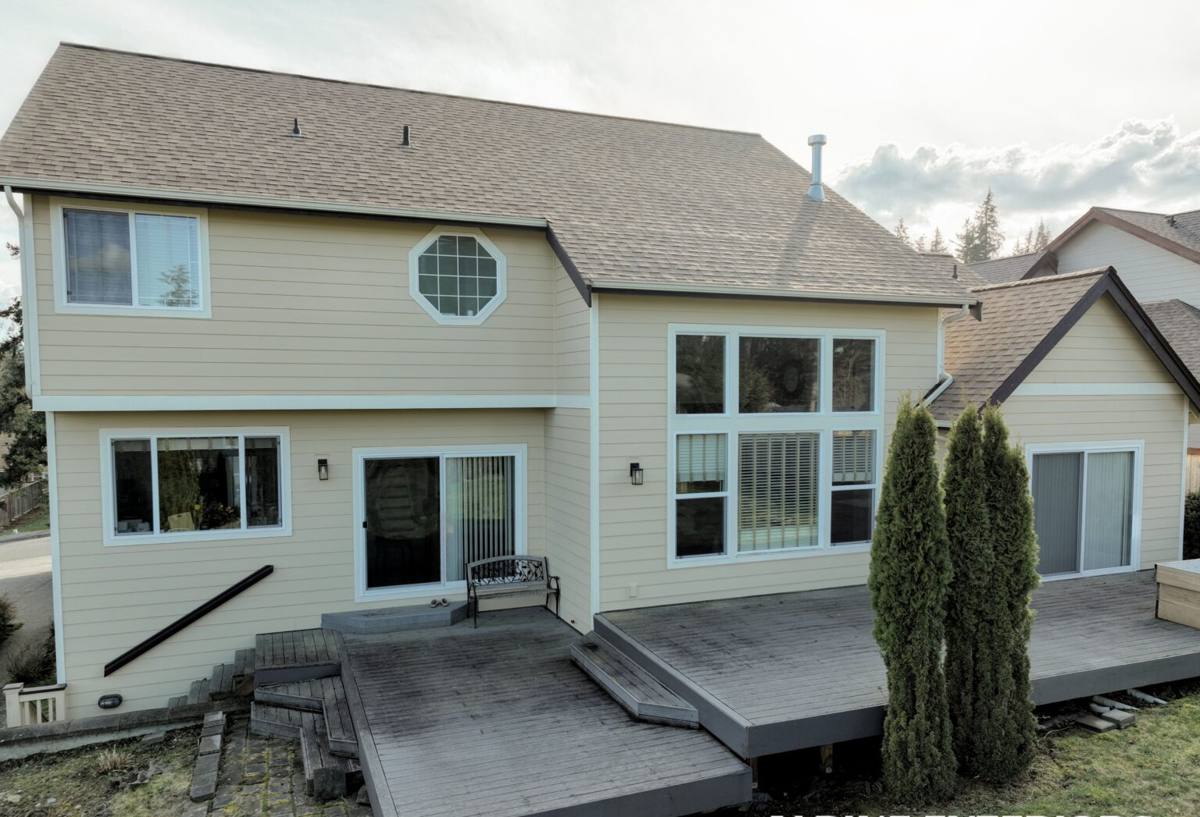
Alger sits in the kind of Pacific Northwest microclimate where a deck earns its keep the hard way. Between the salt-laden air coming off the water, driving rain that finds its way into every seam and fastener hole, and a moss season that seems to stretch longer every year, an outdoor deck here is under more or less constant low-grade attack. Composite decking, when it's specified and installed correctly for this climate, holds up to that pressure far better than untreated wood ever will. But "composite" isn't a magic word — the material only performs as well as the framing, drainage, and fastening underneath it. This page is about what that actually looks like for a deck built in Alger, not a generic decking overview.
What Rain, Salt Air, and Moss Actually Do to a Deck
Before talking about materials, it helps to understand the three forces working against any deck in this part of Whatcom County. They don't act alone — they compound each other.
Moisture That Doesn't Just Sit on Top
Driving rain doesn't fall straight down here — wind pushes it sideways, under rail caps, into board gaps, and along ledger connections where the deck meets the house. On a poorly built deck, that water gets trapped between boards and joists, or behind flashing that was never properly lapped. The surface can look fine for years while the framing underneath quietly rots. This is the single biggest reason decks fail early in this region, and it has almost nothing to do with whether the decking boards themselves are wood or composite.
Salt Air and Hardware Corrosion
Airborne salt accelerates corrosion on anything metal — fasteners, brackets, joist hangers, railing hardware. A screw or bracket that would last decades inland can start rusting and weakening in a fraction of that time in a salt-air environment. Once a fastener corrodes, it loses grip strength long before it looks bad enough to notice from the surface, which is why hardware selection matters as much as the decking material itself.
Moss, Algae, and a Slippery Surface
Shade, moisture, and mild temperatures are exactly what moss and algae need to establish, and a long wet season here gives them plenty of time to do it. Beyond looking neglected, a mossy or algae-coated deck surface gets genuinely slick underfoot — a real safety issue on stairs and near entry points. Board texture, drainage, and how much sun and airflow a deck gets all affect how fast that buildup returns after cleaning.
Composite vs. Wood vs. PVC: An Honest Comparison for This Climate
There's no single "best" decking material for every situation — but for the conditions Alger deals with, the trade-offs are pretty clear-cut once you lay them out.
| Material | Moisture Behavior | Moss/Algae Resistance | Maintenance | Typical Lifespan Here |
|---|---|---|---|---|
| Pressure-treated wood | Absorbs and releases moisture; prone to cupping, splitting, and rot at fastener points | Low — porous surface holds spores | Annual sealing/staining recommended | 10–15 years before major repair |
| Composite (capped) | Resists absorption; core doesn't rot | Moderate to good, depending on cap and texture | Periodic washing, no sealing/staining | 25+ years with proper install |
| PVC/vinyl decking | Fully moisture-resistant | Good, but very smooth profiles can show algae film | Low; occasional washing | 25+ years |
We install composite most often in Alger because it strikes a practical balance: it handles the wet season without the yearly upkeep wood demands, it's less prone to the brittleness some early PVC products showed in colder snaps, and today's capped composite boards resist moss and staining far better than the uncapped composite of a decade or two ago. We don't push one brand over another — we spec the board based on the deck's exposure, budget, and how much sun it actually gets, and we're upfront when a lower-maintenance option costs more up front.
What a Correct Composite Deck Build Actually Involves
The decking boards get all the attention, but most deck failures in this climate start below the surface. A correct build addresses each of these layers.
Framing You Won't See Again
Joists and beams need to be rated for exterior use and, ideally, wrapped or capped where composite decking will sit directly on top of them — this keeps moisture that gets past the boards from soaking into bare lumber. Ledger board attachment to the house gets flashed properly, since that's the single most common point where water intrudes into a structure over time.
Drainage and Airflow Underneath
A deck built low to the ground or against a slope without a clear path for water to escape stays damp longer after every rain, which is exactly what moss and rot need. We grade and gap for drainage and make sure there's airflow underneath — even a low deck — so the structure actually gets a chance to dry between storms instead of staying saturated through the whole wet season.
Fasteners and Hardware That Match the Environment
Given the salt-air corrosion issue, we use fasteners and structural hardware rated for coastal/marine-grade exposure rather than standard-grade hardware. It costs a bit more up front and it's the difference between hardware that's still sound in fifteen years and hardware that's already rusting through in five.
Choosing the Right Board
Within composite, board texture and color matter more here than in drier climates. Lighter colors and certain grain textures show water spotting and pollen/algae film differently than darker, more heavily textured boards. We walk homeowners through actual samples rather than a catalog page, because how a board looks in a showroom and how it looks on a shaded, rain-exposed deck in Alger are two different things.
Our Process for a Composite Deck Project
Every deck is a little different, but the sequence stays consistent:
- On-site assessment — we look at sun exposure, drainage, existing structure (if it's a replacement), and how the deck ties into the house.
- Design and material selection — board brand, color, and railing system are chosen together, with honest trade-offs explained, not just upsold.
- Structural prep — framing repair or replacement, joist protection, and proper ledger flashing happen before a single composite board goes down.
- Installation — hidden fastening systems where appropriate, correct board spacing for expansion and drainage, and manufacturer-spec hardware throughout.
- Final walkthrough — we cover basic care specific to the board you chose so there are no surprises the first time moss season rolls around.
Living With a Composite Deck Through Whatcom County's Wet Season
Composite cuts maintenance drastically compared to wood, but "low-maintenance" isn't "no-maintenance" — especially with the moss and algae pressure this area sees. A simple seasonal routine keeps a composite deck looking and performing the way it should:
- Sweep debris (leaves, needles, pollen) off regularly — trapped organic material is what feeds moss and algae growth
- Wash the surface with a soft-bristle brush and mild soap/water a couple of times a year, more often in heavily shaded areas
- Avoid pressure washers on the highest settings directly against board seams — it can drive water into fastener points
- Check railing posts and stair connections annually for any looseness, which can signal a hardware issue underneath
- Keep gutters and downspouts near the deck clear so runoff isn't dumping directly onto or under the structure
- Trim back overhanging branches where practical to cut down on shade and debris that accelerate moss growth
What Affects the Cost of a Composite Deck in Alger
Pricing varies by project, but the main cost drivers are consistent:
- Size and shape — square footage, plus how many angles, stairs, or transitions the design includes
- Substructure condition — a full rebuild of failed framing costs more than decking installed over sound, code-compliant structure
- Board tier — composite pricing spans a wide range depending on brand, cap technology, and warranty length
- Railing and hardware — composite or metal railing systems cost more than basic wood but tend to match the deck's lifespan better
- Site access — slope, height off the ground, and how materials get to the build site all factor into labor
We give a straight, itemized estimate rather than a vague ballpark, and we'll always explain what's driving the number — there's no reason a homeowner should have to guess why one quote is higher than another.
Why a Crew That Already Works in Alger Makes a Difference
A deck built by someone unfamiliar with this specific stretch of climate tends to get the visible parts right and the invisible parts wrong — the flashing detail, the hardware grade, the drainage gap that seems unnecessary until the second wet winter. Crews who work Alger and the surrounding Sudden Valley area regularly see how decks actually age here, not just how they perform in a showroom or a manufacturer's spec sheet written for a different climate. That local track record is what informs the framing choices, fastener grade, and board recommendations on this page — it's not theoretical.
If you're planning a new composite deck or replacing one that's showing rot, rust, or moss buildup, we're happy to take a look and put together a straightforward, no-pressure estimate. Use the form below to get started.