 Sudden Valley Siding
 Roofing in the Yew Street Area: A Different Set of Conditions
Homes in the Yew Street area, part of the broader Sudden Valley community in Whatcom County, sit in a climate that is genuinely hard on asphalt shingle roofs. It isn't one big dramatic event that wears a roof out here — it's the combination of things happening constantly, month after month. Damp marine air moving off the water carries salt that settles on granules and metal flashing. Driving rain, often pushed sideways by wind, finds its way into laps and valleys that would stay dry in a calmer climate. And because temperatures rarely get cold enough or dry enough for long stretches, moss and algae get a long runway to establish themselves on north-facing slopes and shaded sections of roof.
None of that means asphalt shingles are a bad choice here — they're still the most practical, cost-effective roofing material for most homes in this area. It means the installation has to be done with this specific climate in mind, not treated the same way it would be in a drier region. That's the difference between a roof that looks fine on installation day and one that's still performing well in year fifteen.
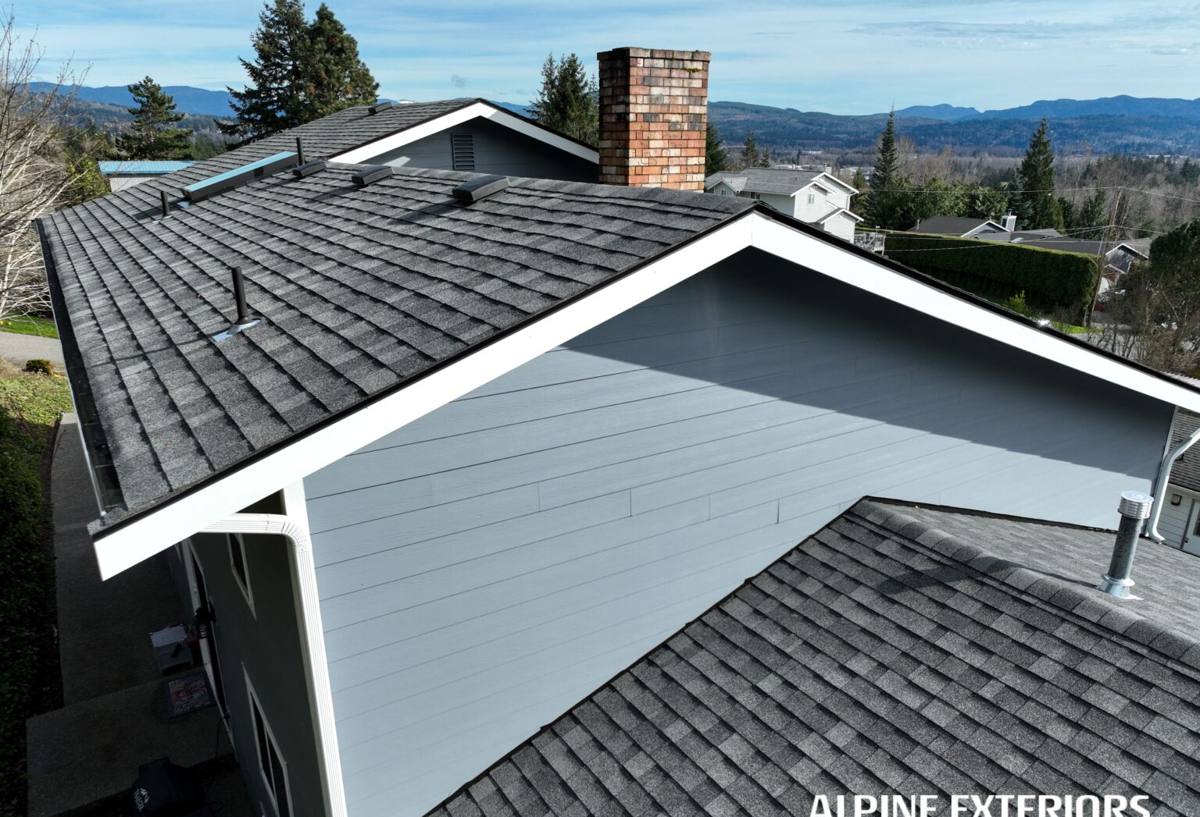
What Local Homes Actually Need From an Asphalt Shingle Roof
A correct asphalt shingle job on a Yew Street home needs to account for a few things that generic roofing advice tends to skip over:
- Extra attention to underlayment and flashing details, since wind-driven rain exploits weak points that dry-climate roofs never get tested on.
- Shingle products rated for higher wind exposure, especially on homes with less tree cover or more open exposure to weather coming off the lake.
- Ventilation that actually moves moist air out of the attic, because trapped humidity accelerates deck rot and shortens shingle life from underneath.
- A plan for moss and algae from day one, not as an afterthought once it's already established.
- Metal flashing and fasteners that hold up to salt-laced moisture instead of corroding out early.
When these get skipped — usually to save time or money on the front end — the roof still looks fine for a year or two. The problems show up later, as leaks around valleys, soft spots near the eaves, or shingles that granule out well before their expected lifespan.
Choosing the Right Shingle Tier for This Climate
Not every asphalt shingle product is built the same, and in a climate like this the differences matter more than they would somewhere drier. Here's how the common tiers compare for a home in this area:
| Shingle Type | Typical Lifespan Here | Wind Rating | Best Fit |
|---|---|---|---|
| 3-tab (economy) | 12–18 years | Lower | Budget-driven projects, rentals, short-hold properties |
| Architectural / laminate | 20–30 years | Moderate to high | Most owner-occupied homes in this area |
| Premium / designer | 25–35+ years | High | Homes with heavy exposure, longer hold periods, or a preference for a heavier, dimensional look |
We generally steer homeowners in this area toward architectural shingles with algae-resistant granules and a wind rating that matches the home's exposure. 3-tab shingles aren't a bad product, but their thinner profile and lower wind ratings mean they show their age faster under the wind and rain patterns typical of Whatcom County. That's our professional read on the trade-off, not a knock on the product itself — it's simply built to a lower spec and priced accordingly.
Algae-Resistant Granules Are Worth the Small Upcharge
Most major shingle lines now offer a version with copper- or zinc-infused granules designed to slow algae growth, which shows up as those dark streaks you see on older roofs. In a climate with this much sustained moisture and shade, that upgrade tends to pay for itself in appearance alone over the life of the roof, even before you factor in the maintenance it saves.
How We Approach a Roofing Job on Yew Street
Every job starts with an honest look at what's actually there, not a sales pitch. Here's the general sequence:
- Inspection. We check the deck, flashing, ventilation, and current shingle condition — from the ground and, where safe, up close — before recommending anything.
- Scope and estimate. You get a written breakdown of what's being replaced, what shingle and underlayment we're proposing, and why, in plain language.
- Deck prep. Any soft, rotted, or delaminated decking gets replaced before new shingles go down. Roofing over a bad deck just hides a bigger problem.
- Underlayment and flashing. Given the rain patterns here, we use synthetic underlayment and ice-and-water shield in valleys and around penetrations as standard practice, not an upsell.
- Shingle installation. Proper nailing pattern, correct exposure, and attention to starter courses and ridge caps — the details that determine whether the roof holds up in wind.
- Ventilation check. We confirm intake and exhaust venting are balanced so the attic can actually breathe.
- Final walkthrough. We show you the completed work and go over care and warranty basics before we consider the job done.
The Parts of the Roof You Never See
What's under the shingles matters as much as the shingles themselves, especially in a wet climate. Underlayment is the roof's backup plan — the layer that keeps water out if wind ever drives rain up under a shingle tab. Flashing around chimneys, vents, and valleys is where most leaks actually originate, not in the open field of shingles. And attic ventilation determines whether moisture from daily living inside the house gets a way out, or condenses on the underside of the roof deck and slowly rots it from the inside.
We treat these as part of the core job, not optional add-ons, because in this climate cutting corners here is what turns a 25-year shingle into a 12-year roof.
Moss, Algae, and Realistic Maintenance
No roof in this part of Whatcom County stays moss-free forever without some upkeep — that's just the reality of a long, wet, mild season. The goal is to manage it, not pretend it won't happen. A few habits go a long way:
- Keep overhanging branches trimmed back so shaded, damp sections of roof get more light and air.
- Clean gutters at least twice a year so water isn't sitting against the eaves.
- Have moss physically removed rather than pressure-washed, which can strip granules and shorten shingle life.
- Consider zinc or copper strips near the ridge on north-facing slopes, which release trace metals that discourage moss growth over time.
- Schedule a roof check-up every couple of years, especially after a particularly wet winter, to catch small issues before they become leaks.
What Affects the Cost
Every roof is different, but these are the main factors that move the price up or down on a typical asphalt shingle replacement in this area:
| Factor | Why It Matters |
|---|---|
| Roof size and pitch | More surface area and steeper pitches take more material and labor time |
| Number of layers to remove | Tear-off of old layers adds labor and disposal cost |
| Deck condition | Rotted plywood or sheathing found during tear-off adds material and labor |
| Shingle tier chosen | 3-tab, architectural, and premium products carry different material costs |
| Roof complexity | Valleys, dormers, skylights, and chimneys add flashing work and time |
| Access | Tree cover, steep lots, and limited staging space can affect labor time |
We don't quote from a distance — an accurate number requires seeing the actual roof, which is why we walk every job before putting a price on it.
Why It Matters to Hire a Crew That Already Works This Area
A roofing crew that regularly works Sudden Valley and the surrounding area already knows how this climate behaves on a roof — which slopes hold moisture longest, how much wind exposure a given lot typically sees, and which underlayment and flashing choices actually hold up here versus in a drier region where a lot of generic roofing advice comes from. That local familiarity shows up in fewer callbacks and a roof that's built for the conditions it will actually face, not conditions from a manufacturer spec sheet written for a national average.
It also means someone who's easy to reach if a question comes up two years down the road, not a crew that worked one job here and moved on to the next county.
Get a Straightforward Estimate
If you're weighing a repair against a full replacement, or just want an honest read on how much life is left in your current roof, we're happy to take a look. The estimate is free, there's no pressure, and you'll get a clear explanation of what we see and what we'd recommend — you can use the form below to get started.