 Sudden Valley Siding
 Windows on Yew Street Take a Different Kind of Beating
Homes along Yew Street sit inside Sudden Valley's mix of wooded lots and lake-influenced weather, and that combination is hard on window assemblies in ways a lot of homeowners don't expect until they're dealing with a soft sill or a window that won't latch anymore. Whatcom County's marine-influenced climate means moisture-laden air moves through this area most of the year, driving rain comes in sideways during fall and winter storms, and the shaded, tree-covered lots common on Yew Street hold onto damp air longer than open lots do. Add a long moss season on top of that, and you've got conditions that will find every weak point in a window's frame, flashing, and seal.
None of that means Yew Street windows fail faster than windows anywhere else in Whatcom County — it means the installation has to account for where water actually goes once it hits the wall, not just how the window looks from the street. That's the difference between a window replacement that lasts fifteen-plus years and one that starts showing rot around the frame in year five.
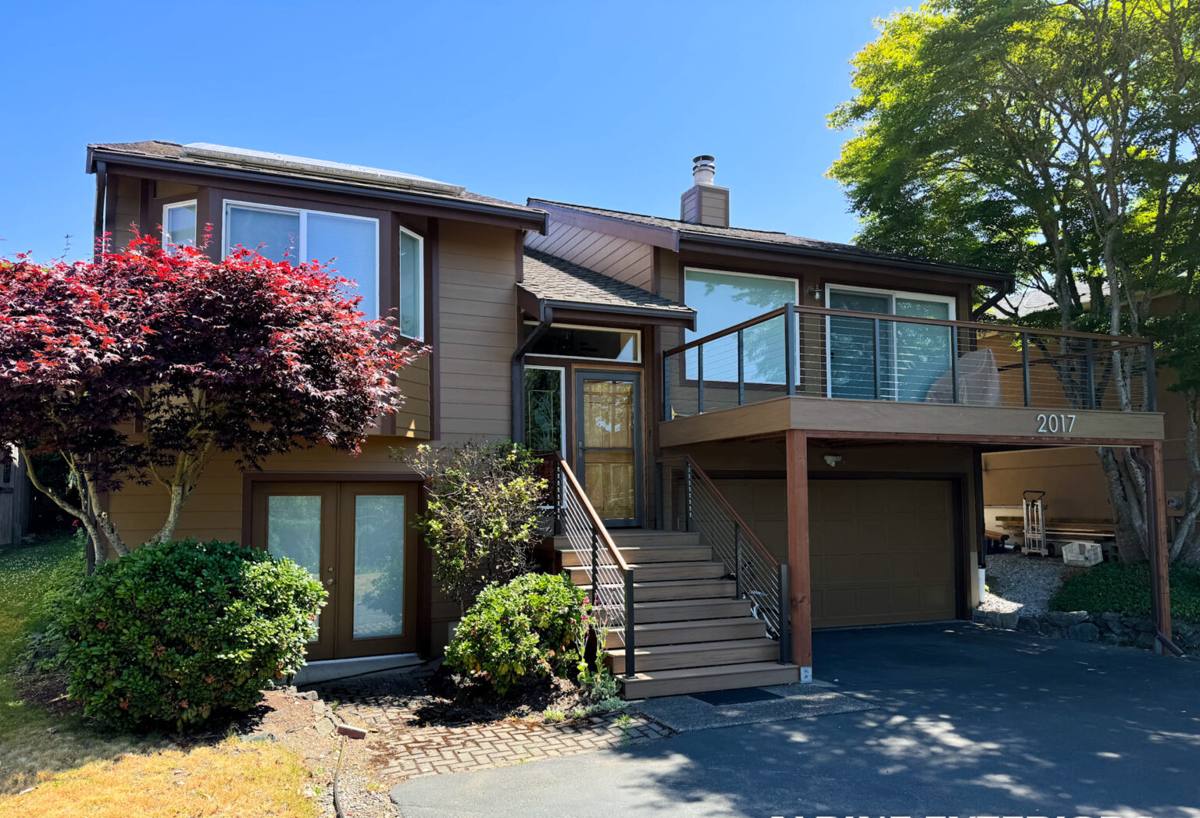
Signs a Yew Street Home Needs Window Replacement, Not Just Repair
Drafts and Temperature Swings
If you can feel air movement near a closed window, or if one room runs noticeably colder than the rest of the house, the seal or the frame has likely failed. On older single-pane or early double-pane windows, this is often the seal between the sash and frame breaking down — not something caulk fixes for good.
Condensation Between the Panes
Fogging or a milky haze trapped inside the glass itself (not on the surface) means the seal on an insulated glass unit has failed and moisture has gotten between the panes. This is permanent — it doesn't clear up, and it only gets worse with the humidity levels this area sees for months at a time.
Soft or Discolored Frames and Sills
Wood-frame windows that have taken on years of driving rain often show soft spots at the bottom corners of the sill first, since that's where water sits longest. Press a screwdriver or your thumb into the wood — if it gives, moisture has already gotten past the finish.
Moss or Dark Staining Around the Frame
A long moss season means anything that stays damp for extended stretches — north-facing walls, shaded trim under trees — will eventually grow moss or streak with organic staining. On window trim, that's usually a sign water is collecting there instead of shedding off, which points to a flashing or caulking problem more than a window problem.
What a Correct Window Replacement Actually Involves
A window replacement is not "pull the old one out, drop the new one in, caulk the edges." Done right, it's a sequence where each step protects the one before it. On a wet-climate job like this, the flashing and sealing steps matter as much as the window unit itself.
Opening Inspection Before Anything Goes In
Once the old window is out, the rough opening gets inspected for rot, soft framing, or existing water damage. This is the point where problems that caused the original window to fail — not just age — get caught and fixed, rather than sealed behind a new window where they'll keep spreading unseen.
Flashing and Weather Barrier Integration
The window has to be integrated into the wall's water management system, not just sit inside the opening. That means proper flashing tape at the sill and jambs, a sloped sill pan so any water that gets past the exterior sheds back outside instead of pooling, and correct lapping with the house wrap or building paper above the window. This is the step that determines whether the wall stays dry for the next twenty years or starts hiding rot behind the trim.
Air Sealing and Insulation
The gap between the window frame and the rough opening gets sealed with a proper low-expansion foam or backer rod and sealant — not stuffed with fiberglass insulation alone, which does nothing to stop air movement and can hold moisture against the frame.
Exterior Trim and Caulking
Exterior trim gets reset or replaced, and caulking goes only where it's supposed to — sealing joints, not blocking the weep holes or drainage paths the window needs to shed water it collects during driving rain.
Our Process for Yew Street Window Jobs
- On-site assessment. We look at the actual opening, the wall assembly, and what's driving the current problem — not just the window itself — before recommending anything.
- Honest scope and quote. You get a clear breakdown of what's being replaced, what materials we're using, and why, in writing.
- Material selection based on the home, not a sales script. We'll walk you through the trade-offs for your specific exposure and budget rather than pushing one product line.
- Install day. Old units come out, openings get inspected and repaired as needed, new windows go in with full flashing and sealing, and trim is finished to match.
- Cleanup and walkthrough. You check operation, sightlines, and finish before we consider the job done.
Choosing Window Materials for This Climate
There's no single "best" window material — there's the right material for your exposure, budget, and how much upkeep you want to take on. Here's how the common options hold up under Whatcom County's rain and humidity:
| Material | Moisture Performance | Maintenance | Typical Trade-Off |
|---|---|---|---|
| Vinyl | Won't rot; handles constant moisture well | Low — occasional cleaning | Can't be painted; frame flex on very large units |
| Fiberglass | Excellent; dimensionally stable in wet-dry cycling | Low | Higher upfront cost than vinyl |
| Wood (unclad) | Attractive but vulnerable without diligent upkeep | High — refinishing on a schedule | Best suited to protected, non-exposed walls |
| Wood-clad (aluminum or vinyl exterior) | Good — exterior shell protects the wood core | Moderate — clad seams need periodic checking | Interior wood look with less exterior upkeep |
Our standard on this kind of job is to steer homeowners away from unclad wood exteriors on walls that take direct, driving rain — not because the wood itself is a bad product, but because keeping a painted or stained wood exterior finish sound in this rainfall pattern requires a maintenance schedule most people don't keep up with, and a lapse shows up as rot faster here than in a drier climate.
What Actually Drives the Cost
| Factor | Why It Matters |
|---|---|
| Number and size of openings | Larger and more windows means more material and labor |
| Frame condition found at removal | Rot repair at the rough opening adds time and material beyond the window itself |
| Material choice | Vinyl, fiberglass, and clad-wood units carry different unit costs |
| Access and site conditions | Second-story or hard-to-reach openings take longer to stage and complete safely |
| Trim and siding tie-in | Matching existing trim profiles or siding around the new window adds finishing work |
We'd rather walk your specific windows and give you real numbers than quote a broad range that doesn't mean much for your house. Costs vary enough between a small bathroom window and a large picture window that a generic estimate isn't useful to you.
Why a Crew That Already Works Sudden Valley Matters
Window replacement done wrong doesn't usually show up as a problem on install day — it shows up two or three winters later, when the flashing detail that got skipped finally lets water behind the wall. A crew that regularly works Sudden Valley homes has already seen how this area's rain pattern and tree cover play out on real houses, which means we're not guessing at flashing details or treating every home like it's in a dry climate. We know to check for the moss and staining patterns that flag a drainage problem, and we build the install to handle driving rain instead of assuming light coastal drizzle.
There's also a practical side: a local crew can turn around a follow-up visit fast if you have a question after the job, without you waiting for a company based hours away to schedule a return trip.
Checklist Before You Hire Anyone for Window Replacement
- Do they inspect the rough opening for rot, not just measure the glass?
- Do they explain their flashing and sill-pan approach, or just say "we'll seal it up"?
- Is the quote itemized — window unit, labor, trim, and any repair work broken out separately?
- Are they licensed and insured for work in Washington State, and will they show proof without you having to ask twice?
- Do they give you a real material recommendation for your specific wall exposure, or push one brand regardless of your situation?
- Will they put the warranty terms — on both the window and the installation labor — in writing?
Keeping New Windows Performing Through Moss Season
New windows still need a little attention to get their full lifespan in this climate. Rinse pollen, moss spores, and debris off frames and sills a couple of times a year, especially on shaded elevations where organic growth takes hold fastest. Check that weep holes along the bottom of the frame stay clear — debris blocking them is one of the most common causes of water pooling that homeowners can prevent themselves. And take a look at exterior caulking annually; a hairline gap that opens up from seasonal expansion and contraction is a five-minute fix if caught early, and a bigger repair if it's left through another wet season.
If you're on Yew Street or elsewhere in Sudden Valley and want a straight answer on whether your windows need replacing or just some targeted repair, we're happy to take a look. The estimate is free, there's no pressure to sign anything on the spot, and you'll get a clear explanation of what we find — just fill out the form below to get started.