 Sudden Valley Siding
 Windows in Deming Face a Different Set of Problems
Deming sits inland from Bellingham Bay but still lives inside the same wet, marine-influenced weather system that soaks all of Whatcom County. Homes here deal with a long, low-angle rain season, humidity that never really lets up, and enough shade and moisture around tree-lined lots to keep moss and algae established on siding, trim, and window sills nearly year-round. Add in the salt-tinged air that carries inland off the Sound on a west wind, and you have an environment that is genuinely hard on window assemblies — not because any one factor is extreme, but because the combination rarely lets a window fully dry out between storms.
Old or poorly installed windows in this climate don't usually fail with one dramatic event. They fail slowly: a bead of caulk that cracked two winters ago, a flashing detail that was never quite right, a sill that stays damp two extra days after every rain. By the time a homeowner notices soft wood, fogged glass, or a draft, the water has usually been getting in for a while. Correct installation up front is the single biggest factor in whether a window lasts 10 years or 30 in this area.
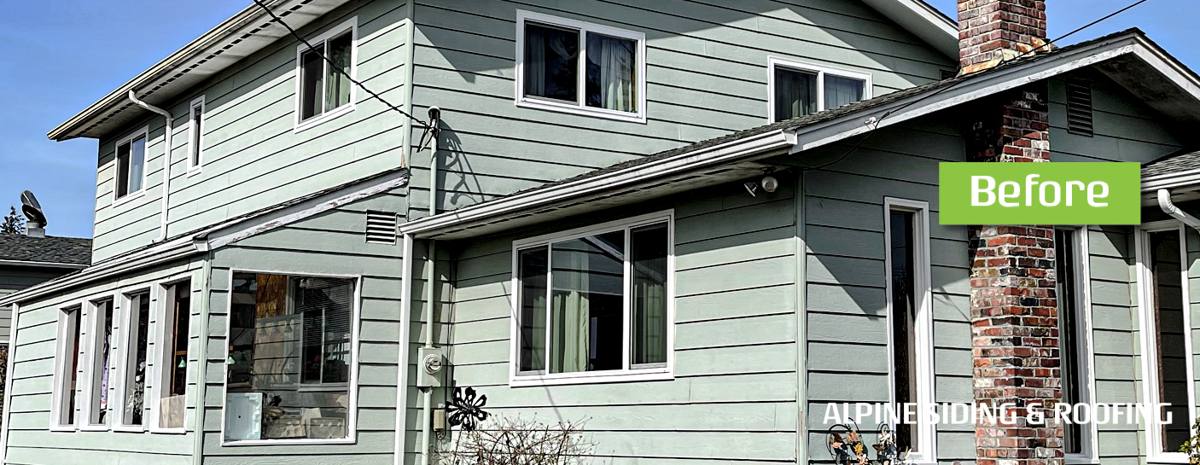
What Deming's Climate Actually Does to a Window Opening
Driving rain and wind-driven moisture
Whatcom County storms frequently come with sideways rain, not just vertical rainfall. That matters because a window that would stay dry in a calm downpour can still take on water when wind pushes rain up and under a poorly lapped flashing detail. Sill pans, head flashing, and proper shingle-style lapping of house wrap aren't optional extras here — they're the difference between a window that sheds water and one that slowly wicks it into the wall cavity.
Moss, algae, and prolonged dampness
Shaded lots and persistent moisture mean moss and algae get a foothold on horizontal surfaces — sills, exterior stops, and trim — faster here than in drier parts of the state. Once organic growth establishes on wood trim around a window, it holds moisture against the surface and accelerates rot underneath, often before the growth itself is even visible from the ground.
Salt air and hardware corrosion
The salt component in the air is milder here than right on the water, but it's still present enough over years to matter for exposed fasteners, hinges, and lower-grade cladding hardware. We factor that into fastener choice and hardware selection so corrosion isn't quietly undermining a window's operation five or ten years down the road.
Temperature swings and seasonal movement
Whatcom County doesn't see extreme heat, but the swing between damp winter cold and warmer, drier summer stretches still causes wood and framing members to expand and contract. Sealants and flashing tapes that aren't rated for that flexibility crack and lose adhesion faster than homeowners expect, opening a path for water years before the window itself would otherwise need replacing.
What a Correct Window Installation Actually Involves
A window installation is really an installation of a water-management system that happens to have glass in the middle of it. Skipping steps doesn't usually show up right away — it shows up in year three or four as rot, drafts, or fogged glass. Here's what we consider non-negotiable on every Deming job:
- Full removal of the old unit and inspection of the rough opening framing, sill, and header for hidden rot or prior water damage before anything new goes in
- Correction of any soft or damaged framing found — installing a new window into a compromised opening just relocates the same problem
- A sloped sill pan flashing so any water that gets past the window drains back out, not into the wall
- Proper shingle-lap sequencing of flashing tape and house wrap: sill first, then jambs, then head, so every layer sheds water onto the layer below it
- Correct shimming and fastening so the window is square, plumb, and doesn't bind or rack over time
- Low-expansion foam and/or backer rod and sealant at the right points — insulating the gap without over-filling it and bowing the frame
- Exterior sealant and interior air-sealing that are two separate details, not one caulk bead doing both jobs
- A final water test or visual check of drainage paths before trim and interior finish work close everything up
Our Process for a Deming Job
1. On-site assessment
We walk the exterior and interior of every opening being replaced, checking for existing water staining, soft trim, or past repair patches that hint at a flashing problem rather than just an old window. This is also when we talk through style, frame material, and glass options based on the home's exposure — a west- or south-facing wall catching prevailing weather gets treated differently than a sheltered north wall.
2. Product selection based on exposure, not upsell
We'll tell you honestly when a mid-grade window is the right call for a sheltered opening and when it's worth spending more on a unit with better weatherstripping and glazing for a wall that takes the brunt of the weather. Not every opening on a house needs the same spec.
3. Removal and opening inspection
Old windows come out carefully so we can actually see the condition of the framing, sill, and any existing flashing or lack thereof. This step is where we most often find the real reason a homeowner called us — not "the window is old" but "the water's been getting in behind it for years."
4. Flashing and installation
Sill pan, jamb flashing, head flashing, window set, shim, fasten, seal — in that order, every time. We don't shortcut the sequence to save time, because the sequence is what makes the system work.
5. Interior and exterior finish
Trim, interior sealant, and exterior caulk are finished to match the home, with attention to keeping sightlines clean and avoiding the kind of sloppy caulk lines that trap moss and dirt.
6. Walkthrough
We check operation, look, and finish with you before we consider the job done, and explain any care items specific to the products installed.
Choosing Windows for a Deming Home: Cost Factors
Every homeowner asks about price early, and the honest answer is that it depends on frame material, glass package, opening size, and how much of the surrounding wall needs repair. Below is a general guide to the factors that move a window job's cost up or down — not a quote, since every home is different.
| Factor | Lower Cost End | Higher Cost End |
|---|---|---|
| Frame material | Standard vinyl | Fiberglass or clad-wood |
| Glass package | Standard double-pane, basic Low-E | Upgraded Low-E, argon fill, triple-pane |
| Opening condition | Sound framing, no rot found | Rotted sill/header requiring rebuild |
| Window size/type | Standard single or double-hung | Large picture windows, bays, or custom shapes |
| Exposure | Sheltered wall, minimal weather exposure | West/south wall taking direct driving rain |
| Trim/finish scope | Reuse existing trim where sound | Full trim replacement to match rotted or mismatched material |
Frame Materials and Why Fit Matters More Than Brand
Vinyl, fiberglass, and clad-wood windows are all viable options in Whatcom County, and each has real trade-offs. Vinyl is budget-friendly and low-maintenance but can be more prone to warping at very large sizes. Fiberglass holds up well to moisture and temperature swings with less expansion and contraction than vinyl. Clad-wood gives a traditional interior wood look with a protective exterior shell, but that shell has to be detailed correctly at every joint or moisture can work its way behind it — which circles back to why installation quality matters as much as the product line itself.
We don't push one brand as universally "best" because the right choice depends on the specific opening, its exposure, and your budget. What we won't do is install a premium window with a rushed or incomplete flashing detail, because a great window installed poorly will fail the same way a cheap one does — just with a bigger price tag attached.
Signs a Deming Home Needs Window Replacement Now, Not Later
- Visible fogging or moisture between glass panes (failed seal)
- Soft, spongy, or discolored wood at the sill or lower jamb
- Persistent drafts even with the window fully latched
- Moss or algae established on the sill or exterior trim
- Windows that are difficult to open, close, or latch
- Peeling paint or bubbling finish on interior trim near the window
- Noticeably higher heating bills with no other explanation
None of these alone means a window needs to be replaced tomorrow, but two or more together — especially soft wood plus drafts, or fogging plus moss — usually means water has been getting past the frame for a while and it's worth having someone look before the damage spreads to the surrounding wall.
Why a Crew That Already Works Deming Is Worth Choosing
Window installation done right depends on understanding the specific weather load a wall actually sees, not just following a generic instruction sheet. A crew that regularly works Whatcom County homes already knows where moss tends to establish first, which wall orientations take the worst of the driving rain, and how much extra attention flashing details need in a climate that rarely gives a house a long dry stretch to fully cure sealants and finishes. That local pattern recognition shows up in small decisions — where to add an extra flashing lap, which sill details are worth the extra time — that a crew unfamiliar with the area might not think twice about.
It also matters for accountability. A contractor working in and around Deming regularly has a reputation to maintain in the community, not just a one-time job to finish and move on from.
Get a Straight Answer on Your Windows
If you're dealing with drafty, foggy, or aging windows anywhere in Deming or the surrounding Sudden Valley area, we're happy to take a look and give you an honest assessment — including whether replacement is actually needed yet or whether a repair will hold you over. Reach out for a free, no-pressure estimate using the form below.