 Sudden Valley Siding
 Why South Hill Windows Take More Abuse Than the Catalog Photo Suggests
South Hill sits up in the trees and slopes that make Sudden Valley what it is — which is great for privacy and views, but it also means your windows are dealing with conditions a lot of manufacturers never tested for. Whatcom County's marine air pushes moisture inland almost year-round, driving rain hits window walls at an angle instead of straight down, and the tree cover that gives South Hill its character also means shade, standing humidity, and a moss season that can run six months or longer on north- and west-facing exposures. None of that is exotic. It's just what happens here every year, and it's exactly the kind of exposure that separates a window that lasts fifteen years from one that lasts thirty.
A window that's fine in a dry inland climate can fail early here — not because the glass or frame is bad, but because the installation wasn't built for wind-driven rain and constant humidity cycling. That's the piece most quotes skip past.
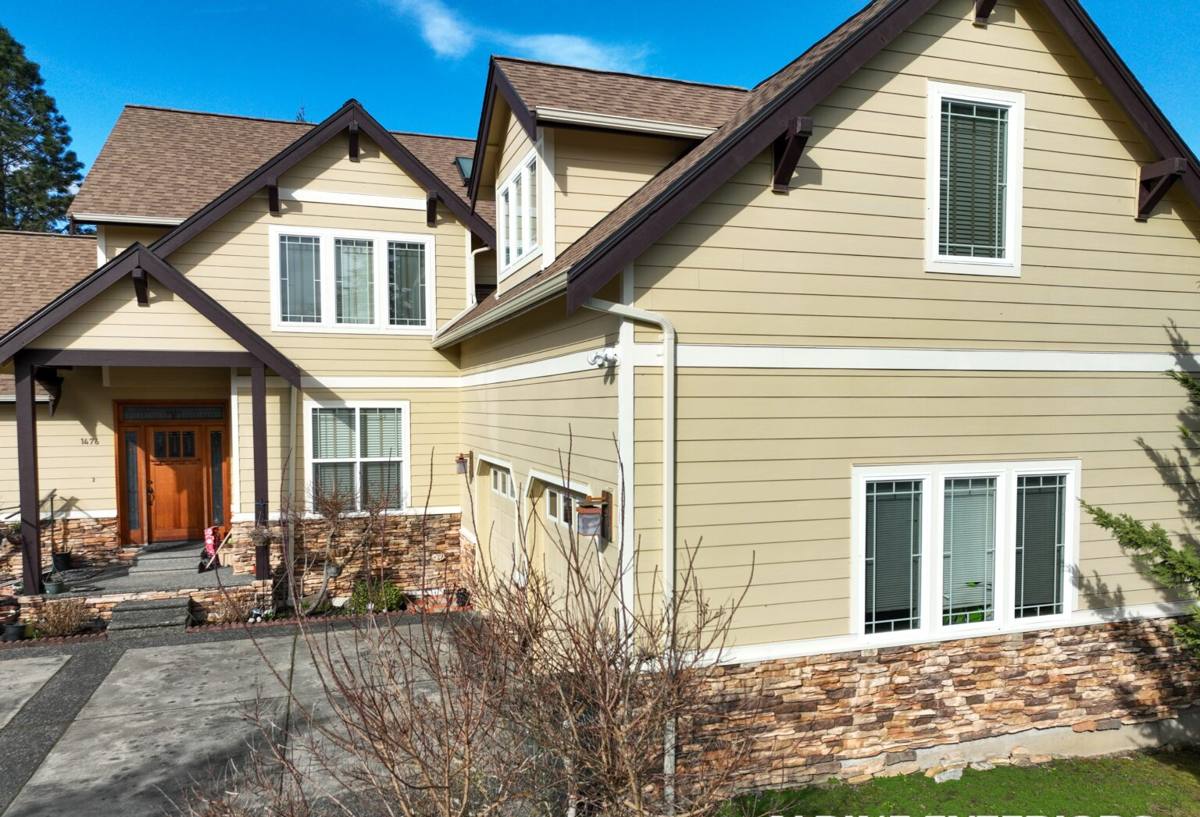
What "Custom" Actually Means on a South Hill Home
Custom doesn't mean fancy shapes or a bigger price tag. On the homes we see up here, it usually means one or more of these:
- Non-standard rough openings from additions, remodels, or older framing that doesn't match today's window sizing
- Sloped lots and split-level layouts where standard flashing details don't drain the way they're supposed to
- Larger view openings facing the lake or valley that need reinforced framing and glass rated for wider spans
- Matching sightlines and trim profiles across a home that's been added onto over the years
- Replacing failed original windows one-for-one where the opening itself has settled or shifted slightly out of square
Every one of those calls for measuring, ordering, and installing to the actual opening — not to a stock size — which is the whole point of custom work.
New Construction vs. Retrofit
New construction windows get nailed straight to the framing before siding goes on, with the water management plane built around them from scratch. A retrofit (replacing existing windows in an existing wall) has to work with what's already there — old flashing, old sheathing, sometimes old rot hiding behind trim that looks fine from the outside. On South Hill homes, especially anything built before the 1990s, we treat every retrofit as an opportunity to check what's actually happening behind that trim before we seal anything back up.
The Climate Factors That Should Drive Your Material Choice
There's no single "best" window material — there's a best fit for your exposure, your budget, and how much upkeep you actually want to do. Here's how the common options hold up against South Hill's specific conditions:
| Factor | Vinyl | Fiberglass | Wood / Wood-Clad |
|---|---|---|---|
| Moisture tolerance | Very good — won't rot, some expansion in temperature swings | Excellent — dimensionally stable in wet/dry cycling | Good if maintained; vulnerable at joints and sills if finish fails |
| Moss/mildew resistance | Good on smooth surfaces; needs periodic cleaning in shaded spots | Good, similar cleaning needs | Requires more attention — organic growth adheres to wood and finish more readily |
| Upfront cost | Lowest | Mid to upper-mid | Highest, especially clad units |
| Long-term maintenance | Low | Low | Ongoing — refinishing, caulking, sill checks |
| Best fit on South Hill | Budget-conscious replacements, secondary elevations | Larger openings, higher-exposure walls, view windows | Homes where wood trim/character is a priority and upkeep is expected |
We're honest about wood: it can look great and perform well, but it asks more of the homeowner over time — especially in a climate that keeps surfaces damp for long stretches. If you go that route, we'll tell you upfront what the maintenance schedule actually looks like rather than let you find out the hard way.
Where Installations Actually Fail Around Here
We don't sell fear, but we do see patterns. On South Hill and the rest of Sudden Valley, the recurring problems are almost never the window unit itself — they're the details around it:
- Sill pan flashing skipped or done with caulk alone — caulk isn't a flashing system, and it's the first thing to fail under sustained wind-driven rain
- Nailing fin sealed before the drainage plane is lapped correctly, which traps water instead of shedding it
- Head flashing missing or reversed, letting rain running down the wall get behind the window instead of over it
- No back-dam on the sill, so any water that does get in has nowhere to go but into the wall assembly
- Trim and cladding sealed too tight, trapping moisture behind the window instead of letting the wall breathe and drain as designed
Every one of these is invisible once the trim goes back on. That's why the install matters as much as the window brand — arguably more.
Our Process for a South Hill Window Job
1. On-Site Assessment
We measure every opening individually — we don't assume uniform sizing even on homes that look symmetrical from the street. We also check the condition of the sheathing and framing at each opening before quoting, so there are no surprises once demo starts.
2. Product Selection
We walk through material, glass package, and hardware options based on which direction the wall faces, how much shade it gets, and what you actually want out of the window — energy performance, noise reduction, low upkeep, or matching an existing look.
3. Removal and Opening Prep
Old units come out carefully so we can inspect the framing underneath. Any soft wood, rot, or prior water damage gets addressed before a new window goes in — installing a good window into a compromised opening just relocates the problem.
4. Flashing and Water Management
Sill pan, back-dam, properly lapped house wrap or building paper, and head flashing installed in the correct shingle-style sequence so water sheds down and out, never in. This is the step that determines whether the window is still performing well in fifteen years.
5. Installation and Air Sealing
Window set level, plumb, and square, fastened per manufacturer spec, insulated around the frame without over-packing (which can bow the frame and cause operational issues), and air-sealed on the interior side.
6. Trim, Finish, and Walkthrough
Exterior trim and cladding restored to match, interior finish work completed, and a walkthrough where we show you how the window operates and what maintenance — if any — it needs going forward.
A Practical Checklist Before You Sign Any Window Quote
- Does the quote specify sill pan flashing and back-dam details, or just "flashed as needed"?
- Is the glass package specified by U-factor and solar heat gain, not just "energy efficient"?
- Does the contractor ask about the wall's sun/shade exposure before recommending material?
- Is rot or soft framing inspection included, or only discovered (and billed) mid-job?
- Are warranty terms for the window and the installation labor both spelled out separately?
- Will the same crew that measures also be the crew that installs?
If a quote can't answer most of these clearly, that's worth asking about before you commit.
Why Hiring Locally Matters More Than It Sounds
Window installation instructions are written for average conditions. South Hill isn't average — it's shaded, sloped, exposed to driving rain off the lake and valley, and slow to dry out between storms for a good part of the year. A crew that already works this specific stretch of Sudden Valley has already seen how the moss builds up on north walls, which elevations take the worst of the wind-driven rain, and which older homes tend to have hidden rot behind the trim before the first window even comes out. That experience shows up in fewer surprises during the job and fewer callbacks after it — not because of a better sales pitch, but because the details that matter here have already been worked out on the house down the road.
Maintenance That Actually Matches This Climate
Whatever material you choose, a few habits go a long way in Whatcom County's wet, shaded conditions:
- Rinse pollen, moss spores, and grime off north- and west-facing windows once or twice a year
- Check exterior caulk lines annually, especially after the first hard winter — small gaps let a lot of water in over a season
- Keep gutters and downspouts clear so roof runoff isn't sheeting directly down window walls
- Trim back vegetation that keeps a window wall shaded and damp longer than it needs to be
- Operate hardware (locks, hinges, tilt-in features) a few times a year even if you don't open that window often — it keeps seals and mechanisms from seizing
If you're weighing options for a South Hill home — whether it's a full house of replacements or a couple of problem windows that never dried out right — we're glad to come take a look. The estimate is free, there's no pressure, and you'll get a straight answer about what your home actually needs.