 Sudden Valley Siding
 Edgemoor's Siding Problem Isn't Like Everywhere Else's
Homes near Edgemoor and the broader Sudden Valley area sit at the intersection of three things that are hard on exterior siding: salt-laden air off the water, driving rain that comes in sideways during Whatcom County storms, and a moss season that runs longer here than almost anywhere else in the state. None of those three problems is unusual on its own. Together, on the same wall, for years at a time, they wear out the wrong siding material faster than most homeowners expect.
We work in this area regularly, and the pattern is consistent: houses with the wrong siding system for this climate start showing trouble years before they should, while houses with a correctly installed, climate-appropriate system stay tight and clean for decades. This page is about what a proper siding replacement looks like for a home in this specific area, not a generic overview of siding in general. It's meant to help you evaluate any bid you get, including ours, against what the job actually requires here.
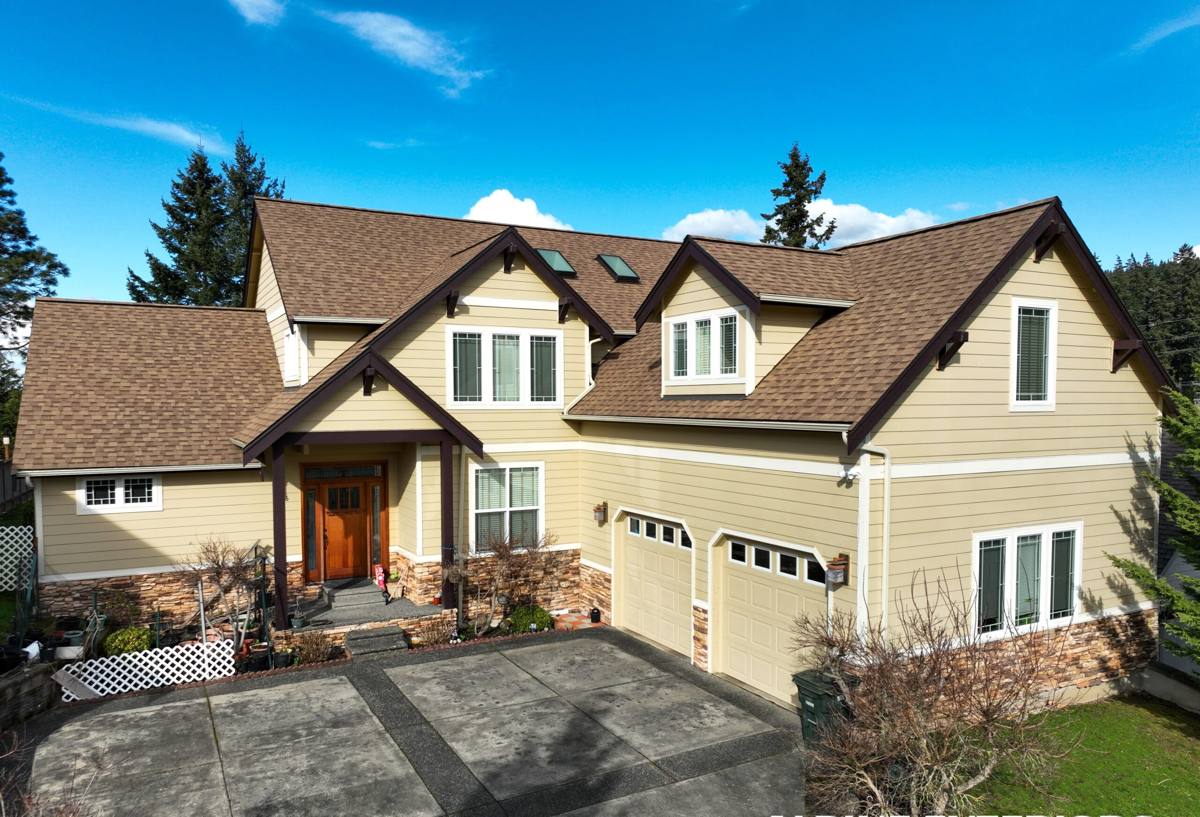
What the Local Climate Actually Does to Siding
Salt Air
Proximity to open water means airborne salt settles on exterior surfaces year-round, not just during storms. Salt is hygroscopic — it pulls moisture out of the air and holds it against whatever it lands on. On siding, that means fasteners corrode faster, paint film breaks down sooner, and any exposed raw wood edge stays damp longer than it would a few miles inland. It's also why fastener choice matters as much as the siding material itself — corrosion-resistant fasteners rated for the exposure are not a place to cut corners on a home with any coastal influence.
Driving Rain
Whatcom County storms rarely arrive as gentle, straight-down rain. Wind pushes it sideways into wall assemblies, which puts real stress on every seam, joint, and piece of trim. A siding system that isn't detailed correctly at those transition points — window heads, corner boards, the bottom edge near grade — will eventually let water behind the cladding, and once water gets behind siding, the damage happens where you can't see it until it's expensive.
A Long Moss Season
Shade, moisture, and mild temperatures add up to a moss and algae season that runs a good part of the year in this part of the state. North-facing walls and anything under mature tree cover stay damp longer between dry spells. Porous or absorptive siding materials hold that moisture and give moss and mildew something to grow on; dense, engineered siding sheds it instead.
Signs an Edgemoor Home Is Due for Siding Replacement
Not every siding problem means a full replacement — but these are the signs we take seriously when we're evaluating a home in this area:
- Soft or spongy spots when you press on the siding, especially near the bottom courses or below windows
- Paint that's peeling, bubbling, or needing repainting far more often than it used to
- Persistent moss or dark streaking that comes back within a season or two of cleaning
- Visible cupping, warping, or delamination of panels or lap boards
- Gaps opening up at seams, corners, or trim that weren't there when the siding was new
- Rising energy bills alongside drafts you can feel near exterior walls
- A siding material nearing or past the point where the manufacturer stops backing it
If you're seeing two or more of these, it's worth having someone look at the wall assembly itself, not just the visible siding — the surface is often the last thing to show a problem that's already been developing underneath.
What a Correct Siding Replacement Involves
It Starts With What's Behind the Siding, Not the Siding Itself
A siding replacement is only as good as what's underneath it. A proper job means the old siding comes off, the sheathing gets inspected for rot or water damage, and any compromised wood gets replaced before anything new goes up. Skipping this step to save time is the single most common reason a "new" siding job fails early — you can put the best cladding in the world over a wet, rotting wall and it will still fail.
Water Management Details
Given how much sideways rain this area sees, the water-resistive barrier, flashing at every window and door, and proper drainage behind the siding matter as much as the siding itself. Correct lapping — every layer overlapping the one below it so water is always directed outward and down — is not optional at any of these transitions.
Drainage Gap
On a home exposed to this much wind-driven rain, a drainage gap or rainscreen between the water-resistive barrier and the back of the siding gives any moisture that does get past the outer layer a path to drain and dry out instead of sitting against the sheathing. It's an extra step some crews skip to save labor time, and it's one we don't skip on homes in this area.
Fastening and Clearances
Siding needs to be fastened to the manufacturer's specification, not "close enough." It also needs proper clearance from grade, roofing, and decks so that water and debris don't sit against the bottom edge. This is a common shortcut on lower-bid jobs and one of the first things that fails in a climate like this one.
Practical Checklist for a Proper Siding Replacement
- Full tear-off, not an over-clad of the existing siding
- Sheathing inspected and repaired before new material goes on
- New water-resistive barrier installed correctly, lapped shingle-style
- Flashing at every window, door, and roof-to-wall transition
- Manufacturer-specified fastening pattern and fastener type
- Correct clearance from grade, decks, and roof lines
- Factory-finished siding installed with the manufacturer's touch-up and caulk system
Why We Install Only James Hardie Fiber Cement
We made a decision a long time ago to install one siding system on the homes we work on: James Hardie fiber cement. We don't install vinyl, LP SmartSide, Cemplank, Allura, primed spruce, or cedar, and we're upfront with homeowners about why.
Fiber cement is non-combustible and doesn't absorb moisture the way wood-based or wood-fiber products do, which matters directly in a climate with a long wet season and heavy moss pressure. Hardie's ColorPlus factory finish is baked on under controlled conditions rather than applied on-site or left to a homeowner's future repaint schedule, and it's engineered specifically to hold up against UV and moisture cycling — the exact combination this coastline produces. Hardie also builds region-specific HZ product lines, which means the product itself is engineered for climates like ours rather than a one-size-fits-all approach. Combined with a strong, transferable manufacturer warranty and a long track record when installed to spec, it's the product we're willing to put our name behind. If you're comparing it to other siding materials, we're glad to walk through the honest trade-offs of each — that's a conversation we have often, and it's covered in more depth elsewhere on our site.
How Our Process Works
1. On-Site Assessment
We walk the exterior with you, check the condition of the existing siding and, where accessible, the wall assembly behind it, and talk through what we're seeing before anything is proposed.
2. A Straightforward Estimate
You get a written scope and price — what's being torn off, what's being replaced underneath if needed, and exactly which Hardie product and color are being installed. No vague allowances.
3. Tear-Off and Repair
Old siding comes off, sheathing gets inspected, and any rot or damage is repaired before we move forward. We'll show you what we find.
4. Installation to Manufacturer Spec
Water-resistive barrier, flashing, and the Hardie siding itself go on following the manufacturer's installation requirements — not a shortcut version of them.
5. Final Walkthrough
We go over the finished job with you, including care and maintenance specific to a home in this climate.
Cost Factors for a Siding Replacement in This Area
Every home is different, but these are the variables that most often move the price on a project like this one:
| Factor | Why It Matters Here |
|---|---|
| Extent of sheathing repair | Homes with long-standing moisture exposure from salt air or driving rain sometimes need more sheathing replaced before new siding can go on |
| Home size and wall complexity | Dormers, multiple gables, and cut-up wall lines take more time to flash and trim correctly |
| Siding profile and accessories | Lap width, panel style, and trim details affect material cost and install time |
| Access and site conditions | Sloped lots, mature landscaping, and tight side yards common in established neighborhoods can affect staging and labor |
| Existing paint or coating removal | Older painted wood siding sometimes requires extra prep or disposal steps |
We don't quote in vague ranges without seeing the home — the factors above are why two houses of similar size can end up with different numbers, and why an accurate quote requires a walk-through rather than a phone estimate.
Why It Matters That We Already Work in This Area
A crew that already works around Sudden Valley and the surrounding Whatcom County neighborhoods knows what this climate does to a wall assembly before they even pull the old siding off. That's not a small thing — it changes where we expect to find hidden moisture damage, how we detail flashing on a bay-facing wall versus a sheltered one, and which maintenance habits actually make a difference here versus what's generic advice written for a different climate. A crew that's only occasionally out this way is learning those lessons on your house. We'd rather already know them, and we'd rather you not pay for that learning curve.
Ready to Talk About Your Home
If your siding is showing its age or you're just planning ahead, we're happy to come take a look and give you a straight answer about what your home needs — no pressure, no pushy sales pitch. Request a free estimate below and we'll walk the exterior with you and talk through what we find.