 Sudden Valley Siding
 Siding Repair in Geneva: Built for This Climate, Not a Generic One
Geneva sits in one of the more demanding pockets of Whatcom County for exterior materials. Homes here deal with a long, wet fall-through-spring stretch, driving rain off the lake and surrounding hills, salt-laden air moving in from the Sound, and shaded, tree-covered lots that stay damp longer than open ground. That combination is hard on siding in ways that a generic "siding repair" checklist doesn't cover. A crack that would dry out and sit quietly in a dry climate becomes an entry point for months of moisture here. A stain that looks cosmetic in July can be the first visible sign of a rot problem that started behind the panel a year earlier.
This page is specifically about siding repair for homes in and around Geneva — what tends to fail here, what a correct repair actually requires given the local weather, and how we approach the work differently than a patch-and-go visit.
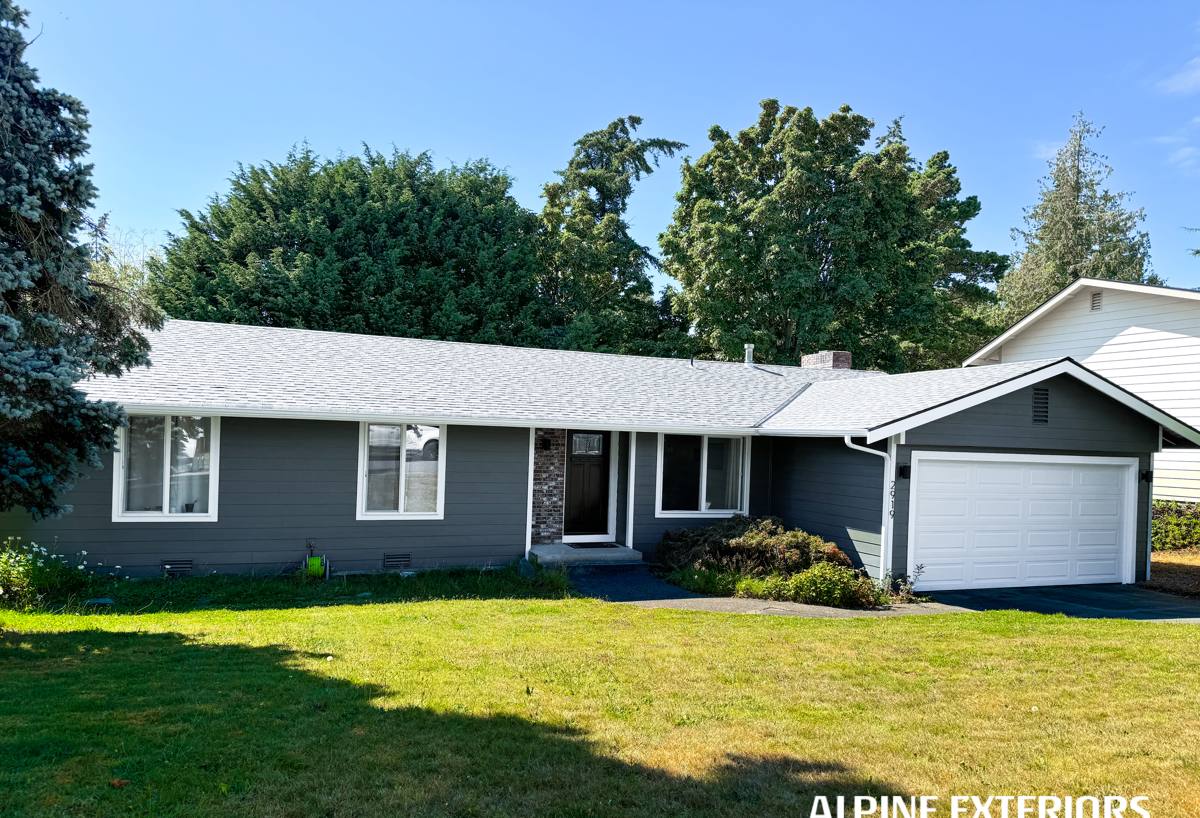
What Geneva's Climate Actually Does to Siding
Salt Air and Metal Fasteners
Homes closer to the water pick up airborne salt that accelerates corrosion on exposed nails, staples, and trim fasteners. Once fasteners start to rust and lose their grip, panels loosen, gaps open behind trim, and water gets a path in that wasn't there when the siding was installed.
Driving Rain and Wind-Driven Moisture
Rain that comes in sideways, rather than straight down, finds every gap in a siding system — lap joints, butt seams, window and door trim, and anywhere caulk has shrunk or pulled away. Standard installation details that work fine in calmer conditions can underperform on exposed elevations facing prevailing wind and rain.
Moss, Algae, and Shade
Whatcom County's moss season runs long, and many Geneva lots sit under heavy tree canopy or close enough to the lake that surfaces stay damp for extended stretches. Moss and algae hold moisture against the siding surface far longer than open sun-exposed walls would ever see, which is exactly the condition that lets water intrusion turn into rot rather than just drying out on its own.
None of this means Geneva homes are doomed to constant repairs. It means the repair has to account for what's actually happening in this climate, not just cover the visible symptom.
Common Siding Problems We Find in Geneva Homes
- Soft or crumbling panels near ground level, deck ledgers, or downspout discharge points, usually from long-term moisture exposure rather than a single event.
- Cracked or delaminating panels on older engineered wood or laminate-style sidings, often worst on south- and west-facing walls that see the most weather.
- Failed caulking at trim joints, window returns, and butt seams, letting water track behind the siding instead of shedding off it.
- Moss and algae staining on shaded walls and roof-adjacent siding, which traps moisture even after the growth itself is cleaned off.
- Warped or buckled sections from moisture absorption and swelling in materials not rated for sustained wet exposure.
- Impact damage from storm debris, ladders, or landscaping equipment, usually isolated but worth checking for hidden moisture underneath.
- Rusted or backed-out fasteners that have loosened panels without any obvious visible crack.
What a Correct Repair Actually Involves
The biggest mistake in siding repair isn't skill — it's stopping at the visible damage. A panel that looks like an isolated crack can be sitting over a section of water-softened sheathing or a compromised weather-resistive barrier that will keep causing problems until it's addressed.
Diagnosis Before Anything Gets Replaced
A proper repair starts by understanding why the damage happened, not just where. That means checking the flashing above windows and doors, looking at how water sheds off trim and butt joints, and probing surrounding material for softness or moisture readings before deciding how far the repair needs to extend.
Matching the Existing System, or Replacing It With Something Better
If the surrounding siding is sound, a repair should tie into it cleanly — matching profile, exposure, and finish so the fix doesn't stand out or create a new water path at the transition. If the surrounding material is the underlying reason for the failure (chronic moisture absorption, delamination, or a product simply not suited to this exposure), patching it back in isn't a real fix — it's a delay.
Sealing Details That Actually Shed Water
Caulk and sealant are a last line of defense, not the primary defense. A correct repair relies first on proper flashing, lap sequencing, and drainage, with sealant used where it belongs rather than as a substitute for good detailing.
Why We Repair — and Rebuild — With James Hardie Fiber Cement
We install and repair exclusively with James Hardie fiber cement siding. That's a deliberate standard, not a limitation, and it matters most exactly in conditions like Geneva's. Fiber cement doesn't absorb and swell with moisture the way wood-based products can, it's non-combustible, and Hardie's ColorPlus factory finish is engineered to hold up against the kind of sustained damp exposure this area sees without the recoating cycle that field-painted materials need.
When we're called out to repair a section of existing siding that isn't Hardie, we'll always be straight with you about what we're seeing. Sometimes a small, isolated repair on a non-Hardie product is a reasonable short-term fix. But if the damage points to a broader moisture or material issue, we'll tell you that honestly rather than patching over it — and if a full section or elevation needs to come off, what goes back up is Hardie, matched to the existing ColorPlus color line wherever possible so the repair blends with the rest of the home.
Why This Matters for Repairs Specifically
A repair is only as good as its weakest material. Tying a new patch into a system that's already struggling with this climate just relocates the next failure a few feet over. Rebuilding damaged sections in fiber cement gives that portion of the wall the same moisture resistance and finish durability as a full Hardie installation, even if the rest of the home isn't there yet.
Our Geneva Siding Repair Process
- On-site inspection. We look at the damaged area and the surrounding wall assembly, not just the spot you called about.
- Moisture and cause diagnosis. We check flashing, fastener condition, caulk joints, and underlying sheathing to find the actual source of the problem.
- Scope and options. We explain what's driving the damage, what a targeted repair covers, and when a larger section replacement is the more honest recommendation.
- Repair or rebuild. Damaged material comes out, any compromised sheathing or barrier gets addressed, and new James Hardie siding goes in with correct flashing and fastening for this climate.
- Color and finish match. We match ColorPlus finishes as closely as possible so repaired sections blend into the existing siding.
- Final walkthrough. We check the repair with you before we consider the job done.
Repair or Replace? How We Help You Decide
Not every problem calls for a full re-side, and not every problem should be treated as a quick patch. The table below covers how we typically think through it.
| Situation | Likely Cause | Typical Approach |
|---|---|---|
| Isolated crack or impact damage, surrounding siding sound | Physical impact, single event | Targeted panel repair or replacement |
| Soft siding near grade or downspouts | Long-term splashback or drainage issue | Section replacement plus a drainage fix so it doesn't recur |
| Recurring rot at multiple trim and window locations | Systemic flashing or moisture-barrier failure | Broader inspection; often points to larger repair or re-side |
| Heavy moss/algae staining without soft material underneath | Shade, moisture retention, surface growth | Cleaning plus caulk and flashing check, not necessarily replacement |
| Widespread warping, delamination, or fastener failure across a wall | Material reaching the end of its service life in this climate | Full elevation or whole-house replacement |
Costs vary a lot depending on how much of the wall assembly is affected — a small, contained repair is a modest job, while a rebuild that involves compromised sheathing or a full elevation is a bigger scope. We'll walk the specifics with you and give you a clear, itemized picture before any work starts, rather than a one-size number.
Why Hiring a Crew That Already Works in Geneva Matters
Siding repair done well depends on understanding the specific exposure of the wall you're standing in front of — which direction it faces relative to prevailing wind and rain, how much shade and moisture retention it deals with, and what that means for how the original installation was likely to fail. A crew that regularly works homes around Geneva and the broader Sudden Valley area has already seen how these conditions play out on real walls, not just in general terms. That local pattern recognition is what separates a repair that lasts from one that reopens in a year.
It also matters for response time and follow-through. Storm and moisture damage doesn't wait for a convenient schedule, and a crew already working in the area can typically get eyes on a problem faster than one coming from farther out.
A Simple Checklist Before You Call Anyone Out
- Note where the damage is (elevation, height, proximity to a downspout, window, or trim joint).
- Check if the area feels soft or spongy when pressed gently — that's a sign of moisture, not just cosmetic damage.
- Look at nearby caulk joints for cracking, gaps, or separation.
- Note whether the area gets heavy shade, tree drip, or standing moisture longer than the rest of the house.
- Take a photo before any cleaning, so your contractor can see the damage in its original state.
- Ask whether the recommended fix addresses the cause, not just the visible symptom.
Maintaining Your Siding After a Repair
A good repair should reduce your maintenance burden, not add to it. Once the work is done, a few simple habits go a long way in this climate:
- Rinse siding periodically to keep moss and algae from re-establishing, especially on shaded walls.
- Keep gutters and downspouts clear so water is directed away from siding rather than running down the wall.
- Trim back vegetation that keeps a wall section damp or blocks airflow and sun.
- Do a quick visual check after major storms for loose trim, new gaps, or fresh staining.
- Address small caulk failures early, before they turn into a moisture problem behind the panel.
If you're dealing with damaged, soft, or stained siding on a Geneva home, we're happy to take a look and tell you honestly what's going on and what it would take to fix it right. Reach out for a free, no-pressure estimate — there's a form right below to get started.