 Sudden Valley Siding
 Why Lake Whatcom Roofs Wear Differently
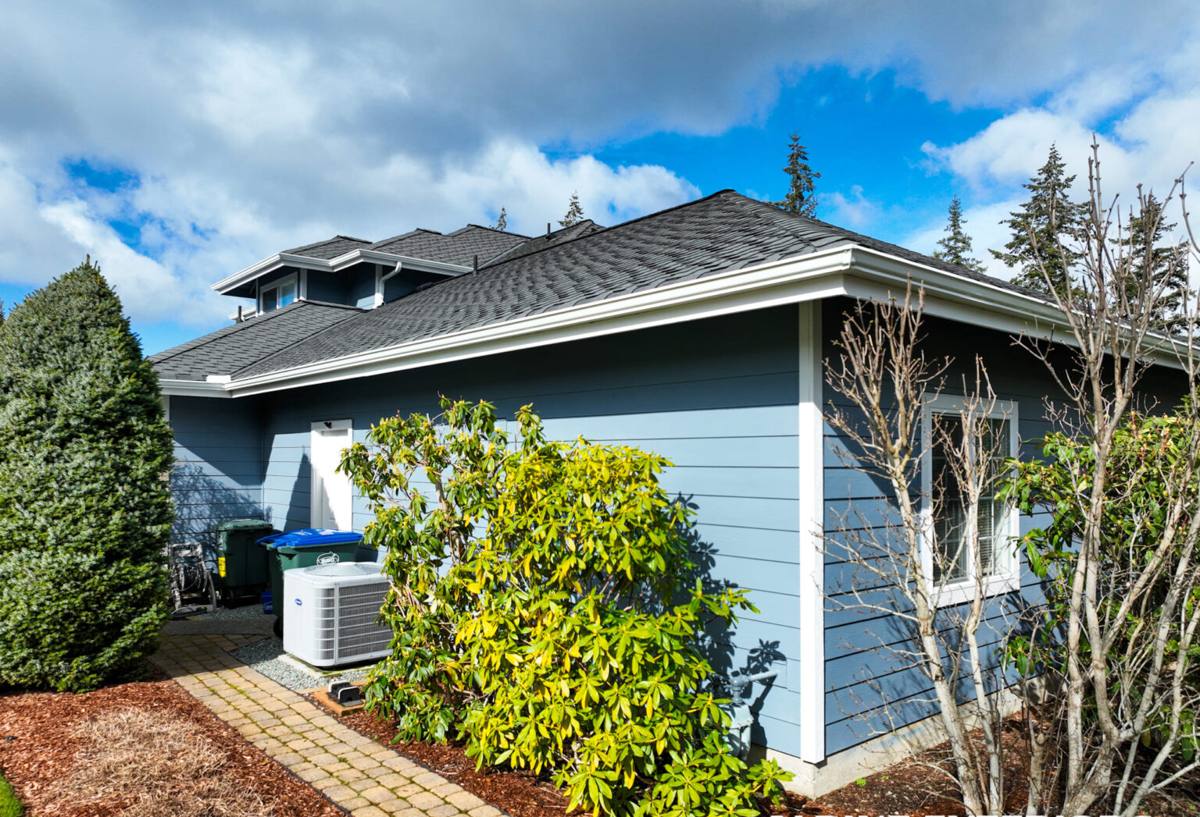
A roof on a Lake Whatcom property in Sudden Valley doesn't age the same way a roof does thirty miles inland. The combination that defines this stretch of Whatcom County — moisture off the lake, driving rain pushed in from Pacific storm systems, and salt-tinged marine air drifting in from the Bellingham Bay side of the county — works on shingles and flashing in ways that manufacturers' standard warranties don't always account for. Add in tree cover around much of the lake basin, and you get a roof climate that's shadier, damper, and slower to dry out after a storm than a roof in an open, sunnier part of the county.
None of that means Lake Whatcom homes need exotic materials or special engineering. It means the details — ventilation, fastener choice, underlayment, flashing at valleys and penetrations — have to be handled correctly the first time, because a roof here has less margin for shortcuts than a roof in a drier climate.
The Three Forces Working Against Your Roof
Driving Rain
Whatcom County storms don't always fall straight down. Wind-driven rain off the water can push moisture sideways under shingle tabs, around chimney flashing, and into any gap in a roof's underlayment. A roof built for a calmer climate — with minimal underlayment or loosely sealed penetrations — will eventually let water in at exactly those weak points.
Moss and Sustained Moisture
Shade from surrounding trees and long stretches of overcast, damp weather give moss a real head start on Lake Whatcom roofs. Moss isn't just cosmetic — its root structure lifts shingle edges, holds water against the roof deck, and accelerates granule loss. Once moss gets established, the moisture-holding problem compounds year over year unless it's addressed as part of the roofing system, not just scraped off the surface.
Marine and Salt-Influenced Air
Homes closer to the water side of Whatcom County pick up airborne salt and moisture that accelerates corrosion on exposed metal — nail heads, flashing seams, gutter fasteners, and vent stacks. Standard hardware that would last decades in a dry inland climate can start showing rust streaks and weak points years sooner here.
Signs a Lake Whatcom Roof Needs Replacement — Not Just Repair
Not every roof problem calls for a full replacement, but ignoring the wrong signs on a lake-adjacent roof usually costs more in the long run. Here's what tells us a roof has moved past the point where patching makes sense:
- Shingle granules collecting in gutters or at downspout outlets, especially after a heavy rain
- Moss growth that returns within a season of being cleaned, or moss on more than a third of the roof plane
- Soft or spongy spots underfoot on the roof deck, particularly near valleys or chimney flashing
- Daylight visible through the attic roof boards, or damp insulation after storms
- Curling, cupping, or cracked shingles, especially on north-facing or shaded slopes
- Rust staining or visible corrosion at flashing, vent boots, or exposed fasteners
- A roof age of 20+ years for asphalt shingle, even if it "looks fine" from the ground
- Repeated leak repairs at the same location over more than one season
If a roof shows two or more of these, a replacement usually costs less over five years than another round of patchwork.
What a Correct Roof Replacement Involves Here
A roof replacement done right for this climate is more than swapping old shingles for new ones. The parts that matter most on a Lake Whatcom home are the ones you can't see once the job is finished:
Tear-Off and Deck Inspection
Full removal of old roofing down to the deck, so any moisture-damaged or soft sheathing gets replaced rather than covered over. Roofing over a compromised deck is one of the most common shortcuts that leads to early failure in a wet climate.
Underlayment Built for Wind-Driven Rain
A synthetic or self-adhered underlayment rated for high-moisture climates, with extra ice-and-water shield membrane at eaves, valleys, and around every penetration — the spots where wind-driven rain finds its way in first.
Ventilation Correction
Balanced intake and exhaust ventilation so the attic can actually dry out between wet spells. Poor ventilation traps moisture against the underside of the deck, which shortens roof life and feeds mold and moss growth from below as well as above.
Corrosion-Resistant Flashing and Fasteners
Flashing and fasteners rated for the marine-influenced air common closer to Whatcom County's coastal side, so seams and nail heads don't become the first failure point in year five instead of year twenty.
Comparing Roofing Materials for a Lake Whatcom Property
| Material | How It Handles Rain & Moss | Maintenance Reality |
|---|---|---|
| Standard 3-tab asphalt shingle | Adequate but thinner profile sheds moss protection faster; more seams for wind-driven rain to test | Shortest lifespan in shaded, damp conditions; lowest upfront cost |
| Architectural (dimensional) asphalt shingle | Heavier mat and better sealant strips resist wind-driven rain and hold up longer under moss pressure | Best balance of cost and durability for most Lake Whatcom homes |
| Metal roofing (standing seam) | Sheds moisture fast and resists moss root establishment; requires marine-grade fasteners near the water | Higher upfront cost, very low ongoing maintenance, long service life |
| Cedar shake | Traditional look but holds moisture longer than other options in shaded, damp settings | Requires the most active moss and moisture maintenance of any option here |
We don't push cedar shake on shaded Lake Whatcom lots as a rule — not because it's a bad product, but because its moisture-retention behavior works against exactly the conditions this area produces. For most homes here, an architectural shingle rated for high-wind, high-moisture climates or a standing-seam metal system gives the best long-term value.
Our Roof Replacement Process
- On-site inspection. We walk the roof and attic, check the deck, ventilation, and flashing condition, and give you a straight answer on repair versus replacement.
- Written estimate. A clear scope and price before any work starts — no surprise line items added mid-job.
- Material selection. We walk through options suited to your home's exposure, tree cover, and budget, including trade-offs between shingle and metal.
- Tear-off and deck repair. Old roofing removed, deck inspected, and any soft or damaged sheathing replaced before anything new goes down.
- Underlayment and flashing installation. Moisture barrier and flashing installed to standards built for wind-driven rain, not just minimum code.
- Roofing installation. Shingles or metal panels installed with attention to nailing pattern, sealant strip activation, and ventilation components.
- Final walkthrough. We review the finished roof with you, including a plan for moss prevention and what to watch for going forward.
Cost Factors for a Lake Whatcom Roof Replacement
| Factor | Why It Moves the Price |
|---|---|
| Roof pitch and access | Steeper roofs and limited lake-side access add labor time and safety equipment needs |
| Deck condition | Rot or soft sheathing found during tear-off requires replacement before new roofing goes down |
| Material choice | Architectural shingle, metal, and cedar carry different material and labor costs |
| Ventilation upgrades | Adding or correcting intake/exhaust venting is worth the cost but adds to the scope |
| Tree cover and moss history | Heavier moss buildup can mean more deck inspection and cleanup time before installation |
| Roof size and number of penetrations | More valleys, chimneys, and vents mean more flashing detail work |
We'd rather walk your roof and give you real numbers than throw out a broad range that doesn't mean much for your specific property. What we can tell you honestly: a roof installed with the right underlayment, flashing, and ventilation for this climate almost always costs less over its lifetime than a cheaper roof that needs early repairs or a premature second replacement.
Moss Prevention Is Part of the Job, Not an Afterthought
A new roof on a shaded Lake Whatcom lot without a moss-prevention plan is a new roof that starts the same cycle over again. As part of a correct installation, we talk through options like zinc or copper strip installation near the ridge, which releases trace metal that inhibits moss growth as rain washes over it, along with a realistic maintenance schedule for cleaning and inspection given your specific tree cover. This isn't an upsell — it's the difference between a roof that looks good for two years and one that stays clean for the length of its warranty.
Why Hire a Crew That Already Works Lake Whatcom
Roofing crews that mostly work drier, more open parts of Whatcom County don't always think about ventilation balance, flashing corrosion resistance, or moss-specific detailing the same way a crew that works the lake basin every week does. Knowing which slopes on a Sudden Valley property hold moisture longest, how tree cover affects drying time after a storm, and which fastener and flashing choices actually hold up near the water isn't something you pick up from a spec sheet — it comes from doing the work here repeatedly. That local pattern recognition is what keeps a roof replacement from turning into a five-year callback.
After Installation: What Keeps a Lake Whatcom Roof Performing
- Clear debris and needles from valleys and gutters at least twice a year, more often under heavy tree cover
- Have moss growth addressed early rather than waiting for a visible mat to form
- Check attic ventilation isn't blocked by insulation, especially after any attic work
- Inspect flashing and fasteners for early rust or lifting after major storms
- Schedule a roof check every couple of years even without visible problems
If your roof is showing its age, or you just want an honest read on how much life it has left, we're glad to come out and take a look. The estimate is free, there's no pressure attached to it, and you'll get a straight answer either way — use the form below to get started.