 Sudden Valley Siding
 Building New in the Sudden Valley Area? Windows Are Not a Place to Cut Corners
If you're framing a new home in or around Alger, your window package is one of the few decisions that will either protect the house for the next thirty years or quietly cause problems you won't see until there's already damage behind the drywall. New-construction windows are installed differently than replacements — there's no existing frame to work around, which means the flashing, the water-resistive barrier integration, and the rough opening prep all have to be done right the first time. There's no "good enough" here, because once the siding and trim go on, that window opening is sealed for good.
We install new-construction windows on builds throughout the Sudden Valley area, including Alger, and we frame every job around the same reality: this part of Whatcom County gets a lot of moisture, a lot of wind-driven rain, and enough salt-laden air off the water that ordinary "big box" window specs don't hold up the way they do fifty miles inland.
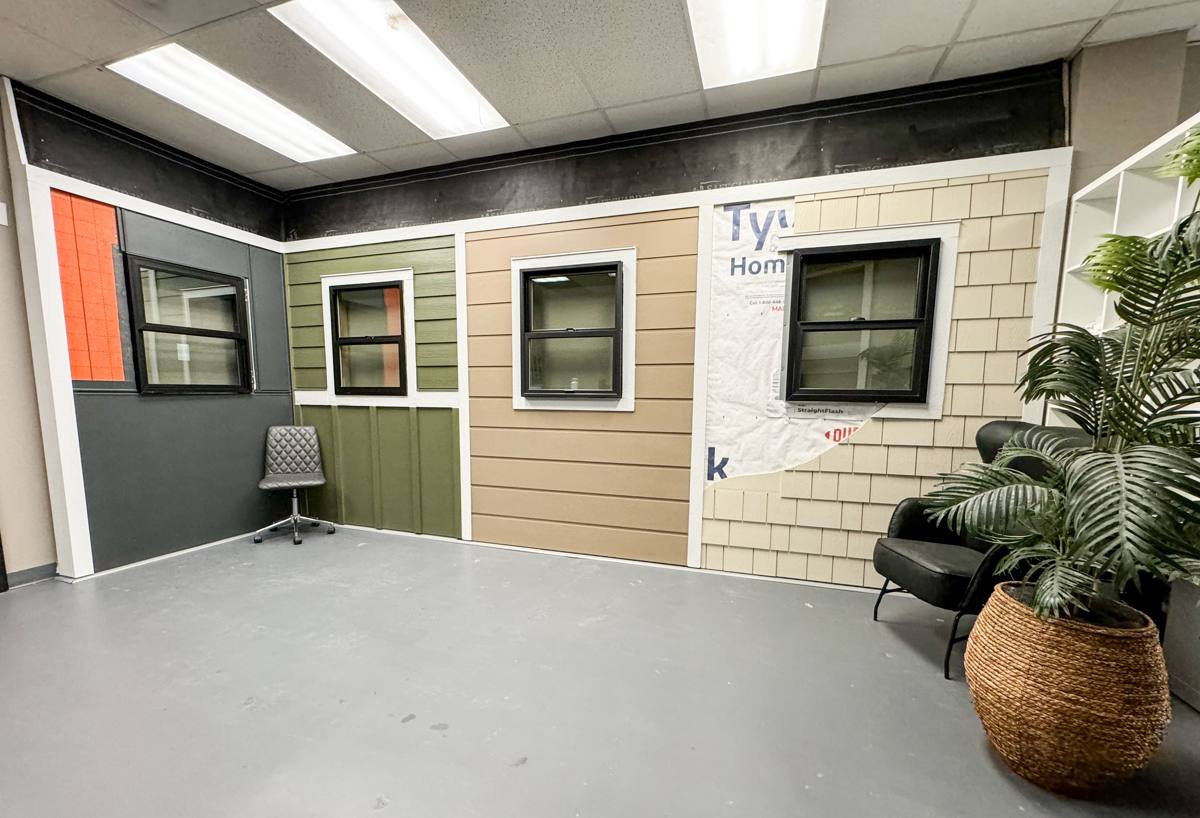
What This Climate Actually Does to a Window Opening
Salt Air and Corrosion
Homes closer to the water pick up airborne salt that settles on hardware, fasteners, and unprotected metal. Over years, that salt accelerates corrosion on cheap cladding, low-grade screws, and unfinished flashing metal. It's not dramatic — it's slow pitting and staining that eventually compromises a seal or a lock mechanism. The fix isn't exotic; it's choosing corrosion-resistant fasteners and flashing metals from day one instead of standard galvanized parts that weren't specified for a coastal-influenced microclimate.
Driving Rain
Whatcom County storms don't always come straight down — wind pushes rain sideways into wall assemblies, and a window opening is the weakest point in that wall. A new-construction install lets us build in a proper sill pan and layered flashing sequence before the window ever goes in, which is the single biggest defense against wind-driven rain finding its way behind the siding.
The Long Moss Season
Extended damp, shaded conditions here mean moss and algae get a long runway to establish themselves on anything that stays wet — sills, trim, and the tops of window heads especially. That's less about the window unit itself and more about how the surrounding trim and drainage details are detailed. A window head without a drip cap or kickout, or trim installed tight against the siding with no gap for water to escape, will stay damp longer and host moss and rot faster than one detailed for drainage.
What a Correct New-Construction Install Actually Involves
A lot of the quality in a window job is invisible once the house is finished. Here's what should happen behind the scenes on every opening:
- Rough openings framed square and to the exact dimension the window manufacturer specifies — not "close enough"
- A sloped sill pan flashing installed at every opening, so any water that gets past the window has somewhere to drain besides into the wall framing
- Water-resistive barrier (house wrap) integrated with the flashing in the correct shingle-lap order — head flashing goes over the WRB, sill flashing goes under it
- Window nailing fins sealed with a compatible flashing tape, not just caulk, at the sides and head
- Shims placed at structural load points, not just anywhere convenient, so the frame doesn't bow under fastening pressure
- Insulation (typically low-expansion foam) in the shim gaps to control both air leakage and condensation risk
- Exterior trim and drip caps detailed to shed water away from the wall, not channel it back toward the siding
Skip any one of these steps and the window may look fine and even pass a casual walkthrough — but the failure shows up two, five, or ten years later as staining, soft trim, or a moisture problem inside the wall that's expensive to trace and repair.
Choosing a Window Line for Alger's Conditions
Frame material matters more here than in a drier climate, because the frame is what's absorbing constant humidity swings, rain exposure, and (closer to the water) salt air. There's no single "best" option — it's a trade-off between upfront cost, maintenance, and how the material behaves over decades in this kind of weather.
| Frame Material | How It Handles This Climate | Maintenance | Relative Cost |
|---|---|---|---|
| Vinyl | Good moisture resistance, won't rot or corrode; can flex slightly in temperature swings | Low — occasional cleaning | Lowest |
| Fiberglass | Very stable in wet/humid cycles, minimal expansion or contraction, holds paint well if desired | Low | Mid-to-high |
| Wood-clad (exterior clad, wood interior) | Interior warmth with a protective exterior shell, but cladding seams and end cuts need correct sealing to keep moisture out | Moderate — watch cladding joints over time | High |
| Aluminum | Strong and slim sightlines, but conducts cold and can be prone to condensation; needs a thermal break for this climate | Low, but corrosion protection matters near salt air | Mid-to-high |
For most new builds in the Sudden Valley and Alger area, we steer homeowners toward vinyl or fiberglass for the bulk of the house, reserving wood-clad for feature windows where the interior look matters most and the homeowner understands the added upkeep. That's a professional judgment call based on decades of regional moisture exposure, not a knock on any manufacturer — every material above can perform well when it's specified and installed correctly for the conditions it's going into.
Glass Package Considerations
Beyond the frame, the glass package affects both comfort and moisture management. A double-pane, low-E unit with an appropriate gas fill is standard for this region's temperature range. On walls that catch the most wind-driven rain or direct weather exposure, we'll sometimes recommend a slightly higher-performance glass package or additional weatherstripping detail — not because the base window is inadequate, but because that specific wall takes more abuse than the rest of the house.
Our Process for New-Construction Window Installs
- Plan review: We review the window schedule against the framing plan before the shell is even fully closed in, catching sizing or header issues while they're still cheap to fix.
- Rough opening verification: Every opening gets measured and checked for square before we order or install a single unit.
- Flashing and sill pan install: Sill pans and flashing sequencing go in per the manufacturer's instructions and best regional practice for wind-driven rain.
- Window setting: Units are set plumb, level, and square, shimmed at structural points, and fastened per manufacturer spec — not just "nailed off."
- Sealing and insulation: Shim gaps are insulated, and all penetrations are sealed with materials compatible with both the window and the WRB.
- Exterior trim and drainage detailing: Trim, drip caps, and any kickout flashing are installed to move water away from the opening, not toward it.
- Final walkthrough: We check operation, seals, and sightlines on every unit before we consider the job complete.
Why a Crew That Already Works This Area Matters
A window crew that mostly works drier inland markets will often build to a generic spec sheet. A crew that's worked Whatcom County builds — including homes around Sudden Valley and out toward Alger — already knows where wind-driven rain tends to hit hardest on a given orientation, how long moss season really runs, and which flashing details actually hold up rather than just meeting minimum code. That's the difference between a window install that looks right on installation day and one that's still performing correctly in year fifteen.
It also means fewer surprises during the build. We know the kind of weather windows here that make certain scheduling calls (like waiting out a stretch of driving rain before opening up a wall) worth the delay, rather than pushing through and risking water intrusion into fresh framing.
A Homeowner's Checklist for New-Construction Windows
Whether you're working with us or vetting any contractor for a new build in this area, these are the questions worth asking before window install day:
- Will sill pan flashing be installed at every opening, not just the ones facing the weather?
- What flashing tape and sealant products are being used, and are they rated compatible with the window manufacturer's warranty?
- Are fasteners and flashing metals corrosion-resistant, given proximity to salt air?
- Is the rough opening being verified square and to spec before the window arrives on site?
- Will exterior trim include drip caps or kickout flashing where water needs to be redirected?
- What's the manufacturer's warranty, and does it require a specific installation method to stay valid?
- How will the crew handle a sudden rain event mid-installation?
Living With New Windows in This Climate
Once the windows are in, upkeep is straightforward but shouldn't be ignored. Rinse accumulated salt film off exterior surfaces a couple of times a year if you're close to the water. Keep an eye on exterior trim and sills for early moss growth and clean it off before it holds moisture against the wood or cladding. Check weep holes (the small drainage openings along the bottom of the frame) periodically to make sure they're clear of debris, since a blocked weep hole defeats the drainage plane you paid to have built correctly in the first place.
If you're planning a new build in Alger or anywhere else around Sudden Valley and want a straight answer on window specs, flashing details, or what a correct install actually costs for your plans, we're glad to walk the drawings with you. Reach out for a free, no-pressure estimate using the form below.