 Sudden Valley Siding
 Energy-Efficient Windows in Acme: A Local Job, Not a Catalog Order
Acme sits back in the timbered foothills of Whatcom County, along the Nooksack River corridor southeast of Bellingham, a quieter and more forested setting than the lake-shore neighborhoods closer to Sudden Valley. Homes out here deal with a slightly different mix than in-town properties: more tree cover, more shade on certain walls for most of the day, and the same marine-influenced weather system that pushes salt-tinged air, driving rain, and a long moss season across this whole stretch of the county. Windows are usually the first place that weather shows up as a comfort or energy problem, because a window is where a wall has the most seams, the most hardware, and the most opportunities for air and water to move where they shouldn't.
We're based out of Sudden Valley and have worked this part of Whatcom County long enough to know that "energy-efficient windows" isn't really about a sticker on the glass. It's about how the whole unit performs once it's actually sitting in a rough opening on an Acme property, exposed to this specific climate, for the next twenty or thirty years.
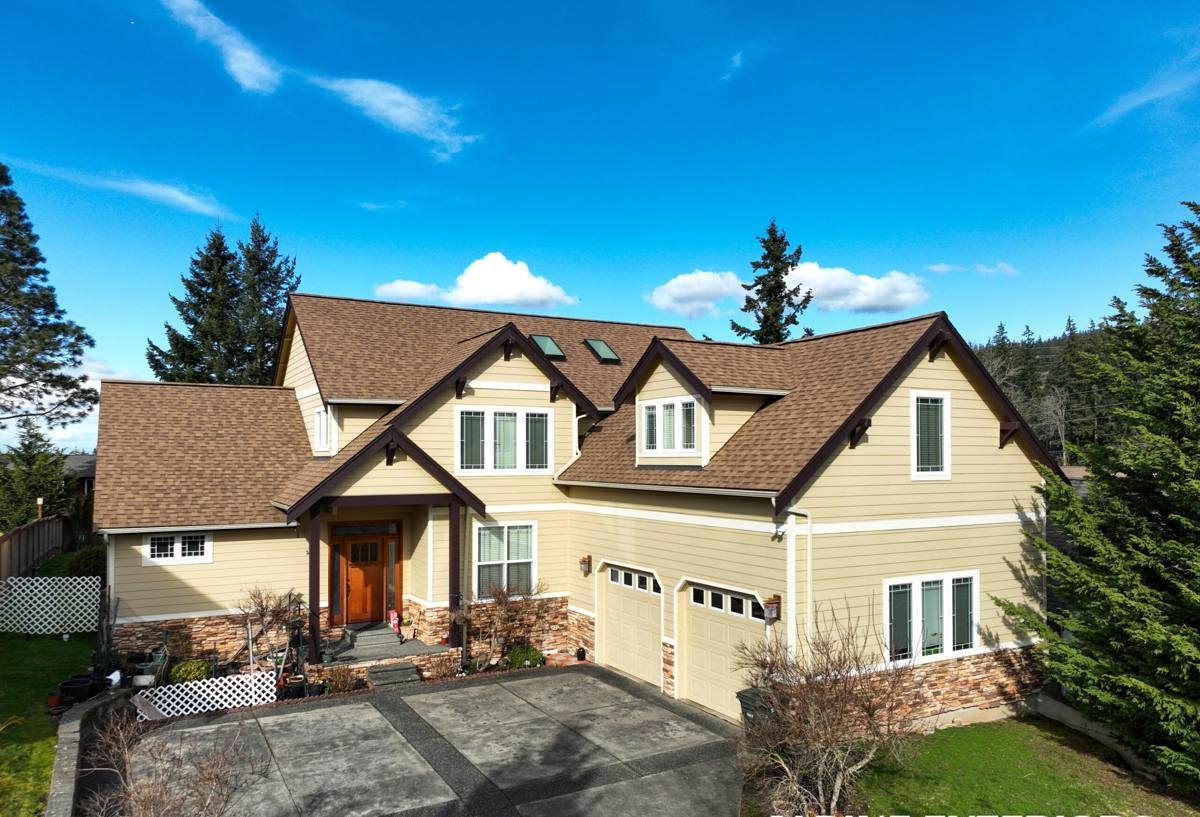
What Acme's Climate Actually Does to a Window's Performance
Driving Rain and Marine Air
Acme is inland enough that homes here aren't getting direct salt spray the way a waterfront lot might, but Whatcom County's marine weather systems still push salt-laden air and long stretches of driving rain up the river valley during fall and winter storms. That moisture load matters for windows in two ways: it stresses seals and weatherstripping over time, and it puts real pressure on flashing and frame joints during wind-driven events, when rain doesn't just fall — it gets pushed sideways into any gap that will take it.
Heavy Shade and a Long Moss Season
Many Acme lots carry significant tree cover, and a shaded wall or window doesn't get the same chance to dry out between storms that a sun-exposed elevation does. That's the exact condition moss and mildew need, and it's also the condition that lets a failing seal or a soft spot in window trim linger and get worse instead of drying out on its own. On energy performance specifically, a window that stays damp longer is also a window whose frame and glazing seals are working harder, longer, which shortens their useful life.
Temperature Swings Between a Warm Interior and a Cold, Wet Exterior
Whatcom County winters aren't extreme by national standards, but the gap between a heated interior and a damp, 40-degree exterior is enough to create real condensation pressure on glass and frames, especially on older single-pane or early double-pane windows. That condensation isn't just an annoyance on the sill — it's usually a sign that a window's insulating performance has degraded, and it's one of the clearest signs an Acme homeowner is losing heat (and money) through the window rather than the wall around it.
What "Energy-Efficient" Actually Means in a Window
The phrase gets used loosely, so it's worth being specific about what actually drives performance, because these are the numbers and features that matter more than any brand name on the label.
- U-factor: Measures how well a window resists heat flow. Lower is better — this is the number most directly tied to winter heating costs in a climate like ours.
- Solar Heat Gain Coefficient (SHGC): Measures how much solar heat passes through the glass. On a shaded Acme lot with limited direct sun, this matters less than it would on an open, south-facing property elsewhere in the county.
- Low-E coatings: A microscopically thin coating that reflects heat back into the room in winter and helps control solar gain in summer, without noticeably changing how clear the glass looks.
- Gas fill: Argon or krypton gas between panes conducts heat more slowly than plain air, improving the insulating value of a double- or triple-pane unit.
- Frame material: Vinyl and fiberglass frames resist rot and don't conduct heat the way an uninsulated metal frame does, which matters given how much moisture this climate carries.
We install vinyl and fiberglass window systems built for the Pacific Northwest's wet, mild climate, and we walk homeowners through real trade-offs rather than steering everyone toward one specific brand. What actually determines how a window performs on an Acme property is the combination of a tight, well-built frame, a glazing package suited to a shaded, damp lot, and installation that ties correctly into the surrounding wall — not a name printed on the spacer bar.
Double-Pane vs. Triple-Pane for This Climate
Triple-pane windows offer a real efficiency edge, but the gap between a good double-pane, low-E, argon-filled window and a triple-pane unit is smaller here than it would be in a much colder climate with harsher winters. For most Acme homes, we find a quality double-pane package delivers strong performance for the money, and triple-pane makes the most sense on north-facing or heavily shaded walls where a home loses the most heat, or for homeowners specifically prioritizing noise reduction and maximum comfort over the lowest upfront cost.
Signs an Acme Home Is Losing Energy Through Its Windows
- Noticeable drafts or cold spots near window frames even when the window is fully latched
- Fogging or visible moisture trapped between the panes of a double-pane window
- Interior condensation or water pooling on sills during cold, damp stretches
- Rooms near older windows that are harder to keep warm than the rest of the house
- Window frames or sashes that feel cold to the touch relative to the surrounding wall
- A heating bill that's climbed noticeably without a corresponding change in usage
- Visible gaps, warping, or difficulty latching a window that used to close snugly
What Drives the Cost of an Energy-Efficient Window Project
There's no single number that applies to every Acme home — window count, opening size, and the condition of the existing wall assembly all move the price. The factors below are the ones that actually shift a quote up or down.
| Factor | Lower Cost Impact | Higher Cost Impact |
|---|---|---|
| Frame material | Standard vinyl | Fiberglass or composite frames |
| Glazing package | Double-pane, low-E, argon-filled | Triple-pane, specialty coatings |
| Installation type | Insert (into existing frame) | Full-frame replacement with new flashing |
| Existing wall condition | Sound framing, no hidden rot | Water-damaged framing needing repair before install |
| Window size and shape | Standard rectangular openings | Custom shapes, oversized, or specialty grids |
| Number of windows | Whole-house projects (per-unit savings) | Single or small-batch replacements |
As a broad rule, quality vinyl replacement windows for a typical home run from a few hundred to well over a thousand dollars per opening depending on size and glazing package, with full-frame replacements and repairs to damaged framing pushing costs higher. We give homeowners an exact number after seeing the actual openings, not a phone estimate — too much of that range depends on what's found once a window is out of the wall.
Insert vs. Full-Frame Replacement: How We Make the Call
An insert replacement fits a new window into the existing, sound frame and is faster and less invasive. A full-frame replacement removes everything down to the rough opening, including flashing, and is the right call when the existing frame is damaged, rotted, or wasn't flashed correctly to begin with — which we see more often on older Acme homes that have spent decades under heavy tree cover without much sun to dry out mistakes made during the original build.
How We Assess Which One a Window Needs
We check the condition of the existing frame and sill for soft spots or rot, look at how the current flashing integrates with the siding, and confirm the opening is still square and structurally sound. If all of that checks out, an insert is often the more cost-effective, less disruptive option. If it doesn't, we recommend full-frame replacement and explain exactly why — not as an upsell, but because installing a new window into a compromised opening just repeats the same problem in a few years.
Flashing and Installation: The Part That Actually Determines Long-Term Performance
A high-efficiency window installed with poor flashing will leak and lose performance faster than a modest window installed correctly. That's true everywhere, but it matters more on a shaded, moisture-retentive Acme lot, where a wall assembly that gets wet doesn't dry out quickly. Correct installation means flashing that laps properly with the surrounding weather-resistive barrier and siding, water directed out and away from the rough opening instead of trapped behind it, and every seam sealed with materials rated for sustained moisture exposure — not caulk used as a substitute for real flashing. This is our standard installation practice on every window, not an upgrade homeowners have to request.
Why a Crew That Already Works Acme Matters
Acme isn't a dense in-town neighborhood — it's a spread-out, wooded stretch of Whatcom County, and lots here vary a lot in tree cover, drainage, and how much direct sun any given wall actually gets. A crew that already works this area knows to check for the wet-framing problems that show up more often on shaded elevations, understands how driving rain off winter storms behaves differently on an exposed wall versus a tucked-back one, and isn't guessing at what "typical" looks like for a property out here. That local pattern recognition is what keeps a window job from becoming a callback two winters later.
A Simple Checklist Before Hiring for Window Work in Acme
- Ask how they decide between insert and full-frame replacement, and what they check to make that call
- Confirm current Washington contractor licensing and active liability insurance
- Ask specifically how they handle flashing integration with the existing siding, not just which window brand they sell
- Ask whether they've worked on homes with significant shade or tree cover, and what they look for on those properties
- Get a written, itemized quote before signing anything — it should specify frame material, glazing package, and installation type
Our Process
We start with an on-site walk-through of every window being considered, checking frame and sill condition, existing flashing, and how much shade and moisture exposure each elevation actually sees — that varies more from wall to wall on a wooded Acme lot than it does on an open property. From there we put together a clear, itemized quote covering frame material, glazing, and installation type, so there's no guessing about what's included. On the install itself, we treat correct flashing and drainage detailing as standard practice for this climate, not an optional add-on, and we clean up and haul away the old units as part of the job.
If you're weighing window options for a home in Acme, or you're just not sure whether what you have needs repair, replacement, or nothing at all, we're happy to take a look and give an honest read. Reach out below for a free, no-pressure estimate.