 Sudden Valley Siding
 Edgemoor's Climate and What It Does to Siding
Homes around Edgemoor sit in one of the tougher exposure zones in Whatcom County. You get salt-laden air moving in off the water, long stretches of driving, wind-pushed rain rather than gentle vertical rainfall, and a moss season that can run most of the year in the shaded, tree-covered lots common to this part of the county. Any one of those conditions is manageable on its own. Together, they add up to a siding environment that punishes shortcuts.
Salt air accelerates corrosion on fasteners, flashing, and trim metal, and it also speeds up the breakdown of certain paint films and coatings. Driving rain doesn't just wet the surface of a wall — it gets pushed sideways and upward under laps, around trim, and into any gap that wasn't detailed correctly. And moss doesn't just sit on the roof; it colonizes north-facing and shaded wall sections, holding moisture against the siding surface for weeks at a time. A siding installation done to a generic standard, without accounting for these three factors specifically, tends to show problems years earlier than it should.
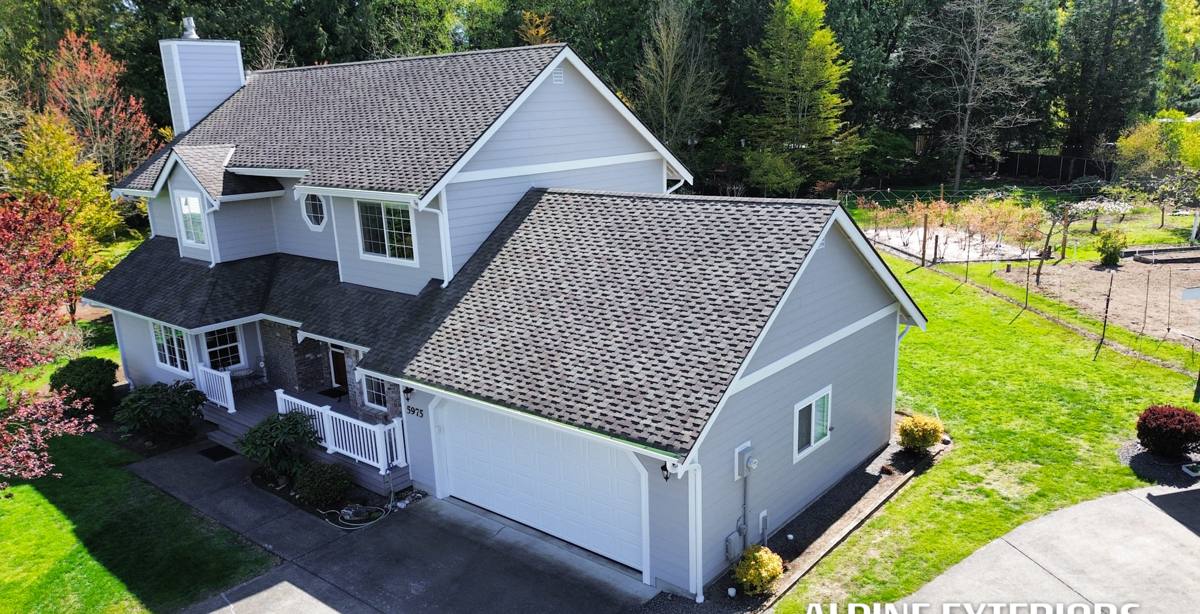
What a Correct Siding Installation Involves Here
"Correct" isn't just nailing panels to a wall in the right pattern. For an Edgemoor home, it means building a wall assembly that manages water at every layer, because the assumption has to be that some water will reach the wall — the goal is making sure it always has a way back out.
Weather-Resistive Barrier and Flashing
A continuous, properly lapped weather-resistive barrier goes on before any siding, with every seam, window, and door opening flashed so water sheds downward and outward, never into the wall cavity. In a driving-rain climate, the flashing details at window heads, deck ledgers, and roof-to-wall transitions matter as much as the siding itself — these are the spots where most long-term leaks actually start.
Clearance and Drainage Details
Siding needs a drainage gap or rainscreen behind it so water that does get past the outer surface can drain and the wall can dry. It also needs correct clearance above roof lines, decks, and grade — usually a minimum of an inch or two depending on the detail — so splash-back and standing moisture don't sit against the bottom edge of the panels. Skipping this clearance is one of the most common shortcuts we see on older re-sides in this area, and it's almost always where the rot starts.
Why We Install Only James Hardie Fiber Cement Siding
We standardized on James Hardie fiber cement and don't install vinyl, LP SmartSide, or other engineered wood or fiber cement alternatives. That's not a marketing position — it's a practical one, built around what actually holds up in this climate.
Fiber cement is non-combustible, which matters more every year as wildfire smoke and ember exposure become a regional concern even outside direct fire zones. It doesn't absorb and swell with moisture the way wood-based products can, which is a real advantage in a neighborhood with this much sustained dampness and shade. Hardie's ColorPlus factory finish is baked on under controlled conditions, so it holds color and resists the fading and chalking that field-applied paint is more prone to — especially under salt air exposure. And Hardie's HZ5 product line is engineered specifically for wet, freeze-thaw-adjacent climates like ours, with additives and manufacturing tolerances aimed at that exact combination of moisture and temperature swing.
The other piece is the warranty. Hardie backs its siding with a long, transferable warranty when it's installed to their published specifications — which is exactly why installation detail isn't optional for us. A warranty is only as good as the install underneath it.
Our Installation Process
- Site and wall assessment — we check existing sheathing condition, look for evidence of past moisture intrusion, and confirm what's actually under the current siding before quoting the job.
- Removal and substrate repair — old siding comes off, any soft or damaged sheathing gets replaced, and we don't cover over rot.
- Weather barrier and flashing installation — a continuous barrier goes on with correct laps, and every penetration and opening gets flashed before siding touches the wall.
- Furring or rainscreen setup — depending on the wall assembly, we build in a drainage gap so the wall can dry from behind, not just the front.
- Hardie panel, plank, or shingle installation — fastened and gapped to Hardie's spec, with attention to butt joints, corner details, and the clearances mentioned above.
- Trim, caulking, and touch-up — factory-finished ColorPlus product needs minimal field paint, but joints and cut edges get properly sealed and touched up per manufacturer guidance.
- Final walkthrough — we review the finished wall with the homeowner, including where the drainage and clearance details ended up, so there's a clear record of how the wall was built.
Cost Factors for an Edgemoor Siding Project
Every home is different, but the line items that move a quote up or down are consistent. Broad ranges depend heavily on square footage, wall complexity, and what's found once old siding comes off.
| Factor | Why It Matters Here |
|---|---|
| Sheathing condition | Long-term moisture and moss exposure can hide rot behind older siding; repair is priced once uncovered |
| Wall height and roofline complexity | More corners, valleys, and transitions mean more flashing detail and labor time |
| Product line and profile | Hardie plank, shingle, and panel products differ in material cost and install time |
| Drainage/rainscreen assembly | Adding a rainscreen where one doesn't exist adds material and labor but pays off in driving-rain exposure |
| Trim and accessory scope | Window and door trim, corner boards, and fascia detail work add to both material and labor |
| Access and site conditions | Tree cover, slope, and tight lot access — common around Edgemoor — can affect staging and labor time |
Moss, Mildew, and Long-Term Maintenance
Fiber cement doesn't feed mold or rot the way untreated wood products can, but moss and mildew will still grow on any surface that stays damp and shaded long enough — including Hardie siding. The difference is what happens underneath. On a correctly installed Hardie wall, surface growth is a cosmetic issue you can wash off. On a wall with poor drainage or clearance, sustained moss and moisture at the wall surface is a warning sign of what may be happening behind it.
- Keep vegetation and low branches trimmed back from siding to reduce shade and airflow blockage
- Rinse shaded, moss-prone wall sections once or twice a year, especially north-facing walls
- Check caulking at trim and joints annually — salt air and UV exposure break down sealants faster here than in drier inland climates
- Watch for staining or soft spots at the bottom courses near grade, decks, and roof-to-wall transitions
- Keep gutters and downspouts clear so roof runoff isn't dumping extra water onto wall sections
Common Problems We Find on Older Edgemoor Homes
When we're called out to look at an aging or failing siding job in this area, the same handful of issues show up repeatedly: siding installed with no clearance above the roofline or grade, missing or reversed flashing at window heads, caulk used as a substitute for proper flashing, and old fastener corrosion from salt exposure showing as rust streaking down the wall. None of these are unique to any one brand of siding — they're installation issues, and they're exactly what a detail-focused install is meant to prevent the second time around.
Why Local Experience in Edgemoor Matters
A crew that already works this part of Whatcom County isn't guessing at how much rain exposure a wall will see or which sides of a house need the most attention to moss and shade. We know that a west- or north-facing wall under tree cover needs different drainage treatment than a south-facing wall in the open, and we know the fastener and flashing corrosion patterns that show up near the water. That local pattern recognition shortens the assessment phase and reduces the chance of missing a problem that a generalist crew — accustomed to a drier climate elsewhere — might not think to check for.
What to Look for When Hiring
- Manufacturer-trained or certified installers for the specific siding product being used
- A written scope that specifically addresses weather barrier, flashing, and drainage details — not just "install siding"
- References or examples of work in similarly exposed, wet, or shaded properties
- Clear communication about what happens if rot or damage is found once old siding is removed
- A warranty explanation that covers both the manufacturer's product warranty and the contractor's workmanship warranty
If your Edgemoor home's siding is showing moss buildup, cracking, or soft spots, or you're just planning ahead for a replacement, we're happy to take a look and walk you through what we find. Fill out the form below for a free, no-pressure estimate.