 Sudden Valley Siding
 Deck Repair for Cordata Homes
Cordata sits close enough to the water and the lowland fog belt that decks here age differently than decks fifty miles inland. Homeowners call us about the same handful of problems every year: soft boards near the house, rot where a post meets a concrete footing, ledger boards pulling away from the siding, and a green film that never fully goes away no matter how often it's power washed. None of that is unusual for this part of Whatcom County — it's just what happens to wood and fasteners that sit outside through a Pacific Northwest wet season. The fix isn't complicated, but it has to be done in the right order, or you end up patching the same spot again in two years.
We're a Sudden Valley-based crew that already works this corridor regularly, so a Cordata deck repair call isn't a special trip for us — it's part of the normal week. That matters more than it sounds like, because a deck built or maintained by someone unfamiliar with local moisture patterns often gets treated like a dry-climate structure, which is exactly how small problems turn into full rebuilds.
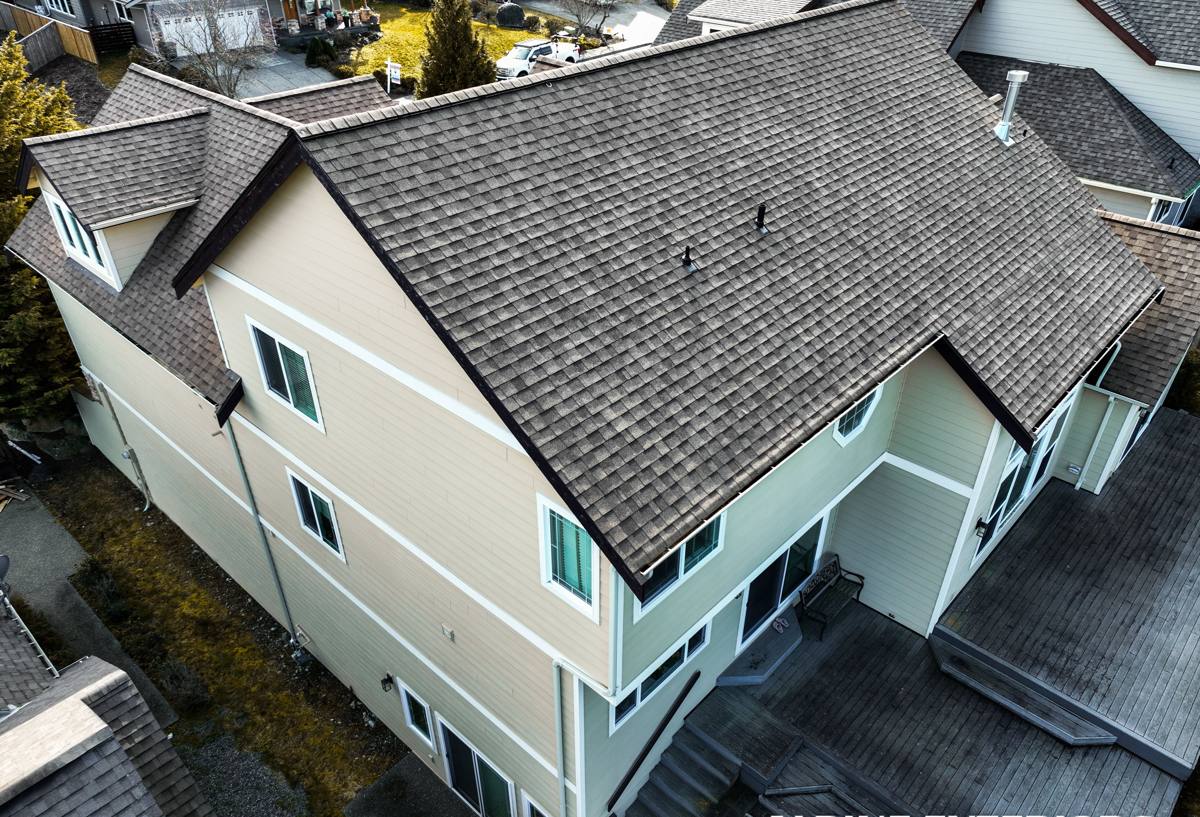
Why Decks Fail Faster Here Than People Expect
Salt Air and Corrosion
Cordata isn't right on the shoreline, but it's close enough that salt-laden air moves through on a regular basis, especially with onshore wind patterns. Salt air accelerates corrosion in fasteners, joist hangers, and any exposed metal hardware. A deck screw or bracket that would last two decades in a dry inland climate can start showing rust streaks and weakening within eight to twelve years out here. Once a fastener corrodes, it loses grip strength long before it looks obviously broken — that's the dangerous part.
Driving Rain and Water Intrusion
This region doesn't get gentle, straight-down rain most of the season — it gets wind-driven rain that pushes water sideways into joints, under flashing, and behind ledger boards. A deck attached to the house needs a ledger flashing detail that actually sheds that angled water, not just a flat cap that works fine in calmer climates. When that flashing is missing, undersized, or installed without proper slope, water tracks behind the board and rots the rim joist from the inside — often invisible until the deck feels spongy underfoot.
The Long Moss Season
Whatcom County's moss season runs long, often eight months or more on shaded or north-facing decks. Moss isn't just cosmetic. It holds moisture against the wood surface far longer than bare boards would, keeps the deck from drying between rain events, and creates a slick, slippery walking surface. Left alone, moss-covered boards stay damp enough, long enough, to start surface rot even on treated lumber.
What a Correct Deck Repair Actually Involves
A repair that's done right starts with figuring out how far the damage actually goes, not just patching what's visible from the top.
Assessment Before Any Board Comes Off
- Probe the ledger board, rim joist, and any post bases with an awl or screwdriver to find soft wood, not just visual staining
- Check joist hangers and structural fasteners for rust, pitting, or loosened connections
- Look at the ledger flashing detail where the deck meets the house siding — this is the single most common failure point we find
- Check post bases and footings for standing water, cracked concrete, or wood-to-concrete contact with no barrier
- Identify moss and algae coverage patterns to see which areas stay wet longest
The Repair Itself
Once we know what's actually failed, the work generally falls into a few categories: replacing individual boards that have gone soft or split, sistering or replacing joists where rot has compromised structural strength, correcting or adding proper ledger flashing, swapping corroded hardware for hardware rated for coastal/wet exposure, and resetting or repouring post footings where water has undermined them. We don't replace more than needs replacing, but we also don't patch around a rotted joist just to save a board — structural members get fixed properly or the repair isn't worth doing.
Our Process for a Cordata Deck Repair Call
- On-site inspection. We walk the deck, probe suspect areas, and check the substructure from underneath when access allows.
- Written scope and estimate. You get a clear breakdown of what's failing, what we recommend fixing now versus monitoring, and a price range before any work starts.
- Material selection. We talk through board and hardware options suited to this climate, not a generic national default.
- Repair work. Structural fixes first, then decking, then hardware and flashing details, then cleanup.
- Final walkthrough. We check fastener seating, board spacing for drainage, and flashing before we call it done.
Material Choices: What Holds Up and What Doesn't
There's no single "best" decking material for every situation — it depends on budget, how much of the structure is being replaced, and how much upkeep the homeowner wants to take on.
| Material | Moisture Behavior Here | Maintenance | Typical Trade-off |
|---|---|---|---|
| Pressure-treated lumber | Handles wet exposure well if properly sealed and re-sealed on schedule | Needs re-staining/sealing every 2-3 years in this climate | Lowest upfront cost, highest ongoing maintenance |
| Cedar | Naturally rot-resistant but still needs sealing against driving rain | Annual cleaning, periodic oiling | Good appearance, moderate cost, moderate upkeep |
| Composite decking | Doesn't rot, but poor-quality composite can trap moisture at fastener points if installed wrong | Occasional washing, no sealing | Higher upfront cost, lowest long-term maintenance |
| Structural framing (joists/ledger) | We generally recommend treated lumber rated for ground or wet contact regardless of decking choice above | Inspect every few years, especially at the ledger | This is not the place to cut cost |
Whatever surface material a homeowner chooses, we're firm on one thing: the structural framing underneath — joists, ledger, posts — needs to be rated for the moisture exposure this climate actually delivers, not the minimum spec that passes in a drier region. That's a standard we hold regardless of budget, because it's the part of the deck nobody sees until it fails.
Signs a Cordata Deck Needs Attention Now
- Boards that feel soft, spongy, or flex more than neighboring boards when you walk on them
- Visible gaps or movement where the deck attaches to the house
- Rust streaking below screws, brackets, or joist hangers
- Persistent moss or dark staining that returns within weeks of cleaning
- Railings or posts that wiggle more than they did a year ago
- A musty smell coming from underneath the deck
Any one of these on its own might be minor. Two or three together usually means the substructure needs a real look, not just a surface cleaning.
Why Local Experience on This Specific Job Matters
A deck repair crew that only sees a handful of jobs in Whatcom County a year tends to default to generic building-code minimums and move on. A crew that works Sudden Valley, Cordata, and the surrounding Bellingham-area neighborhoods regularly starts recognizing patterns fast — which orientations hold moss longest, which ledger details keep failing across different builders' work, which hardware brands are actually holding up in salt air versus which ones are showing early corrosion. That pattern recognition is what keeps a repair from becoming a repeat call two winters later.
We're not asking anyone to take that on faith. It shows up in the estimate itself — in which areas we flag for inspection that a less experienced crew might not think to check, and in the hardware and flashing recommendations we make without needing to explain the reasoning twice.
What Repairs Typically Cost
Every deck is different, so exact numbers depend on square footage, how much structural work is needed, and material choice. As a general guide: replacing a handful of surface boards and hardware is a modest, contained cost; ledger flashing correction and joist sistering adds more labor because it involves partial disassembly; and a deck with widespread substructure rot starts to approach the cost of a partial rebuild rather than a repair. We always give a firm written estimate after inspection — not a phone-quote guess — because guessing on a wet-climate deck repair almost always misses something.
Get an Honest Look at Your Deck
If your Cordata deck has soft spots, moss that won't quit, or hardware that's starting to rust, it's worth a real inspection before another wet season adds to the damage. We offer free, no-pressure estimates — just an honest look at what's actually going on and what it would take to fix it right. Use the form below to get a time on the calendar.