 Sudden Valley Siding
 Why Decks in Cordata Wear Out Faster Than You'd Expect
Cordata sits in the wetter, greener stretch of Whatcom County, and that's exactly the environment that's hardest on an outdoor deck. Long stretches of driving rain soak into end grain and fastener holes, moss and algae colonize any surface that stays damp for more than a day or two, and the shoulder seasons bring freeze-thaw cycles that work joints and connections loose. A deck built with the wrong materials, or built correctly but never sealed and maintained, can look fine on top while the framing underneath is quietly rotting away.
We see the same failure pattern on deck after deck in this area: the top decking looks worn but survivable, while the ledger board, joist ends, and post bases — the parts you can't see without getting underneath — are where the real damage lives. That's the part a simple board-by-board repair can't fix, and it's why replacement, done properly, means rebuilding from the structure up, not just swapping out old boards for new ones.
What Makes This Different From a Generic Repair
A repair patches what's visible. A proper deck replacement re-evaluates the whole structure: footings, posts, beams, joists, ledger attachment, flashing, and drainage, then rebuilds anything that's compromised before a single new board goes down. In a climate that stays damp for months at a stretch, skipping that step just means paying for new decking twice.
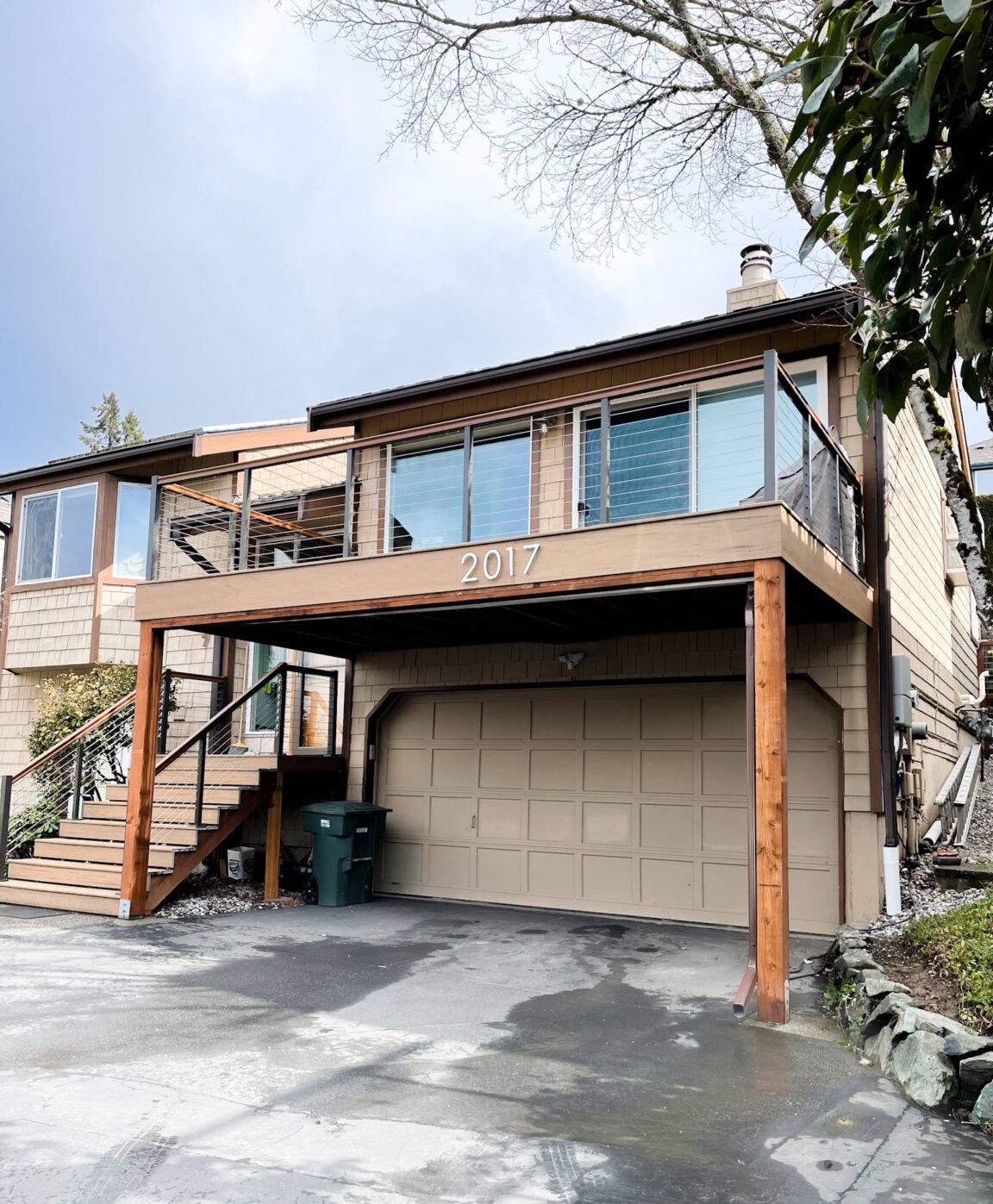
What a Correct Deck Replacement Involves
There's a right order of operations for a deck rebuild, and cutting corners on any one of these steps is where most premature failures start.
- Structural assessment first. Every post, beam, and joist gets checked for rot, insect damage, and undersizing before we plan the new deck around it.
- Ledger board and flashing. Where the deck attaches to the house is the single most common point of hidden rot in this climate. Proper flashing that sheds water away from the house sheathing is non-negotiable, not optional.
- Footings and post bases. Posts sitting directly on soil or undersized concrete pads settle and rot from the bottom up. Correct footings go below frost depth and keep wood off standing water.
- Joist spacing matched to decking material. Composite and PVC decking often need tighter joist spacing than solid wood to avoid sagging over time — a detail that gets missed when a crew installs composite over an old wood-spec frame.
- Fasteners rated for the decking. Mismatched fasteners cause staining, corrosion, and loosening long before the boards themselves wear out.
- Drainage underneath. Water needs somewhere to go. A deck built tight to grade or without a slight slope away from the house traps moisture underneath year-round.
Choosing Decking Material for a Cordata Climate
There's no single "best" decking material — there's a best material for how you use the deck, how much upkeep you're willing to do, and your budget. Here's how the common options actually perform in this region's rain and moss conditions.
| Material | Moisture Behavior | Maintenance | Typical Lifespan Here |
|---|---|---|---|
| Pressure-treated wood | Resists rot when sealed; end grain and cut edges are vulnerable | Annual cleaning and re-sealing recommended | 10–15 years with upkeep |
| Cedar | Naturally rot-resistant but softer; greys and can absorb moisture if unsealed | Periodic cleaning, oil or sealant every 1–2 years | 12–18 years with upkeep |
| Composite decking | Doesn't rot, but can trap moisture and grow surface moss/algae if not cleaned | Occasional wash; no sealing needed | 20–25+ years |
| PVC/capped composite | Best moisture resistance of the group; sheds water and resists staining | Low — occasional wash | 25+ years |
Composite and capped composite boards have become popular in this area precisely because they take the moss-and-moisture problem off the table for the decking surface itself. But the material only performs as advertised if the frame underneath is built to the manufacturer's spacing and ventilation specs — that's a detail that matters more here than in a dry climate, because a poorly ventilated frame under composite decking stays wet longer and can still rot even though the boards on top won't.
Signs Your Cordata Deck Needs Replacing, Not Patching
- Soft or spongy spots when you walk across the deck, especially near the house
- Visible moss or algae buildup that returns within weeks of cleaning
- Gaps opening up between the ledger board and the house siding
- Fasteners backing out or leaving rust streaks on the boards
- Posts that feel loose or have visible checking (cracking) at the base
- A deck more than 15–20 years old that's never had the substructure inspected
- Standing water underneath the deck that doesn't drain within a day of rain stopping
If you're only seeing one or two of these and the framing checks out sound, a repair may still make sense. Once the ledger, joists, or multiple posts are compromised, replacement is usually the more honest recommendation — and the more cost-effective one over time.
Permits and Code Considerations in Whatcom County
Deck replacement projects in this area typically require a building permit once the work involves structural changes — new footings, altered framing, or a deck larger than a small threshold size. Guardrail height, baluster spacing, and stair rise-and-run all have code requirements that get checked during inspection. We handle the permit process as part of the job rather than leaving it for the homeowner to sort out, and we build to the current code requirements rather than just matching whatever the old deck happened to have.
Our Process for a Cordata Deck Replacement
- On-site assessment. We get underneath the existing deck, not just look at the surface, to evaluate posts, beams, joists, and the ledger connection.
- Written scope and estimate. You get a clear breakdown of what's being replaced, what materials are involved, and why — no vague line items.
- Demolition and disposal. Old decking and, where needed, old framing come out and off-site.
- Structural rebuild. Footings, posts, beams, and joists get replaced or reinforced to current code, with proper flashing at the ledger.
- Decking installation. Boards go down per manufacturer spacing and fastening specs, whether that's wood, composite, or PVC.
- Railing, stairs, and finish details. Guardrails and stairs are built or rebuilt to current code requirements.
- Final walkthrough. We check the deck with you before calling the job finished, not after.
What Drives Cost on a Deck Replacement
| Factor | Why It Matters |
|---|---|
| Deck size and shape | More square footage and multiple levels or angles add material and labor |
| Decking material | Pressure-treated wood costs less upfront; composite and PVC cost more but need less upkeep |
| Substructure condition | Rotted framing, posts, or footings that need full replacement add cost beyond surface decking |
| Height and access | Elevated decks or decks with limited yard access require more labor to build safely |
| Railing and stair complexity | Code-compliant railings and stairs, especially on multi-level decks, add material and labor |
| Permit and inspection scope | Structural changes generally require permitting, which adds time but is not optional |
Most full deck replacements in this region land in a broad middle range once you account for structure and materials — a small, simple wood deck on solid existing footings will cost far less than a large, elevated composite deck with new footings and multi-level stairs. We give you an itemized number after we've actually looked at the framing, not a phone-quote guess.
Why a Crew That Already Works in Cordata Matters
Deck failures around here follow patterns tied directly to this microclimate — the specific combination of rainfall, humidity, and moss growth that Whatcom County properties deal with for a good chunk of the year. A crew that regularly works Cordata and the surrounding Sudden Valley area already knows where water tends to collect on local lot layouts, how the regional damp season affects curing times for concrete footings and sealants, and which material choices actually hold up here versus what looks good in a showroom in a drier climate. That local pattern recognition shows up in small decisions — flashing details, footing depth, fastener choice — that add years to a deck's life.
It also means straightforward accountability. We're not driving in from out of the area for one job; we're working on homes throughout this community on an ongoing basis, and a deck we build has to hold up to neighbors and repeat customers seeing it for years to come.
Maintaining a New Deck in This Climate
Whatever material you choose, a little seasonal attention goes a long way here. Clear debris and standing water off the deck surface before the wet season sets in, keep gutters and downspouts directing water away from the deck structure, and check the ledger flashing and post bases once a year for early signs of moisture intrusion. Wood decks need re-sealing on a regular cycle; composite and PVC decks mainly need periodic washing to keep moss and algae from taking hold. None of this is complicated, but skipping it is how a well-built deck starts failing early anyway.
If your deck in Cordata is showing soft spots, moss that won't quit, or is simply old enough that you're not sure what's happening underneath, we're happy to take a look and give you a straight answer about repair versus replacement. Reach out for a free, no-pressure estimate using the form below.