 Sudden Valley Siding
 Windows Built for What Alger Weather Actually Does to a House
Homes in the Alger area near Sudden Valley deal with a specific combination of weather that most window products were never really designed around: salt-laden air moving off the water, wind-driven rain that hits window assemblies sideways instead of straight down, and a moss season that can stretch for months at a time. None of that is dramatic on its own. It's the slow, repeated exposure that causes problems — a window that looked fine at installation can be letting in moisture behind the trim five years later without anyone noticing until the sash starts sticking or the interior sill goes soft.
A custom window job done right in this part of Whatcom County has to account for that from the start, not patch around it later. That means the right materials, the right flashing details, and installation work that treats water management as the main job, not an afterthought.
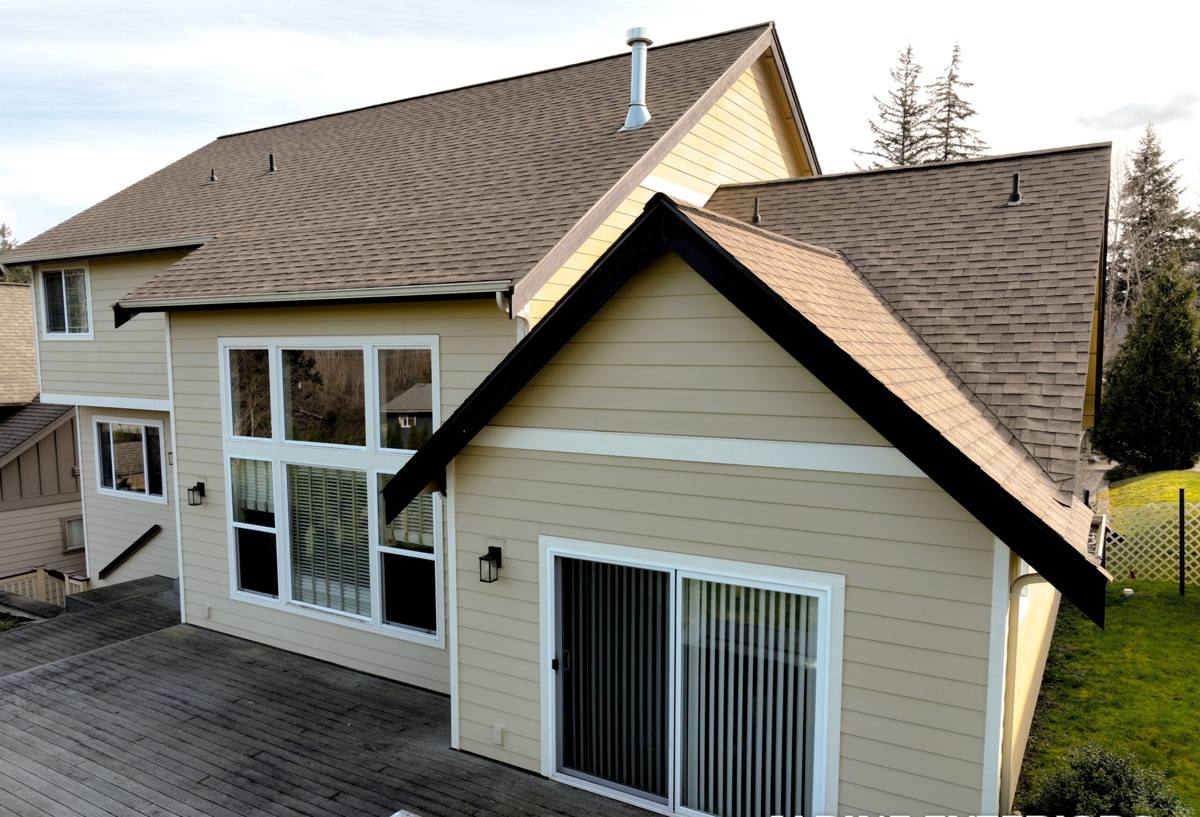
How the Local Climate Wears Down a Window Over Time
Every window in Alger is fighting a slow battle against moisture, and understanding how that battle plays out helps explain why some installations last decades and others fail in half that time.
Salt Air and Hardware Corrosion
Air carrying salt moisture accelerates corrosion on anything metal — hinges, locks, cranks, screws, and the fasteners holding the window frame in place. Standard hardware and fasteners that would be fine fifty miles inland can start pitting and seizing up years earlier out here. Once hardware corrodes, seals around it are compromised too, giving water a path in.
Driving Rain and Water Intrusion
Wind-driven rain doesn't just run down glass — it gets pushed sideways and upward into gaps that a calmer rain would never reach. If the flashing behind the trim and siding isn't lapped correctly, or if sealant was used as a substitute for proper flashing instead of a backup to it, water finds its way behind the window frame. From there it travels into wall framing, sheathing, and insulation, often invisibly for years.
Moss, Algae, and Trapped Moisture
The long moss season here isn't just a roof and siding issue. Moss and algae growth on sills, trim, and the lower edges of window frames holds moisture against wood and painted surfaces far longer than it would otherwise sit. That constant damp keeps wood fiber saturated, which is exactly the condition that leads to rot at the sill and jamb — usually starting from the inside of the wood, out of sight, before it ever shows on the surface.
What a Correct Custom Window Installation Actually Involves
"Custom" windows means the unit is built to fit an opening that isn't a standard off-the-shelf size — common in older homes, additions, or houses where a previous remodel changed a wall opening. But fitting the glass is only part of the job. The installation details around the window matter just as much as the window itself.
Flashing and Water Management
Every opening needs a sill pan to catch and direct out any water that gets past the window, along with flashing tape or membrane integrated correctly with the house's weather-resistive barrier — lapped so water sheds outward and down, never trapped behind the siding. This is the single most important part of the job and the part that's easiest to rush.
Fasteners and Hardware Selection
Given the corrosion risk from salt air, fastener choice isn't a place to cut corners. Corrosion-resistant screws and hardware cost a little more up front and save a callback in five years.
Fit, Insulation, and Air Sealing
A custom window has to be shimmed square and plumb, insulated around the rough opening with a material that won't compress or settle over time, and air-sealed on both the interior and exterior sides. Gaps left in the insulation layer show up later as cold spots, drafts, and condensation on the interior glass in winter.
Exterior Sealant and Trim Detail
Sealant is a backup layer, not the primary water barrier — it's applied at specific joints, with the right product for the substrate, and it's not expected to do the job flashing should already be doing.
Choosing the Right Frame Material for This Climate
There's no single "best" window material for every house — it depends on the home's style, budget, and how much upkeep the owner wants to take on. Here's how the common options hold up under Alger's mix of salt air, rain, and moss:
| Material | Moisture Resistance | Maintenance | Typical Lifespan |
|---|---|---|---|
| Vinyl | Good — won't rot, but frames can warp with poor installation | Low | 20-30 years |
| Fiberglass | Very good — dimensionally stable, resists moisture well | Low | 30-40+ years |
| Wood-clad | Depends on cladding integrity; exposed wood is vulnerable | Moderate to high | 20-30 years with upkeep |
| Aluminum | Fair — prone to condensation without a thermal break | Low to moderate | 20-30 years |
In a salt-air, high-moisture environment like this, fiberglass and quality vinyl frames tend to hold up with the least maintenance. Wood-clad units can look great and work fine, but only if the cladding stays intact — once it's breached, exposed wood underneath is dealing with the same moisture load described above. We'll walk through the honest trade-offs for your specific house rather than push one product line.
Signs Your Windows Need Attention
- Fogging or a hazy film between the panes of double- or triple-pane glass — the seal has failed
- Soft, spongy, or discolored wood at the sill or lower frame
- Windows that are hard to open, close, or lock — often a sign of frame movement or hardware corrosion
- Visible moss, algae, or dark staining building up on sills and trim
- Noticeable drafts or cold spots near the window in winter
- Condensation forming on the interior glass regularly, especially on cold mornings
- Paint or finish peeling on interior trim near the window, which usually points to moisture behind it
Our Process for a Custom Window Project in Alger
- On-site assessment — we look at each opening, the condition of the surrounding siding and trim, and how exposed that side of the house is to wind and rain.
- Accurate measurement and ordering — custom openings get measured carefully since off-the-shelf sizes won't work; units are ordered to spec.
- Careful removal — old windows come out without tearing up more siding or interior trim than necessary, and we check the framing underneath for any existing rot or moisture damage before it gets closed back up.
- Flashing and installation — sill pan, flashing tape, and weather barrier integration happen before the new window ever goes in.
- Sealing and trim finish work — interior and exterior trim reinstalled or replaced, sealant applied at the correct joints.
- Cleanup and walkthrough — every window operates smoothly, seals correctly, and looks finished before we call the job done.
What Affects the Cost of a Custom Window Project
| Cost Factor | Why It Matters |
|---|---|
| Frame material | Fiberglass and higher-end vinyl cost more upfront than basic vinyl or aluminum |
| Opening size and shape | Non-standard shapes or larger openings require true custom manufacturing |
| Number of openings | Per-unit cost drops somewhat on multi-window projects due to shared setup and labor |
| Accessibility | Second-story or hard-to-reach openings take more time and equipment |
| Existing damage | Rot or moisture damage found during removal adds repair work before the new window goes in |
| Trim and siding condition | Older or mismatched siding around the opening may need repair or partial replacement to finish cleanly |
We give a firm, itemized quote after seeing the actual openings — not a phone estimate — because the condition behind the trim is often what actually drives the price.
Why a Crew That Already Works Sudden Valley and Alger Matters Here
A contractor who works this specific area regularly has already seen how homes here were built, what materials and window brands were common when they went in, and where problems tend to show up first — usually on the sides of a house catching the most wind-driven rain, or around older wood-frame windows that have been through a lot of wet seasons. That local pattern recognition matters when you're deciding whether a window needs full replacement or just better flashing and sealing around a unit that's otherwise sound.
It also means realistic scheduling around this region's weather — knowing when a dry stretch is likely long enough to do the work properly, rather than rushing an install between rain systems and compromising the flashing details that keep water out for the next twenty years.
A Homeowner's Checklist Before Starting a Window Project
- Note which windows show fogging, drafts, or sticking, and which side of the house they're on
- Check sills and lower trim for soft spots or discoloration
- Decide on frame material based on maintenance tolerance, not just upfront price
- Ask any contractor specifically how they handle sill pan flashing and weather barrier integration
- Confirm whether damaged framing or siding, if found, is included in the quote or billed separately
- Ask about warranty coverage on both the window unit and the installation labor separately
If your windows in Alger are fogging, drafting, or just old enough that you're wondering, we're glad to take a look and give you a straight, no-pressure estimate — free, with no obligation to move forward.